
The Religious Rejection
The Ownership Wars: Who Owns YouThis flow traces the book’s attack on mainstream religion as a rival system of authority and inherited obedience.
increasing Bearing strength in each event
 decreasing
Bearing strength in each eventdecreasingThe Cosmic Master

The Cosmic Master
Obedience Before God
The book interprets Abrahamic worship as submission to an absolute authority who commands obedience through reward and punishment. The story of Binding of Isaac becomes a symbol of this structure.
Faith is therefore treated as political psychology rather than private spirituality.
The Human Consequence
When people learn to admire unquestionable authority in heaven, the book argues, they become more willing to accept unquestionable authority on earth.
The Protestant Protest
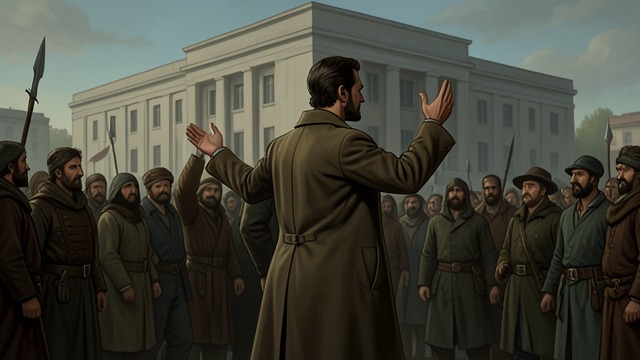
The Protestant Protest
Authority Rejected
The book presents Martin Luther’s challenge to the Roman Catholic Church as an early expression of resistance to centralized authority. Yet it argues that subjective faith replaced institutional obedience with personal certainty.
The individual became sovereign over interpretation but not necessarily more rational.
The American Inheritance
Modern anti-government individualism is described as carrying this religious posture into politics.
Theocracy and State
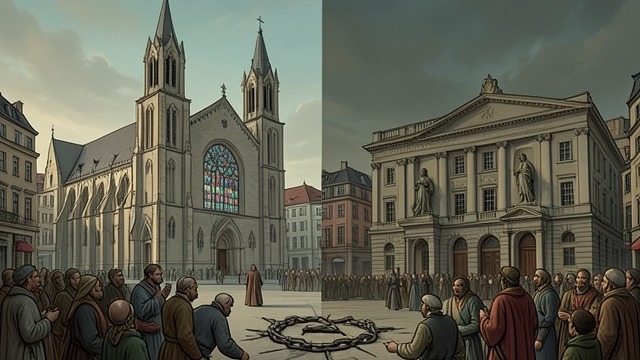
Theocracy and State
Separation in Name
The book argues that formal separation of church and state has not removed religious influence from public life. Cultural education and family practice continue to reproduce faith.
The state is negative toward economic intervention but permissive toward religious conditioning.
Contradictory Liberty
This produces an asymmetrical society: market power is protected while rational public education is restrained by claims of private belief.
The Ban Against Faith

The Ban Against Faith
Rational Monoculture
The imagined republic would prohibit mainstream religions and replace faith with reason, logic, mathematics, and critical inquiry. Religious inheritance would no longer shape civic identity.
The proposal treats belief as a social technology that preserves old authority.
The Authoritarian Edge
The book’s liberation from superstition is pursued through prohibition. Its vision therefore raises the question of whether rational emancipation can coexist with intellectual pluralism.
Mythos Against Truth
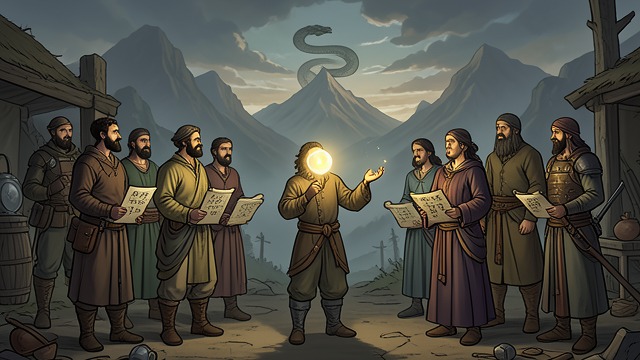
Mythos Against Truth
Stories of Belonging
Religion is treated as part of a wider world of myth, chosen peoples, sacred bloodlines, sin, karma, and promised salvation. These stories explain belonging but resist verification.
The book contrasts them with a mathematical and rational order.
The Final Substitution
The projected future would replace inherited myth with deliberate knowledge. Humanity would no longer need cosmic masters to explain its destiny.
In the opening religious comparison
In the historical discussion of Protestantism
During the analysis of American religion
In the imagined Hyperborean policy
Near the ending of the religious argument
