
The Boy and His Birth Parents
The Painted BirdThis flow traces how separation turns the boy’s parents into distant objects of longing, and how their eventual reunion tests whether family belonging can overcome the independence and attachments he built while surviving alone.
increasing Bearing strength in each event
 decreasing
Bearing strength in each eventdecreasingA Child Sent Away
A Child Sent Away
The Parents’ Choice
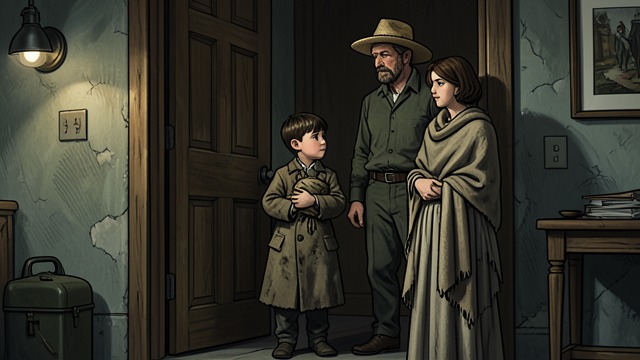
The boy’s parents send their six-year-old son from the city to a distant village, hoping that separation will shield him from dangers connected to his father’s anti-Nazi activities. They entrust him to a man paid to find foster parents, treating a painful absence as the best available form of protection.
Hope Without Contact
The plan depends on the promise that the family will reunite after the war. When occupation and population transfers sever contact with the intermediary, the parents lose the means to locate their child, while the boy waits for them at Marta’s hut.
Their separation is therefore not a voluntary abandonment but a bond made powerless by circumstance. The parents’ protection survives chiefly as the boy’s expectation that they will return.
Waiting at Marta’s Hut
Waiting at Marta’s Hut
A Child’s Expectation
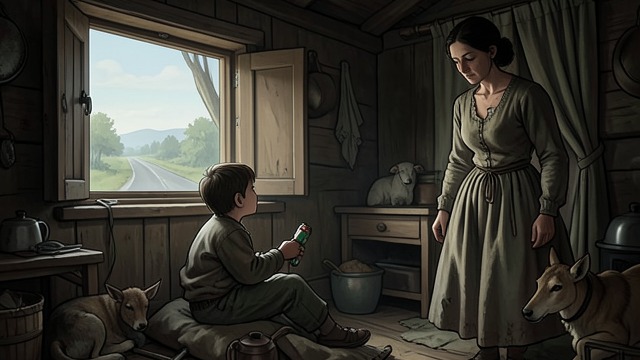
At Marta’s hut, the boy believes his parents may arrive at any moment. He cries and remembers his former home, toys, and his mother at the piano, using these images to keep his family life present in a world that is becoming unfamiliar.
The Distance Widens
Marta offers shelter, but her household cannot restore the parents’ presence. As the boy attends to the animals and adjusts to her customs, memories of home begin to feel like stories from another life.
His repeated expectation that his parents will come gives waiting the shape of a relationship: he assumes that being their child should make them know when he is in danger. Their absence gradually teaches him that love and rescue are not the same thing.
The Fire and the Unanswered Call
The Fire and the Unanswered Call
The Hut Burns
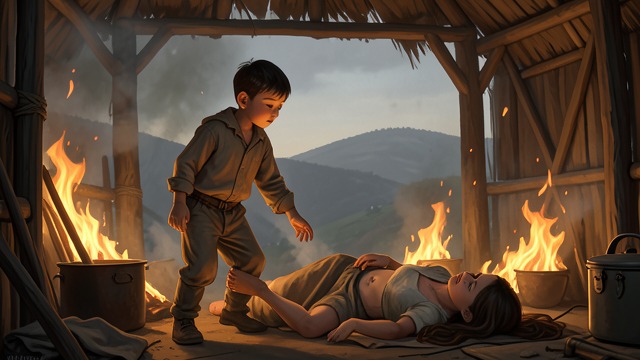
When Marta dies, the boy misreads her stillness as a possible transformation and waits for her to move. A fire spreads through the hut, and he finally runs outside, unable to save her or understand death as an ending.
Parents as Rescue
From the ravine, he believes that his parents must somehow know what has happened and that they will meet him there. He calls for them, receives no answer, and eventually goes toward the village because hunger and cold leave him no choice.
The crisis turns family longing into a practical question: who will come when a child is helpless? The answer is no one, and the boy’s sense of parental protection is weakened before he has any way to confirm whether his parents are alive.
A Mother’s Face in the Office
A Mother’s Face in the Office
Recognition and Doubt
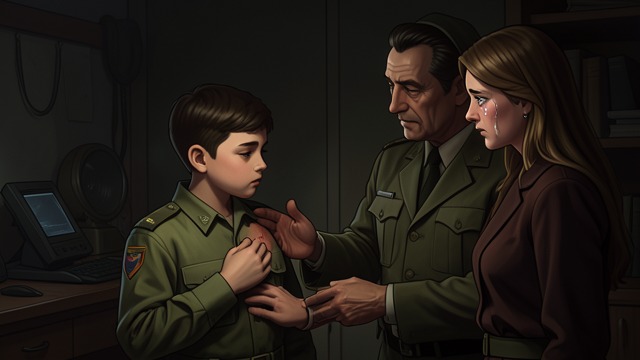
At the Children’s home, a commission brings a man and woman before the boy. Their resemblance suggests they are his parents, but recognition brings uncertainty rather than immediate relief: he has spent years learning to survive without them and has built new loyalties elsewhere.
The Birthmark
His father asks him to open his uniform and reveal the birthmark that can establish his identity. The boy hesitates, understanding that showing it will end the possibility of remaining a child attached to the Red Army and its mentors.
He ultimately exposes the mark partly because he feels sorry for his mother’s tears. The reunion is emotionally real, but the evidence that confirms kinship also removes his choice about whether to return to family life.
Love as Shelter and Constraint
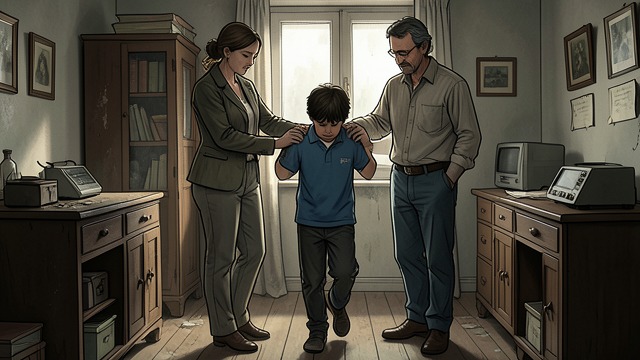
Love as Shelter and Constraint
A Family Reassembled
The boy leaves the orphanage with his parents and learns that they have adopted a younger child during the war. His parents welcome him tenderly, but their small apartment and fragile health make the family’s return feel cramped and uncertain rather than like a simple restoration of the past.
Protection That Presses Close
Walking between his parents, he feels their hands on his shoulders and hair and describes their love as smothering. He wonders whether he would be better off alone, waiting for Gavrila, whose world offered him a chosen future.
The boy does not deny the bond; he struggles with the obligations and dependence it brings. His reunion thus resolves the physical separation while leaving open whether he can inhabit the identity of a son again.
Fall 1939
During the first weeks after his arrival
Late fall, the night Marta’s hut burns
Near the end of the war, during the commission’s meeting
Soon after the war ends
