
The Mark of the Outsider
The Painted BirdThis thread traces how the boy’s dark features make him an imagined threat to village communities, until exclusion becomes part of the identity he struggles to survive.
increasing Bearing strength in each event
 decreasing
Bearing strength in each eventdecreasingA Child Sent Away
Separation and Exposure
A Refuge That Fails
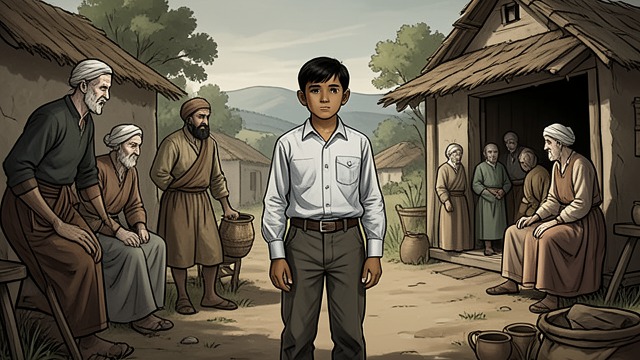
The boy’s parents send him from the city to a distant village, hoping to keep him safe while they hide from wartime danger. Their plan depends on strangers, fragile communications, and the hope that the family can reunite.
Marta’s death soon leaves the child without a dependable protector. He has been separated from his parents before he can understand the forces that made the separation necessary.
Difference Made Visible
The narrator’s account emphasizes that his olive skin, dark hair, black eyes, and city speech set him apart from the pale, blond villagers. These traits become grounds for suspicion rather than neutral details of appearance.
The boy’s vulnerability is therefore social as well as material: he needs shelter from people who may interpret his difference as evidence that he does not belong.
The Village’s First Verdict
Difference Turned into Accusation
A Hostile Welcome
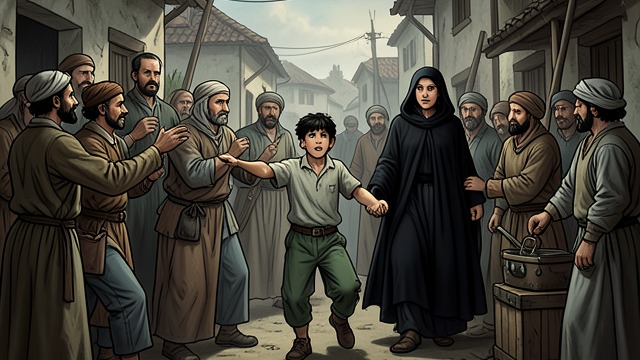
After escaping the burning hut, the boy goes to the village expecting help and hoping his parents might be there. Instead, residents surround him, jeer, strike him, and treat him as an object of public amusement.
His unfamiliar speech deepens the separation. The villagers repeatedly call him a Gypsy, converting a child’s inability to explain himself into an apparent confirmation of their suspicions.
Survival Through Others
The violence shows how quickly an isolated community can make visible difference into a social verdict. The boy is judged before anyone has learned who he is or why he is alone.
He is then bought and taken away by Olga the Wise One. Shelter arrives, but it does not erase the principle governing his life: acceptance depends on the power and protection of another person.
An Evil Eye Made of Rumor
Suspicion Given a Supernatural Face
A Child Cast as a Danger
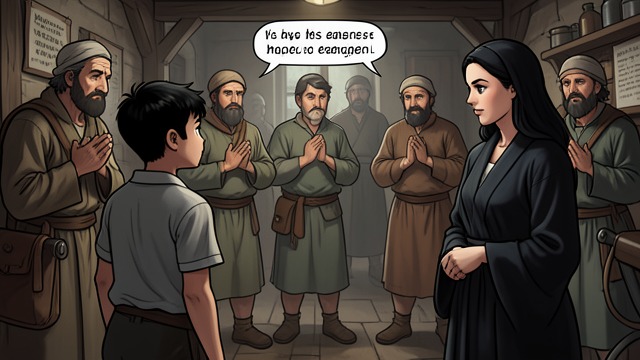
Olga teaches the boy that his black eyes mark him as possessed and capable of casting spells. The belief draws on the villagers’ existing fear of dark-featured outsiders, presenting prejudice as if it were a fact of nature.
The boy is told to watch others carefully and to keep his thoughts blank when using his gaze to help the sick. He absorbs the accusation as a description of himself, even though he has no power to choose how others interpret his face.
Fear Becomes a Social Boundary
People cross themselves, flee from him, and sometimes unleash dogs. The supernatural explanation gives their exclusion a shared vocabulary, making a frightened child seem responsible for the danger he experiences.
Olga offers protection, yet her teaching also deepens the boy’s sense that his identity is permanently suspect. He learns to anticipate rejection before he can know whether a particular person will harm him.
The Stranger on the Track
The Threat Beyond the Village
A Face on the Railway
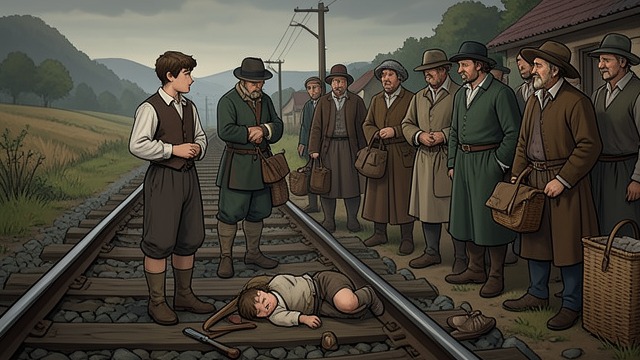
The boy and the peasants find an injured child beside the railway, apparently thrown from a train carrying Jews and Roma toward death. The villagers read his dark features as a danger to themselves rather than as a reason to help him.
They take his shoes and clothes, leave his body on the track, and expect the German patrol to find him. The episode makes the boy confront a version of his own vulnerability in a child who cannot defend himself or explain what happened.
Prejudice and Self-Preservation
The narrator admits that he feels relief when the child dies, fearing that sheltering him would expose the village and reveal the narrator’s own hiding place. Fear makes the boy complicit in the logic that has repeatedly endangered him.
His question about changing people’s eyes and hair instead of building furnaces imagines an impossible remedy for racial persecution. The thought exposes the grotesque mismatch between the simplicity of human difference and the machinery built to destroy those marked by it.
Darkness Offers No Kinship
Belonging Reversed
Recognition Without Safety
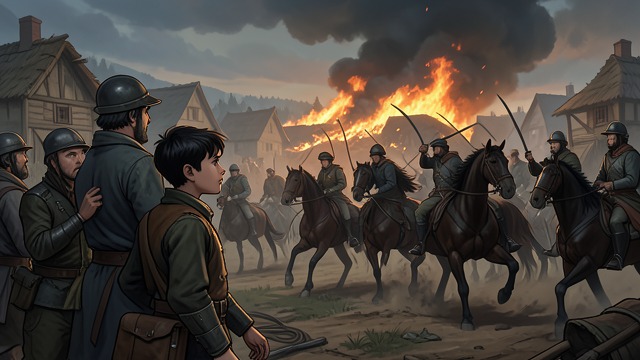
When the Kalmuk cavalrymen arrive, the boy initially feels pride because their dark hair, eyes, and skin resemble his own. For a moment, the resemblance seems to promise that he belongs to a group rather than standing alone among people who fear him.
The attack destroys that hope. The riders commit extreme violence against the village, and the boy recognizes that shared appearance offers no protection or moral kinship.
An Identity Imposed from Outside
Watching the assault, he concludes that his dark features must place him in the same world as the attackers. He mistakes an externally imposed racial category for a reliable account of character or destiny.
That painful inference shows how persecution can distort a child’s understanding of belonging. The boy has learned to search for safety in resemblance, but experience teaches him that appearance cannot guarantee solidarity, shelter, or innocence.
In the first weeks of the Second World War
After Marta’s hut burns, early in the boy’s village wandering
During the boy’s early months with Olga the Wise One
During the autumn mushroom season, after the boy reaches a new village
During the Kalmuk cavalry attack, near the end of the village years
