
The Boy’s Passage from Abandonment to Reunion
The Painted BirdThis thread follows The boy from a child sent away for safety through repeated persecution, wartime attachments, and a hard-won return to his birth parents.
increasing Bearing strength in each event
 decreasing
Bearing strength in each eventdecreasingSent to the Village
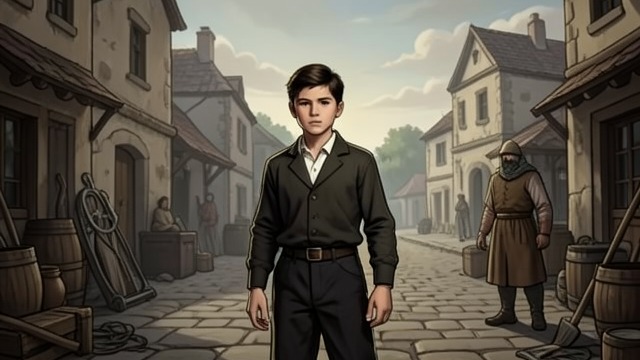
A Child Sent Away
Separation
At the beginning of the war, The boy’s parents send him from their city to a distant village, paying a stranger to find him temporary foster care. His father’s prewar anti-Nazi activities have made the family vulnerable, and the parents believe that separating from their son offers him a better chance of surviving.
A Fragile Refuge
The arrangement collapses when Marta dies soon after The boy arrives. Lost in a rural region where his appearance and speech mark him as an outsider, he remains convinced that his parents will come for him. Their absence is not a single loss but the condition that shapes his uncertain childhood.
From Hut to Hut
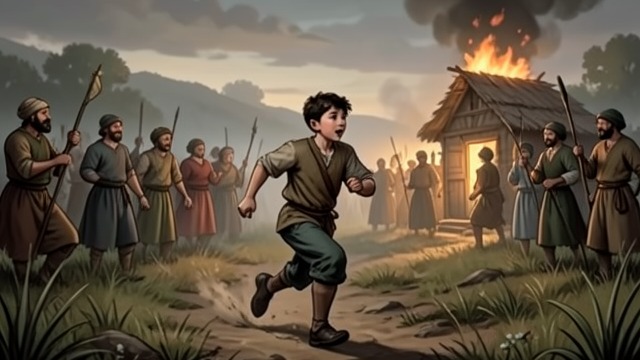
Survival Without Shelter
Marked as an Outsider
After fleeing Marta’s burning hut, The boy approaches a village and is met not with protection but with a crowd that jeers, strikes, and humiliates him. His dark features and unfamiliar speech lead the villagers to treat him as a Gypsy or Jewish stray, identities that carry deadly risk under German occupation.
A Childhood of Displacement
His movement from one household to another brings temporary food and shelter but no lasting security. He is repeatedly exposed to arbitrary violence, forced labor, and the threat of being reported to the occupiers. Each new refuge is provisional, and each rejection deepens the gulf between the child he once was and the solitary survivor he is becoming.
The Voice Falls Silent
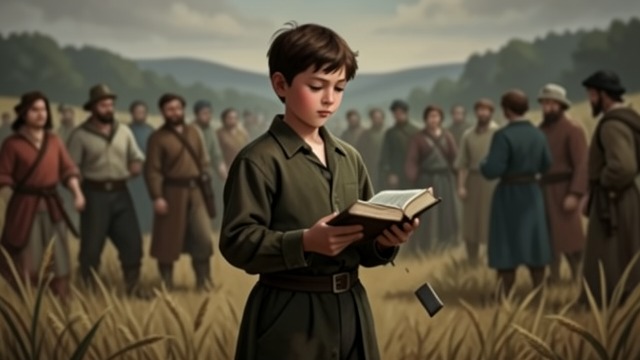
Loss of Speech
A Failed Appeal
While living with Garbos, The boy endures beatings and intimidation by both his guardian and Judas. He turns to prayer for protection, imagining that each prayer accumulates days of indulgence and will eventually make his life safer. His faith offers a system of hope, but it does not stop the abuse.
Silence as a Wound
On Corpus Christi, The boy tries to serve at the altar, but the heavy Missal falls and the congregation turns against him, calling him a vampire and throwing him into a manure pit. He escapes, but discovers that he can no longer speak. His muteness becomes a lasting consequence of terror and rejection, separating him further from people even when he longs to communicate.
A New World with the Red Army
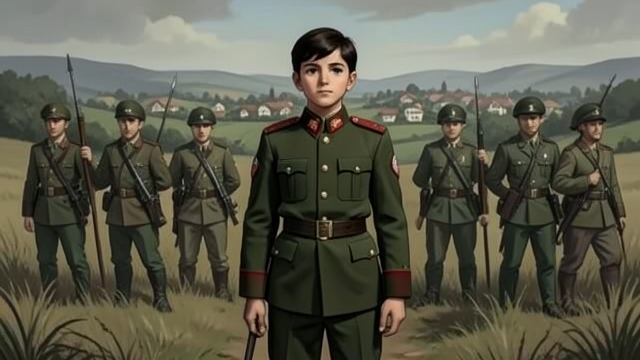
Learning Another Order
Care and Instruction
After surviving the village assault by the Kalmyk cavalrymen and suffering a serious chest injury, The boy is treated by Red Army doctors and allowed to remain with a regiment. Political instructor Gavrila teaches him to read and explains Soviet ideology; Mitka the Cuckoo offers companionship, songs, and an example of personal vengeance.
An Identity to Borrow
The regiment gives The boy food, attention, a uniform, and a sense of belonging he has lacked for years. He begins to imagine a future in which he can join the Red Army and become an inventor or a useful citizen. When the war’s end approaches, however, military rules require that he leave his improvised family and go to a center for missing children.
Found by His Parents
Recognition and Return
The Choice to Be Known
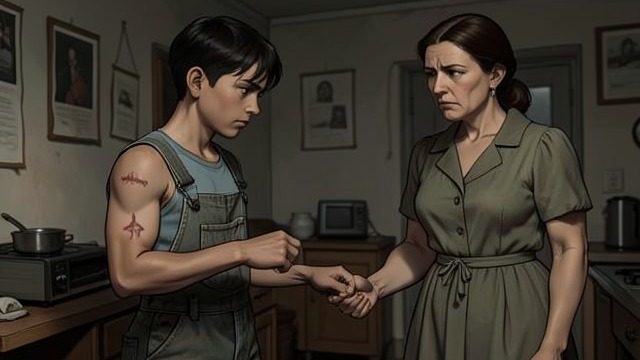
At the Children’s home, The boy’s birth parents find him through the personal details he had given the Red Army. He recognizes them but hesitates before confirming his identity, aware that returning to family may end his imagined future with Gavrila and Mitka the Cuckoo. He finally reveals his birthmark, accepting the claims of kinship even as he remains wary of dependence and affection.
An Uneasy Homecoming
His parents take him into their crowded apartment, where he must adjust to domestic life and to an adopted younger brother. The boy’s response to the child is painfully forceful: he breaks the boy’s arm, exposing how much violence has shaped his instincts. Reunion restores his family ties but does not erase his isolation, and his recovery of speech comes only later, after a skiing accident.
Autumn 1939
The first years after Marta’s death
After the Corpus Christi Mass
Autumn 1944 to the final months of the war
The closing months of the war and the postwar period
