Evil eye
The Painted BirdEvil eye is a folk belief that turns the boy’s gaze into a possible source of sickness and misfortune, and sometimes into a means of countering them. Across Marta’s household and the teaching of Olga the village witch, the same eyes are treated as both dangerous and useful: they may spread harm, yet, under strict conditions, help remove it. The belief shapes daily habits, isolates the boy from the village, and gives a later encounter with a German soldier the quiet force of a test he does not fully carry through.
A Theory of Hidden Harm
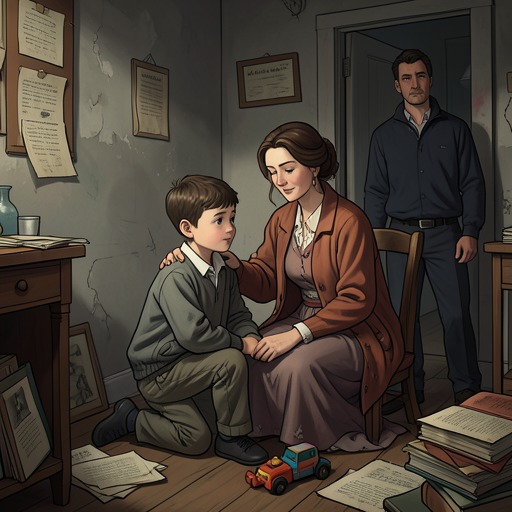
Marta explains illness as an invisible intruder able to enter through air, water, contact with an animal or another person, or a frightening gaze. She warns that the boy’s dark eyes could bring crippling illness, plague, or death. The threat is difficult to detect precisely because it is unseen; an ordinary glance may be imagined as the point at which harm begins. To guard against it, Marta forbids the boy to look directly into her eyes or those of the household animals. If he does so accidentally, he must spit three times and cross himself.
Her precautions extend beyond looking. When bread dough turns sour, Marta blames the boy for casting a spell and withholds bread from him for two days. He responds by shutting his eyes as he moves through the hut and outside, stumbling into furniture, overturning buckets, and trampling flower beds. While he blunders about, Marta gathers goose down and scatters it over burning coals; she blows the smoke around the room while reciting incantations. She announces that the spell has lifted, and the next baking produces good bread. The sequence makes an uncertain cause legible through ritual: spoiled dough prompts blame, ceremony supplies an explanation and remedy, and successful baking appears to confirm both.
Marta also fears that a single lost hair could cause serious throat trouble if an evil eye sees it, so the boy is never permitted to pick up her fallen hairs. The rule gives the gaze a reach beyond direct contact: even a small trace of the body may become vulnerable to it. In Marta’s account, protection depends on vigilance over eyes, gestures, and objects that might otherwise seem insignificant.
Olga’s Teaching and the Boy’s Double Power
Olga gives the boy a more elaborate explanation. She calls him the Black One and teaches him that an evil spirit inhabits him without his awareness. In her account, his dark, bewitched eyes identify this condition: they do not blink when fixed on bright, clear eyes, and he may therefore cast a spell without intending to do so. The danger is not presented as a deliberate act. The boy’s appearance and gaze make him a possible threat before he has chosen any action.
Olga also teaches that bewitched eyes can remove spells as well as cast them. The boy must keep his mind blank of everything except the disease he is helping to remove while staring at a person, animal, or even grain. Otherwise, her rules warn, a healthy child may waste away, a calf may die suddenly, or grass may rot after it has been cut for hay. The same capacity is thus divided between harm and healing, with the boy’s intention and concentration offered as safeguards. His eyes are not simply a mark of danger; in Olga’s system they are also an instrument whose effects require discipline.
That teaching accompanies concrete precautions. Olga suspects the boy may be a vampire and sometimes tells him so. Each morning she gives him a bitter elixir and a piece of garlicked charcoal to restrain the supposed desires of his evil spirit and prevent its transformation into a phantom or ghost. The regimen makes the invisible threat part of ordinary life, repeated every day rather than confined to a single frightening incident.
Fear Made Social
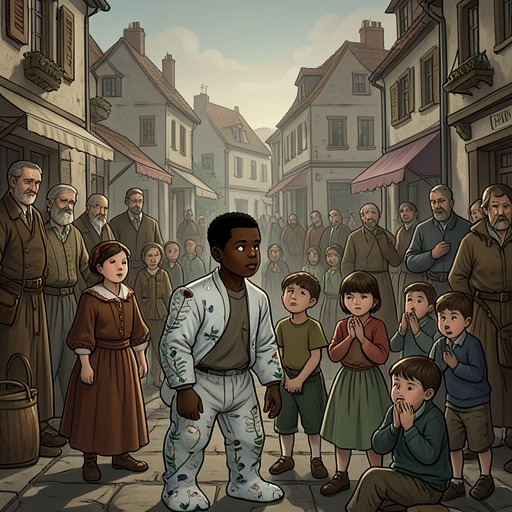
Olga’s explanations do not remain private lessons. When the boy tries to walk through the village alone, people turn away and cross themselves; pregnant women flee, and bolder peasants set Dogs on him. The belief therefore alters where he can safely go and how other people respond to his presence. He learns to flee quickly and to stay near Olga’s hut, whose protection offers a practical refuge from the reactions her teachings also help make intelligible.
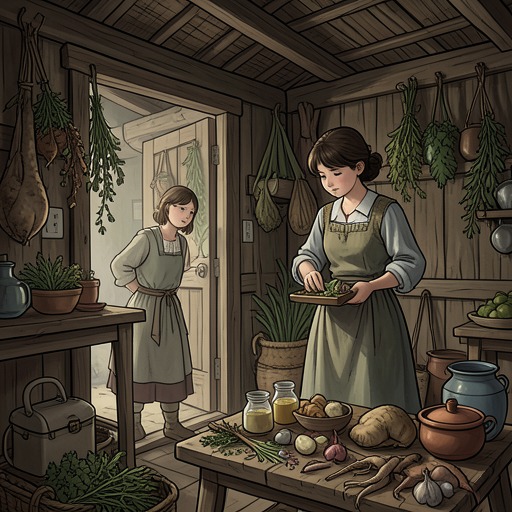
The feared gaze exists alongside Olga’s standing as a respected village practitioner. Peasants ask her to protect cattle’s eyes against spells before the animals are taken to market, and she instructs them in gestures and preparations intended to ward off harm. She spits three times when advising them about buying a pig, prepares sanctified-herb bread for a heifer before mating, and judges whether a horse or cow will remain healthy after pouring water over it and watching it shake itself. Her verdict can determine both the animal’s price and whether a sale takes place. In this setting, the Evil eye belongs to a shared practical vocabulary: people fear its effects, seek protection from it, and consult Olga when decisions about animals and livelihood are at stake.
A Test at the Railway Station
Later, at a railway station, the boy encounters German soldiers surrounding a cart. An elderly soldier with sweat-fogged spectacles leans against it and watches him with watery-blue eyes. The boy smiles, receives no response, and looks directly back. He wonders whether his gaze will cast an evil spell and make the man ill. Then, feeling sorry for him, he lowers his own eyes.
The moment does not establish whether the belief is true. Instead, it brings its rules into contact with the boy’s own judgment: he imagines the power attributed to his gaze, but pity interrupts the possibility of using it. The eyes that have made him an object of suspicion are also the means through which he considers another person’s vulnerability. Across the episodes, the Evil eye works as both a folk explanation for unpredictable misfortune and a social label that makes the boy seem dangerous; at the station, his choice to look away briefly loosens that label’s hold over what he does.