German soldiers
The Painted BirdGerman soldiers are the armed face of occupation in the villages through which The boy wanders: they impose recurring demands for supplies and make the cost of sheltering a suspected Gypsy or Jewish child potentially collective. Their actions are mostly presented as part of a coercive system, but an encounter at a railway station complicates that picture when one soldier releases The boy rather than carrying out the fate he fears.
Occupation and material demands
The German soldiers operate within a countryside already marked by poverty, isolation, and weak infrastructure. Under occupation, villagers must surrender a substantial portion of their meager harvest to regular troops, while Partisans also demand provisions. Refusal can bring punitive raids that leave settlements in ruins. The soldiers’ requisitions therefore fall on communities with little to spare, caught between competing armed forces rather than protected by a stable authority.
At one village, detachments arrive three times a year to collect foodstuffs and materials required for the army. The regularity gives occupation a practical rhythm: military demands return whether or not the village can easily meet them. These deliveries are also bound up with local safety. The blacksmith, who is respected and has authority in the community, promises German commanders punctual supplies and extra grain when they visit, seeking to avert harsher consequences for the village.
The risk extends beyond resources. Because The boy is taken for a Gypsy or Jewish stray, people who harbor him may expose themselves and their communities to the harshest German penalties. His presence makes shelter a dangerous choice, not simply an act of kindness. More broadly, the village’s obligations are enforced in a setting where customary power already favors the strong and wealthy, leaving a child dependent on the protection of individuals such as the blacksmith.
Searches and village enforcement
German troops search the village and question its inhabitants about visits from Partisans. In the account of these searches, they shoot one or two peasants as an example. The blacksmith hides The boy in a potato cellar while he tries to placate the commanders with promises of deliveries. Hiding and negotiation occur side by side: the child is concealed from the soldiers, while the village headman attempts to manage the danger by accommodating their demands.
This enforcement is part of a larger conflict rather than an isolated contest between the army and civilians. Partisans are themselves divided into factions, each seeking village assistance, and their fighting can turn the settlement into a battlefield. German searches add another threat to communities already pressured by armed groups and scarcity. The result is a precarious local order in which the possibility of collective punishment shapes both what villagers provide and whom they dare to shelter.
The railway-station encounter
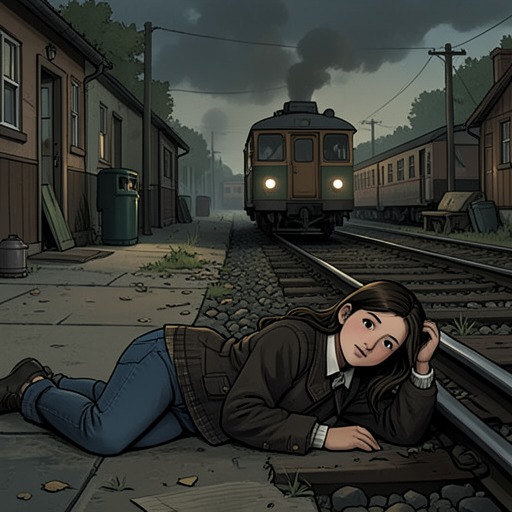
At a railway station, German soldiers surround a cart carrying The boy and two peasants. The peasants hand over a note written by Partisans, and an officer orders a soldier to examine the child. The soldier pulls back The boy’s eyelids and inspects the scars on his knees and calves before reporting back. After the officer leaves, an elderly, bespectacled soldier unties The boy from the cart and takes him along the railway track.
The soldier collects a small can of gasoline at a warehouse. Given what The boy has seen happen to people shot and burned, he takes this as evidence that he is about to be killed. The soldier offers no explanation that would correct this expectation. At the edge of the track, however, he uses a small knife to cut the rope that is rubbing The boy’s leg, then throws the rope away. The quiet action reverses the boy’s immediate fear without explaining the soldier’s purpose.
The soldier then points toward the forest and repeatedly tries to send The boy away. The boy, convinced the gesture may be a trick, initially refuses to leave. The soldier eventually lies across the rails with his rifle, from which he has removed the bolt. Only when The boy begins moving toward the forest does the soldier remain still. He neither explains himself nor accompanies the child onward; the release is communicated through gestures and the boy’s cautious departure.
Narrative role and significance
The soldiers are not developed as a single character with a shared interior life. Their significance comes instead from the repeated pressures their institution places on villagers: requisition, interrogation, searches, and exemplary violence. The contrast between those general patterns and the elderly soldier’s release of The boy matters precisely because it remains unresolved. The soldier’s action does not erase the danger of occupation, but it prevents the encounter from fitting the boy’s expectation of inevitable execution.
The wider chronology shifts after the war. Gavrila tells The boy that the country has been liberated from the Germans and that regulations require lost children to be taken to special centers while the survival of their parents is determined. This later administrative process differs from the earlier occupation regime: The boy is again subject to decisions made by authorities, but the stated purpose is to locate or care for missing children rather than extract village supplies. German soldiers thus mark both an immediate source of danger during the boy’s wandering and the occupying power whose departure makes postwar placement possible.