Mitka's Sniper Rifle
The Painted BirdMitka's Sniper Rifle stands at the intersection of public heroism and private loss. Revered by soldiers for the marksmanship it enabled, it gives the narrator a concrete image of the military ideal he hopes one day to embody. Yet the weapon also recalls that Red Army sniper Mitka’s own career as a sniper ended when a German bullet left fragments in his body; the rifle remains, but the man who once used it in combat now teaches others.
The Rifle and Its Reputation
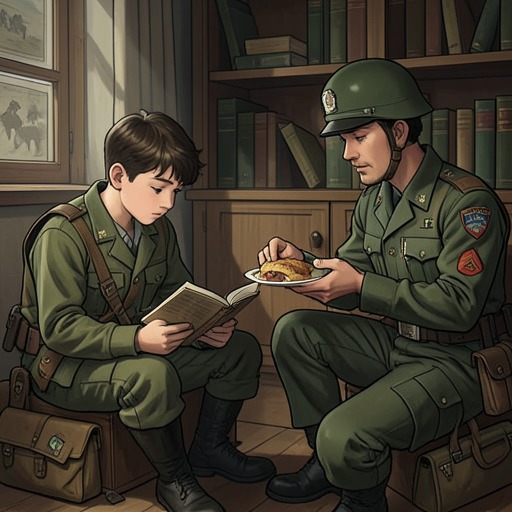
The rifle is presented through the attention it commands. When soldiers ask to see it, Red Army sniper Mitka takes it from its sheath and blows away specks of dust from its sights and stock. Young soldiers bend close to inspect it, while older ones handle its softly polished stock with conspicuous care. The scene makes the weapon more than standard equipment: its physical finish and the manner of its display reflect the esteem attached to its owner and his record.
That esteem has a public history. Red Army sniper Mitka is one of the regiment’s most respected soldiers, a Hero of the Soviet Union and among the division’s most decorated men. Newspapers and books have recounted his feats, newsreels have shown him to millions, and the regiment takes pride in his achievements. The rifle concentrates that widely circulated reputation into an object the soldiers can gather around and examine. Its prestige belongs to a celebrated individual, but the regiment’s admiration makes it a shared emblem of military achievement.
The Sight and the Work of Sniping
The crystal-clear lenses of the telescopic sight are the rifle’s defining feature in the narrator’s account. Through them, distant targets appear close enough for Mitka to distinguish faces and gestures. The description dwells on the transformation the sight performs: it reduces distance and makes precise aiming possible. The narrator understands the instrument through its intended use against the German Army, including the lethal point at which Mitka aimed. The rifle’s technical advantage is therefore inseparable from the violence it makes accurate.
The weapon also shapes the narrator’s picture of what a sniper does. Soldiers recount how Mitka parachuted alone behind enemy lines, targeted officers and couriers, returned, and was sent out on further dangerous missions. In the narrator’s imagination, each operation depends on isolation, observation, and a carefully chosen moment to shoot. He listens beside Mitka, leaning on his arm, and wonders whether he might one day become a sharpshooter whose deeds working people discuss at their meals. The rifle makes that imagined future tangible: admiration for its lenses and stock becomes an aspiration to the role they represent.
A Career Ended, a Skill Retained
The rifle’s public display carries an undertone of loss. As the soldiers admire it, Mitka’s face darkens and he touches the stiff, painful side of his body, where fragments from a German bullet remain. The wound ended his career as a sniper a year earlier. The rifle has not lost its capacity or its prestige, but the man who once carried it on missions can no longer serve in that role. Its gleaming, carefully maintained presence thus sits beside the bodily consequence that admiration alone cannot erase.
Mitka still serves as the regiment’s sharpshooting instructor, passing his skill to young soldiers, though instruction is not what he most wants. At night, the narrator sometimes sees him lying awake and imagines him reliving the waits in branches or ruins behind enemy lines. The rifle connects that remembered combat life to Mitka’s present work: the same expertise persists, but its use has changed from carrying out missions himself to teaching others. The object’s continued reverence therefore marks both continuity and rupture—his mastery survives as a lesson, while his former career belongs to the past.
What the Rifle Means to the Narrator
For the narrator, the rifle helps distinguish two kinds of power. He admires Mitka as someone who, in his understanding, works toward a safer world through marksmanship rather than prayer. Set against Mitka, a German officer who decides the fate of helpless prisoners appears insignificant to him. This is the narrator’s judgment, formed through his admiration for the sniper; the book does not present the rifle as making violence morally simple. Instead, its importance lies in how the boy invests it with the promise of protection, service, and recognition.
The rifle’s carefully inspected lenses also focus the narrator’s attention on the distance between watching heroism and possessing its means. He can sit close to Mitka and listen, but his imagined future as a sharpshooter remains conditional on growing old enough to serve. Meanwhile, the object recalls the personal cost behind the regiment’s stories: Mitka’s decorated record, the dangerous missions, and the injury that stopped his work in the field. It is at once a revered military instrument, a lesson in precision, and a reminder that the heroic image gathered around it cannot restore the career its owner lost.