Mitka’s Sniper Retaliation Against the Villagers
The Painted BirdMitka’s Sniper Retaliation Against the Villagers is a clandestine act of revenge in which Red Army sniper Mitka uses his trained marksmanship to kill people in a village while The boy assists from a concealed perch. The episode turns the skill and discipline of military service toward private retribution: Mitka risks his standing as a soldier and a Hero of the Soviet Union to answer, by his own measure, for friends who have died.
Causes and Setting
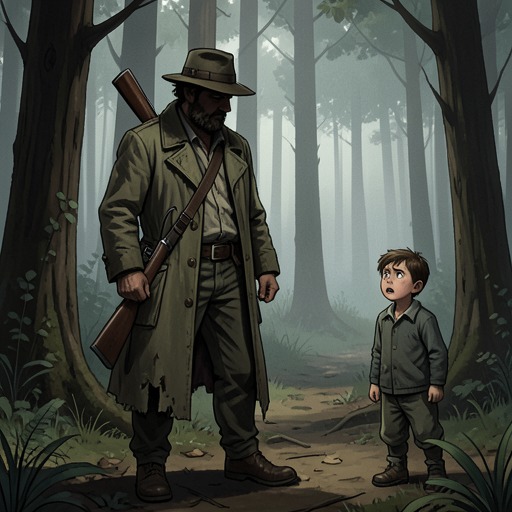
The act takes place against a rural landscape already shaped by competing armed powers. In the villages where The boy has wandered, his dark features and unfamiliar speech mark him as an outsider, while the German occupation forces make sheltering people identified as Jews or Roma perilous. The villagers must surrender much of their meager harvest both to regular troops and to Partisans; refusal can bring punitive raids that leave settlements in ruins. These conditions establish a world in which survival is governed less by a single law than by whoever can enforce a demand.
Partisans themselves are divided. White partisans want to fight both the Germans and the Russians, while Red partisans support the Red Army; their rival claims over property and land reform draw villages into their conflict. German soldiers also search the village, question peasants about partisan visits, and shoot some of them as an example. The account does not establish that the people Mitka targets personally killed his friends. It does place his retaliation in communities already caught between armed factions and military coercion, making the distinction between individual responsibility and collective exposure central to the episode’s violence.
Secret Departure and Preparation
Several days after the regiment begins returning to ordinary routines, Mitka wakes The boy before dawn and tells him only to dress. The boy helps bind Mitka’s feet and pull on his boots, then watches him conceal his purpose: Mitka removes his rifle from its brown case, leaves the empty case locked behind the bed as if the weapon were still there, and takes the telescope, tripod, cartridges, and field glasses. He gives the field glasses to The boy, bringing him into the plan without explaining it.
They slip out past the field kitchen when the guards have marched by and cross the adjoining field toward the woods. Mitka limps, repeatedly lifting the rifle when it slips from his shoulder; he is tired and in pain, but presses on. They bypass a sleeping village and continue into the forest. The boy recognizes that Mitka is acting alone, doing something prohibited that could cost him his military position and public esteem. Yet he feels proud to have been chosen to accompany a celebrated soldier on a secret mission. His inability to speak makes that pride inward: he can hear Mitka’s curses but cannot repeat them.
At the forest edge, Mitka selects a sturdy tree near the fields. He helps The boy climb, hands up the rifle and optical equipment, and follows him through the branches. Together they reach a high perch. Mitka bends, cuts, and ties branches to make a concealed seat, then sets the telescope on the rifle’s tripod. From there the village buildings come into view as the first smoke rises. A tall man steps out of a house; Mitka studies the scene through the telescope, keeping the binoculars beyond The boy’s reach.
The Shooting
A shot rings out, startling The boy and sending birds fluttering through the thicket. Mitka does not let him look through the binoculars. The boy imagines the man collapsing at his threshold, then pictures an old woman finding the body and raising the alarm. People emerge from houses; men gather around the dead man, while the village fills with movement. The account distinguishes The boy’s imagined view of events on the ground from what he can actually see at their distance, but the growing panic becomes unmistakable.
Mitka keeps the rifle to his shoulder and fires three times in quick succession. The boy shuts his eyes and pictures three more bodies falling. Families drag the dead toward houses and barns; children and older people move about in confusion, and then people retreat indoors. Shutters close. Mitka surveys the village again, waiting until no one appears to be outside. When a young man tries to move between the houses and reach a hut, Mitka shoots him as well; he topples into a row of wild rosebushes. The described sequence therefore presents an initial victim, three further shots, and a final killing as the villagers withdraw into their homes.
The boy asks Mitka by gesture to shoot a dog, but Mitka refuses, looking at him with disapproval. The refusal gives the episode a boundary within its violence: Mitka has chosen his human targets as part of a deliberate reprisal, not as permission for The boy to extend the killing to an animal. Afterward they descend. Mitka buries the spent cartridges under moss and removes traces of their presence before they return to camp unnoticed.
Private Justice and Aftermath
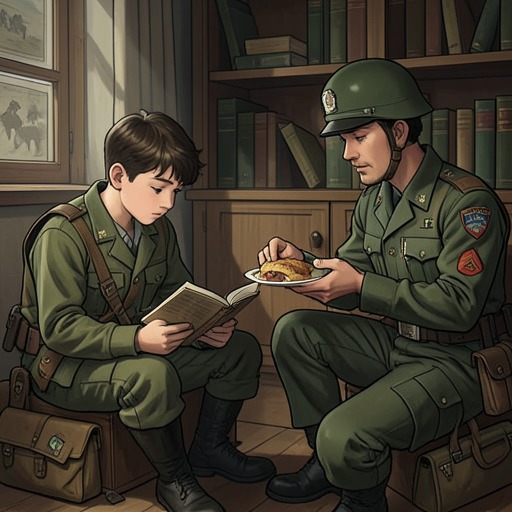
Back in camp, Mitka cleans the rifle and its sight and puts them away. That evening he is mild and cheerful, singing ballads about Odessa and gunners avenging mothers whose sons have died in the war. The soldiers join the chorus. From the village, funeral bells sound faintly and steadily. The contrast between the communal song and the bells makes the consequences audible without bringing the village’s dead into the camp: Mitka resumes the recognizable life of the regiment while the killings continue to reverberate elsewhere.
The boy interprets the mission as revenge for Mitka’s fallen friends, undertaken regardless of other people’s opinions and at the risk of his rank and his title as a Hero of the Soviet Union. In his understanding, military mastery would be hollow if Mitka could not act on the duty he felt toward the dead; public admiration could not settle the private judgment by which he measured himself. The episode thus sets official discipline and collective ideals beside an individual code that grants one person the authority to administer justice. The boy’s admiration is sharpened by this contrast: he sees Mitka’s solitary decision as a different kind of ascent, one reached with the help of at most a single companion rather than through the march of the masses.
The return to camp does not end the boy’s separation from Mitka. As the war ends and the country is declared liberated from the Germans, regulations require that lost children be sent to special centers while their families are sought. The boy struggles to leave Mitka, Gavrila, and his other friends; Gavrila promises to care for him if no relatives claim him within three months and to send him to school, where he can learn to speak again. In that larger transition, the secret expedition remains a moment of intense companionship—and an unsettling lesson in how a private war can survive inside an army organized around collective purpose.