Painted birds
The Painted BirdPainted birds are animals transformed into outcasts: their conspicuous colors make them unrecognizable to the flocks they seek to rejoin, and the flocks attack them. In The Painted Bird, this recurring image connects a remembered peasant pastime to Lekh’s increasingly bleak treatment of captured birds, making the creature’s failed return a central emblem of exclusion and violence.
The remembered custom and its meaning
The image draws on a village entertainment the narrator recalls from childhood. Villagers trapped birds, painted their feathers, and released them to rejoin their flocks. The other birds treated the brightly colored newcomers as aliens and attacked them, often killing them. The violence begins not with the painted bird’s nature but with an alteration imposed on its appearance, which makes its own kind perceive it as a threat.
The narrator connects this custom to the symbolic use of birds in Aristophanes’ play The Birds. That precedent suggested a way to address people and events without the restrictions of historical description. The novel therefore places its story in a timeless, fictive setting, where the painted bird can carry meaning beyond a single place or historical moment. Its fate gives concrete form to the experience of being made visibly different and then rejected by those among whom one seeks safety.
Lekh’s practice
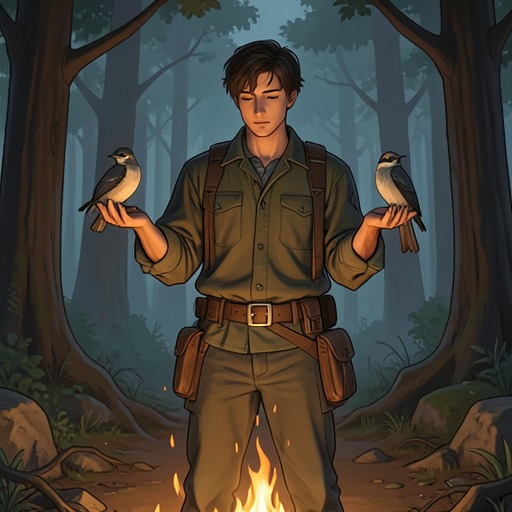
The novel returns to the image through Lekh, who traps birds and keeps them in cages. When days pass without Stupid Ludmila appearing in the forest, Lekh falls into a silent rage. After staring at the caged birds, he chooses the strongest one and prepares paints from varied ingredients. He covers its wings, head, and breast in bright, rainbow-like colors, turning a living bird into a conspicuous stranger among its own kind.
The release follows a repeated sequence. In the forest, Lekh has the narrator hold the painted bird lightly in his hand. Its calls attract a flock of the same species, and the captive strains toward them. When enough birds have gathered, Lekh signals for it to be released. The newcomer circles among the flock, but the others do not accept it; they drive it away and attack. The sequence makes the hope of return visible before it is extinguished: the bird reaches its own kind, yet its altered appearance bars it from belonging.
Escalation and consequence
As Stupid Ludmila continues not to return, Lekh paints more birds in increasingly gaudy colors and releases them to be killed by their kin. The pattern thus changes from a single cruel act into repetition. The birds’ deaths accompany Lekh’s worsening isolation: he grows thin, stays in the hut more often, drinks homemade vodka, and sings about Ludmila. The episode does not make the birds’ suffering a detached spectacle; it places their repeated rejection alongside the human grief that surrounds Lekh.
A raven makes the pattern especially stark. Lekh paints its wings red, breast green, and tail blue, then frees it when a flock gathers over the hut. The other ravens attack from all sides. The painted bird falls to the freshly plowed earth still alive but too weak to rise. Unlike the birds that are usually found dead, its inability to rejoin the flock is shown at the moment of collapse, leaving the outcome suspended in the scene while making the violence of exclusion unmistakable.
Narrative role
The painted birds join two levels of the novel: a childhood memory of village custom and the later forest episodes involving Lekh. On both levels, the essential pattern is the same: capture, imposed color, release, attempted reunion, rejection. The carefully staged passage from the bird’s call to the flock’s arrival and its subsequent expulsion makes belonging briefly seem possible before the attack reverses that promise.
The image’s force lies in the contrast between the birds’ ordinary need to return to their fellows and the danger created by their conspicuous difference. Their fate resonates with the novel’s wider concern with outsiders, while remaining grounded in the specific actions of capture, painting, and release. The bird does not choose its new appearance, and its attempt to return is not enough to overcome the flock’s response; the episode gives exclusion a repeated, physical form without reducing it to an abstract idea.