Swallows
The Painted BirdSwallows carry the changing seasons through the narrator’s account of Lekh’s bird lore: they announce spring and joy, then vanish into a folk explanation of winter beneath the ice. Their migration also marks a boundary between the forest’s lively bird season and the desolation that follows.
Seasonal Lore
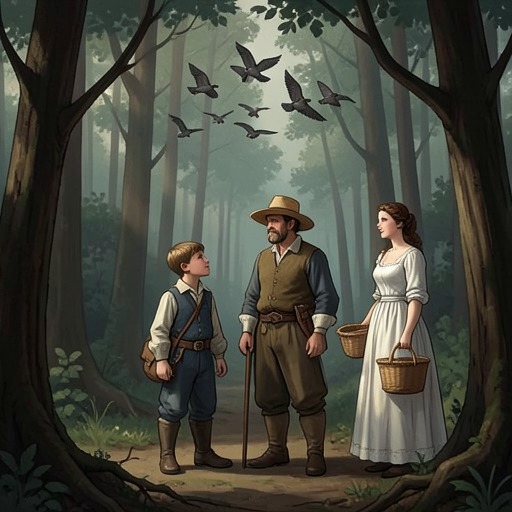
The swallows are described as the favorite birds of the Virgin Mary and as harbingers of spring and joy. In autumn, according to Lekh, they fly far from human life and settle, tired and sleepy, on reeds in distant marshes. A reed eventually breaks beneath their weight, plunging them into the water, where they remain through the winter in an icy refuge. The story gives migration a fantastical destination: disappearance from view becomes not merely departure but an imagined passage into another seasonal world.
Birds in the Narrator’s World
Lekh teaches the narrator to watch birds closely and interpret their behavior, while their shared routines make birds concrete, vulnerable presences as well as objects of lore. At dawn they stalk toward nests; later they remove terrified, struggling birds from traps and place them in a bag. The evidence does not identify the trapped birds as swallows, but this practice establishes the harsh human activity surrounding the narrator’s observations of bird life.
Departure and Significance
Weeks later, the storks and swallows have flown away. The forest is becoming deserted, while the birds remaining in cages sit puffed up, their wings gray and still. The swallows’ departure thus belongs to a broader seasonal change: the movement that once promised spring gives way to an emptied landscape and the stagnation of captivity. Their remembered winter refuge stands in quiet contrast to the birds that cannot leave.