The Narrator and the Silent One
The Painted BirdThe Narrator and the Silent One begin as wary, isolated boys at the same orphanage and become companions through gestures, shared risks, and mutual defense. Their connection offers The Narrator protection and recognition, but also draws him into the Silent One’s campaign of revenge. The bond culminates in a market-day train disaster and the discovery that the man they had targeted survived; their parting comes when The Narrator leaves the orphanage with his birth parents, while the Silent One remains behind, unwilling to greet them.
Silence and Initial Distrust
The Silent One had not been heard speaking since arriving at the orphanage. The other boys knew he could speak, but he had decided during the war that there was no point in doing so. Their attempts to make him talk included a beating, which produced no response. His silence was chosen, not a physical inability to speak—a distinction that complicates his growing closeness with The Narrator, who could not speak.
At first the boys avoided one another. The Narrator felt that the Silent One’s chosen silence might make other boys suspect that he, too, was merely withholding speech. Friendship between them, he feared, could strengthen that suspicion. Their shared condition was therefore not immediately a source of solidarity: the Silent One’s refusal was voluntary, while The Narrator’s inability to speak was not, and that difference made intimacy feel exposing.
Their relationship shifted when the Silent One intervened in a corridor, knocking down a boy who was beating The Narrator. The next day, The Narrator stood on the Silent One’s side in a scuffle during recess. Protection was exchanged before it was explained. The boys then sat together at the back of the classroom, first communicating through written notes and eventually through signs. They fashioned a language of their own, one that let them act together without requiring either boy to account for his silence in speech.
Companionship, Risk, and Recognition
The Silent One accompanied The Narrator on trips to the railroad station, where they befriended departing Red Army soldiers. They also stole a drunken postman’s bicycle and rode through a city park that was still closed to the public because it had been sown with land mines. These excursions made their friendship an active partnership: each boy joined the other in leaving the routines and restrictions of the orphanage, even when their adventures exposed them to danger.
At night they slipped out of the dormitory and roamed through squares and courtyards. They frightened couples, threw stones through open windows, and attacked unsuspecting passersby. The Silent One was taller and stronger, and took the physical role in these assaults. The relation that began in mutual defense thus also became a means of shared aggression, with the Silent One’s strength enabling the pair’s nighttime attacks.
The railroad embankment became another setting for their companionship. After The Narrator survived lying in the path of an approaching train, the Silent One was the first to approach him. Affecting casualness, he brushed gravel and splinters from The Narrator’s clothes as The Narrator recovered from the ordeal. The watching boys admired the feat, and the two friends returned to the orphanage with a sense of pride in one another. The Narrator knew the performance would have to be repeated every few days to keep the other boys from doubting his courage. He pressed his Lenin Red Star Badge to his chest before returning to the embankment, making the stunt a recurring test of reputation as well as a shared experience.
They spent much time near the tracks, watching trains and sometimes jumping onto the steps of rear cars, then getting off when a train slowed at a crossing. These repeated excursions give their friendship a distinctive rhythm: silence does not keep them apart, but neither does it make their shared risks harmless. The Silent One’s presence offers companionship and practical protection, while their exploits repeatedly bring them close to danger.
Rescue and Revenge
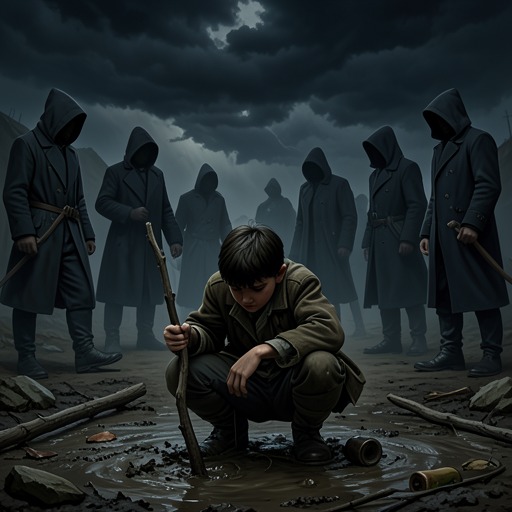
Their loyalty became more consequential after a farmer attacked The Narrator at the market, knocked out three of his teeth, and left him trapped in a sauerkraut barrel. The Silent One found him and tried to get him out. When the onlookers mocked him and village boys tried to interfere, he rolled the barrel toward a fountain and used a club to keep them back. He then supported The Narrator on the painful walk to the orphanage. After a doctor treated The Narrator, the Silent One waited outside and studied his injured face. His actions answered the earlier rescue in the corridor with sustained, physical care.
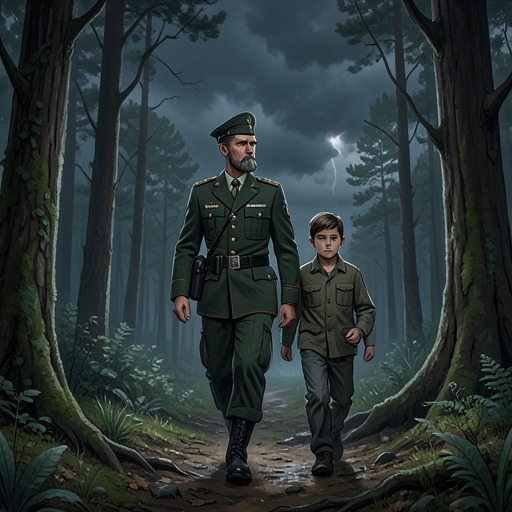
Two weeks later, the Silent One woke The Narrator before dawn and led him to a derelict hut near the railroad crossing. They climbed onto its roof and waited for the market train. The Silent One watched its approach with visible agitation, squeezing The Narrator’s arm as the locomotive veered and the carriages derailed. He then pulled The Narrator away from the scene and returned with him to the orphanage before the crowd arrived. Their companionship had now entered a different register: The Narrator was not merely beside the Silent One during a shared excursion, but present at an act whose consequences included casualties and a public search for saboteurs.
On the next market day, the Silent One hurried The Narrator through the crowd toward the stand of the farmer who had attacked him. The Silent One appeared pleased as they passed empty stalls marked with black crosses for their dead owners. But the farmer was still at his stand. Seeing him alive, The Narrator looked at the Silent One in anguish; the Silent One stared back in disbelief, then led him away. Once they reached the road, the Silent One collapsed and cried. His words were muffled against the ground, and this was the only time The Narrator heard his voice. The encounter revealed both the purpose and the failure of the revenge: the disaster had not killed the man they sought, and the Silent One’s first spoken words came not as an explanation but in an outburst of pain.
Separation at the Orphanage
When The Narrator’s parents came to take him away, the boys went to say goodbye to the Silent One. He regarded the parents suspiciously, shook his head, and refused to greet them. The Narrator left the orphanage with his father carrying his books and walked between his parents, feeling overwhelmed by their protection. The account does not describe a reconciliation or a later meeting between the boys. Their relationship ends at this threshold in an unresolved contrast: The Narrator is reclaimed by family, while the Silent One’s refusal to acknowledge the visitors keeps him apart from the new life opening beyond the orphanage.