The Red Army Order Against Contact with Hostile Local Residents
The Painted BirdThe Red Army Order Against Contact with Hostile Local Residents draws a boundary between the Red Army and people designated as hostile, forbidding soldiers to cross it through contact or actions that might worsen relations. Announced after the murder of several soldiers, the directive seeks to contain further conflict; Mitka’s subsequent decision to avenge his friends shows how a command intended to regulate conduct can collide with a soldier’s private sense of justice.
Issuance and Scope
The order appears in an evening report after the bodies of four soldiers are found. Vanka lies with congealed blood on his chest, Lonka has been struck with an ax, and the other two are so battered that their faces are barely recognizable. An ambulance takes the bodies away while Mitka angrily clutches the narrator’s arm. That evening, the men hear new orders: they are to have no contact with the hostile local population and to take no action that could further aggravate its relations with the Red Army.
The directive has two related but distinct limits. It bars contact, and it also bars conduct that could worsen relations. The second restriction makes the order more than a rule about where soldiers may go or whom they may approach: it places their behavior under an obligation to avoid intensifying the wider conflict. The episode gives no formal text, enforcement procedure, or definition of which locals count as hostile. Its force in the story comes instead from its announcement to the regiment and from the risks Mitka appears willing to accept afterward.
A Region Governed by Competing Coercions
The order enters a countryside already governed by overlapping demands and threats. Under the German occupation forces, harboring a child considered Jewish or Romani could expose a household or community to severe punishment. Peasants were also required to deliver much of their meager harvest to regular troops and Partisans; refusal could bring punitive raids that left villages burning. The Red Army’s injunction against contact with hostile residents thus belongs to a broader wartime landscape in which civilians and soldiers alike face rules enforced through force, while different armed powers impose incompatible obligations.
The partisan factions add another layer of danger. The blacksmith explains that the White partisans want to fight both the Germans and the Russians, while the Red partisans want to support the Red Army. The factions also disagree over property and land reform, demand increasing assistance from villages, and punish communities suspected of helping their opponents. German troops search the same village, interrogate peasants about partisan visits, and shoot one or two as an example. During such searches, the blacksmith hides the boy in a potato cellar and tries to placate German commanders by promising regular food deliveries and extra grain. In this setting, contact is never merely personal: it can be read as assistance, disloyalty, or grounds for retaliation.
Mitka’s Private Revenge
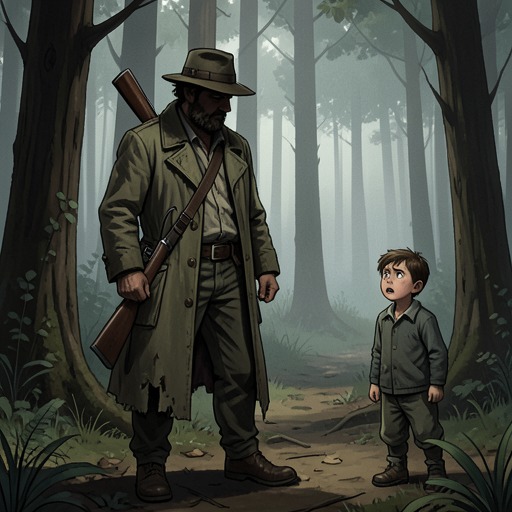
The order’s tension with individual action becomes visible in the days after the report. Mitka whispers and mutters to himself, beats his head with his fist, and falls into silence; soon someone else replaces him in his training duties. Several days later, he takes the unnamed boy narrator with him toward the woods. The child does not know their destination, but understands that Mitka is doing something on his own, against what he is supposed to do, and that it may cost him his position in the Army and public esteem.
After Mitka has carried out his revenge, the narrator interprets the act as a choice of personal justice over the judgment of others. Mitka, a Hero of the Soviet Union, has avenged his dead friends while risking his standing in the regiment and the honor attached to his title. The order’s restrictions and Mitka’s retaliation therefore stand in direct tension: the regiment has been told to avoid contact and actions that worsen relations, while Mitka acts on an obligation to his fallen comrades that he regards as his own to fulfill. The narrator’s account does not present the revenge as an authorized military response; it emphasizes the danger to Mitka’s position and reputation.
Discipline, Justice, and the End of War
The narrator admires Mitka’s willingness to answer for his friends’ deaths according to his own conscience. He understands the act through the idea that each person carries a private war and a justice that person alone must administer. This is the child’s interpretation of Mitka’s conduct, not a claim that the regiment’s order has ceased to matter. The episode leaves the two standards side by side: collective discipline seeks to restrain actions that could deepen hostility, while Mitka’s private code demands a response to a wrong he believes he must not leave unanswered.
The military boundary is eventually overtaken by demobilization and postwar administration. When the war is ending and the country has been liberated from the Germans, Gavrila tells the boy that regulations require lost children to be sent to special centers until it can be determined whether their parents are alive. The boy must leave Gavrila, Mitka, and his other friends in the regiment. This later procedure is not the same as the wartime order, but its contrast clarifies the changing reach of authority: military commands regulate contact during an unresolved conflict, while official rules then direct the placement of children after the fighting. Together, these episodes show how rules shape precarious lives without resolving the moral claims or attachments that persist beneath them.