
Landor and Hitchcock’s Fraying Alliance
The Pale Blue EyeA practical investigative partnership between Landor and Hitchcock deteriorates over evidence, trust, and Landor’s concealed allegiance.
increasing Bearing strength in each event
 decreasing
Bearing strength in each eventdecreasingThe Agreement
The Agreement
A civilian investigator
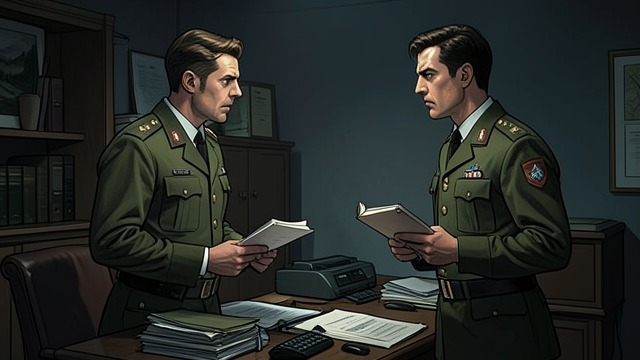
Hitchcock and Thayer recruit Landor for a sensitive inquiry, and Hitchcock becomes his principal military counterpart. Their partnership begins with explicit demands for discretion and regular reports.
Different obligations
Landor values independent observation, while Hitchcock must protect cadets and the Academy. Their competing responsibilities are present from the start, even when their cooperation appears easy.
Evidence Against Suicide
Evidence Against Suicide
A working theory
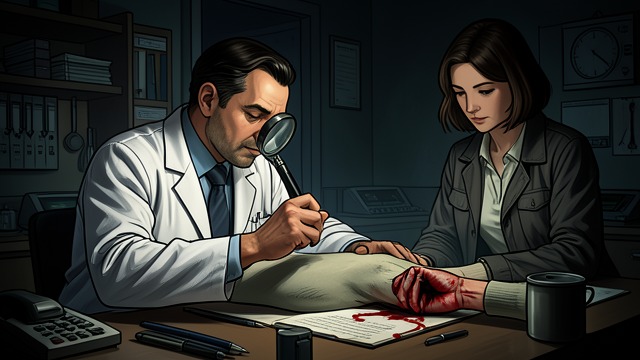
Landor persuades Hitchcock that Leroy Fry may have been killed before his body was mutilated. The doctor’s observations and the witness account make the original official assumption untenable.
Caution and urgency
Hitchcock accepts the need to investigate but resists Landor’s habit of withholding conclusions. Their cooperation advances the case while exposing an early difference in investigative temperament.
Ritual or Rumor
Ritual or Rumor
Landor’s theory
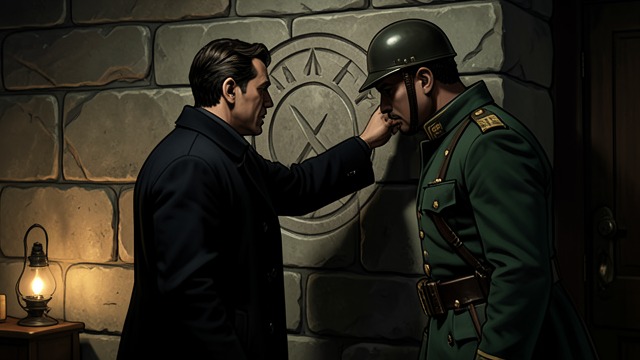
Landor reports the magic circle and the possible occult meaning of the missing heart. Hitchcock demands clearer evidence and resists treating a symbolic interpretation as a factual conclusion.
Trust under strain
Their disagreement is more than a debate over Satanism: Hitchcock needs findings he can report, while Landor prefers provisional inference. The tension deepens as the case grows more politically dangerous.
The Charge of Bias
The Charge of Bias
Poe becomes suspect
After Ballinger’s death, Hitchcock points to Poe’s threats against the two dead cadets and questions Landor’s judgment. Landor resists, but he cannot explain Poe’s movements without disclosing their secret work.
Professional trust breaks
Hitchcock interprets Landor’s evasions as evidence that personal attachment has impaired the inquiry. Landor’s concealment protects Poe temporarily while weakening the partnership.
The Final Report
The Final Report
A necessary account
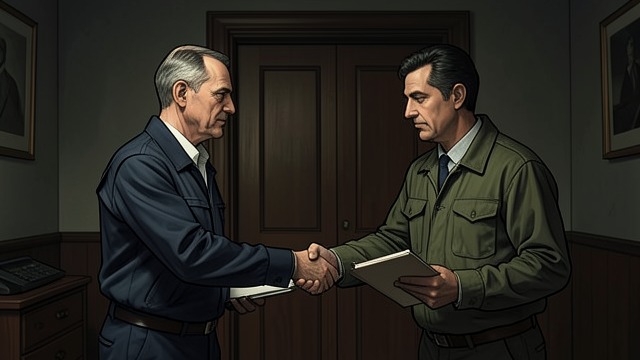
After the Icehouse disaster, Hitchcock accepts Landor’s report and thanks him for saving Poe. Their exchange briefly softens the conflict, though neither can undo the accusations made earlier.
A restrained parting
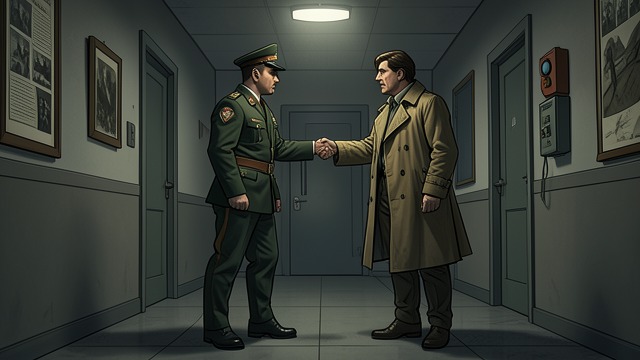
The two men recognize the limits of their relationship and part with a handshake. Cooperation has achieved its institutional purpose, but personal reconciliation remains beyond them.
October 26–27, 1830
October 27–29, 1830
Early November 1830
November 23, 1830
December 14, 1830
