Augustus Landor
The Pale Blue EyeAugustus Landor is a private citizen recruited to investigate the desecration of Cadet Leroy Fry’s body at West Point, but his account ultimately discloses that he himself killed Fry and used the investigation to conceal a revenge plot. The character’s decisive significance lies in this reversal: the careful investigator appointed to protect the Academy’s order has secretly exploited its search for a culprit to hide his own crime.
Identity and Narrative Position
Landor presents himself as a man of professional experience whose industry and tact make him suitable for inquiries the Academy considers sensitive. The account identifies him as the narrator of his own involvement in the West Point affair. Its framing is self-conscious: before recounting the investigation, he describes becoming his own reader for the final time, then begins again. This retrospective stance allows the account to show both what Landor perceived at the time and how those apparently ordinary moments acquire a different meaning once his guilt is known.
His opening scene establishes the gap between his accustomed habits and the state of mind that made him useful to the investigation. On the morning of October 26, 1830, he was walking in the hills near Buttermilk Falls, later than usual, and heading toward the granite promontory called Shadrach’s Heel. A French horn sounding from far away caught his attention. Landor remarks that such a question about how sound travels would not ordinarily have occupied him; distracted, he turned back before reaching the summit and was slow to notice wheel traces. The small interruption matters because it places him near the evidence while presenting his attention as unusually unsettled.
Appointment and the Case at West Point
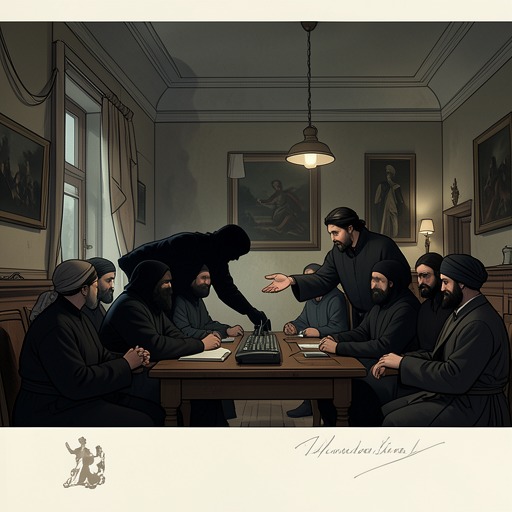
The Academy’s representatives explain that they have reviewed Landor’s career to decide whether he is suited to their purposes. They seek a private citizen to conduct sensitive inquiries on the Academy’s behalf. The need becomes stark when the condition of Fry’s remains is stated plainly: his heart has been carved from his body after his death. Sylvanus Thayer gives Landor the charge of finding the person responsible and helping ensure that the act is not repeated. The stated aim is protection of the Academy as well as identification of an offender; Thayer warns that, if the culprit is one of their own, that person must be removed from West Point.
Landor’s position is therefore an unusual one: he is an outsider invited into an institution’s internal crisis, yet his later account shows that he had already been present at the crime. He accepts the investigative role and becomes part of the official effort to explain the missing heart. The assignment offers him access and legitimacy that he could not have had as an ordinary suspect. In retrospect, the commission is not simply an opportunity to solve the case; it gives his private actions a public explanation that directs attention elsewhere.
Investigative Methods and Alliances
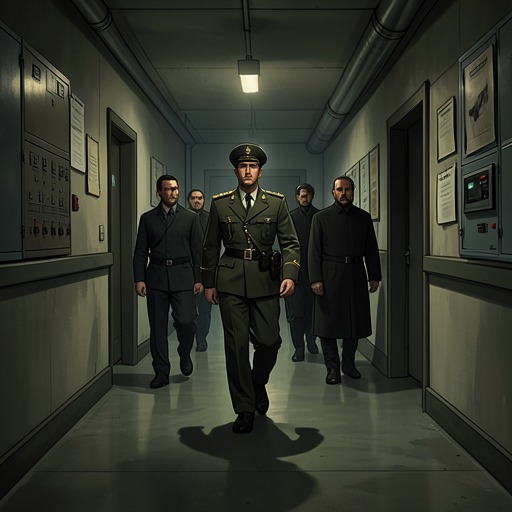
Landor works with Captain Hitchcock, and the two discuss possible perpetrators among cadets, soldiers, and faculty. Their planning has not accounted for the possibility that the suspect could be a faculty member’s son. When Artemus Marquis comes under suspicion, Hitchcock’s personal familiarity with him makes the possibility especially difficult to accept. The moment exposes a conflict between an investigation’s categories and the loyalties that complicate them: Landor and Hitchcock had tried to anticipate the case, but their preparations had left this family connection unconsidered.
Landor also presses Hitchcock to test his theory at the icehouse. He insists that the holes and letters there can be examined and that Hitchcock should verify whether they form the pattern Landor has described. His appeal combines a demand for evidence with a threat to end the working arrangement if Hitchcock continues to dismiss his interpretation. Landor then softens his manner and argues that whoever removed Fry’s heart must have been acting with intense purpose. His conduct shows him using both material clues and interpersonal pressure to shape the official inquiry, while the truth about his own actions remains concealed.
His account also reveals a violent intention beyond the Fry investigation. After Edgar Allan Poe discusses his inability to pay Professor Pawpaw, Landor privately considers Poe’s death as a form of compensation for the professor. The episode presents Landor as capable of treating another person’s life as an instrument in a private calculation, even while he occupies the role of investigator. The evidence establishes the intention, not its execution.
The Crimes Behind the Investigation
Poe eventually reconstructs the sequence that Landor had withheld. After completing his own deadly errand against Fry, Landor returned to his cottage at Buttermilk Falls believing he had escaped notice. He was summoned back to West Point the next day, where he learned that Fry’s body had been mutilated. The added crime, Poe observes, gave Landor cover for his own act and led the Academy to enlist him in finding the person responsible. The irony is structural as well as personal: Landor’s appointment appears to confirm his authority, while the circumstances that made the authorities seek his help also help disguise his guilt.
Under questioning, Landor identifies the note found in Fry’s hand as one he intended Fry to believe came from Patsy. He acknowledges that he was careless not to retrieve it before leaving in a hurry. He also admits responsibility for the sheep and cows whose hearts were removed. He explains that he planned to take the hearts of two other men in order to make those crimes look like the work of satanists. The confession reveals that the animal incidents were not unrelated curiosities: they were part of a deliberate effort to create a misleading pattern around the human crimes.
Mattie, Revenge, and Exposure
The motive Landor finally gives is revenge for Mattie. When Poe points out that Landor could have gone to the West Point authorities after his daughter was injured and sought confessions, Landor rejects that course: he did not want confessions; he wanted the men dead. He says that law did not save Mattie or bring her back and no longer means anything to him. His words distinguish his objective from an effort to establish guilt through official process. He has chosen punishment by private violence, not an investigation that might end in testimony or institutional judgment.
The contrast between his public charge and private purpose defines his role throughout the case. Thayer asks him to identify an offender and prevent another such crime; Landor instead makes the investigation serve his desire for vengeance. His own account shows how he moved between those positions, using the authority of the commission to conceal the acts that made him an offender himself.
After his clothes and belongings are brought back to the cottage in Buttermilk Falls, Landor spends several days alone. On December 19, Poe arrives at his threshold and tells him he knows about Mattie. The encounter turns the investigation back upon its investigator: Poe, formerly Landor’s young informant, now presses the case against him and reconstructs the sequence Landor tried to hide. Landor’s admissions expose the gap between official justice and his chosen revenge, while the passage reaches Poe’s final remaining question without supplying an answer. The unresolved exchange leaves Landor not as the case’s successful solver, but as the man whose concealed motive has become its central truth.