Leroy Fry
The Pale Blue EyeLeroy Fry is a second-year cadet from Kentucky whose death initiates the investigation into a killing and the removal of a heart at West Point. First announced as a suicide, his death soon resists that explanation: the condition and position of his body raise questions, and the discovery that his heart has been removed turns a cadet’s death into a case of deliberate desecration. Fry remains absent as a living presence, reconstructed instead through evidence, other cadets’ memories, and the diary he left behind.
Identity and Introduction
Fry is introduced by Sylvanus Thayer as a cadet from Kentucky, and Ethan Allen Hitchcock identifies him as Leroy Fry. The spare introduction gives his place within the Academy but little personal history. That imbalance shapes what follows: the investigation must make a person legible from fragments, while the available fragments do not immediately explain either his death or its treatment afterward.
Hitchcock initially reports that Fry hanged himself the previous night. Augustus Landor receives the news with sympathy, but the apparent simplicity of the announcement does not last. When the removal of Fry’s body is discussed, Thayer states plainly that Fry’s heart was carved from it. The sudden shift—from a presumed suicide to an act of desecration—makes Fry’s remains the first and most consequential evidence in the case.
Death and the Investigation
Landor’s account introduces Fry’s body in deliberate stages rather than as a settled explanation. Fry lies on a feather mattress, with his eyes partly open; the narration’s restraint emphasizes the gap between seeing a body and knowing what happened to the person. The image of a cadet apparently at rest conflicts with the formal report that he died by hanging, and the missing heart adds a second mystery that cannot be contained within that first conclusion.
In a later review of what is known, Landor stresses that Fry had not told anyone he wished to die and left no note. The examination, as Landor recounts it, records signs that complicate the account of a willing suicide, including a contusion and evidence associated with the rope. Landor asks whether those circumstances describe a man who went willingly to his death. The question does not itself establish an alternative cause, but it marks a decisive change in the investigation: Fry’s death can no longer be treated as self-explanatory.
The investigation thus turns on the difference between the initial label and the details that resist it. A report of suicide offers a conclusion before it offers a convincing account. The body, the missing heart, and the absence of a note instead leave open questions about the death and about whoever removed Fry’s body and heart. For the reader, Fry becomes the center of a mystery precisely because the evidence establishes grave violence without immediately identifying its cause or author.
Relationships and Conflict
Fry’s clearest reported personal conflict is with Edgar Allan Poe. Ethan Allen Hitchcock tells Landor that during the previous summer’s encampment Fry, acting with two fellow upperclassmen, made sport of Poe. Poe retaliated by throwing his musket toward Fry, bayonet forward, narrowly avoiding a serious injury to Fry’s leg. More than one listener reportedly heard Poe declare that he would not allow anyone to treat him in that way. Hitchcock’s disclosure matters not as proof of guilt, but because it supplies a history of hostility that Poe had not volunteered to Landor.
The account gives Fry a place in the Academy’s social hierarchy as well as in its case file. He is described as an upperclassman who joined others in targeting a younger cadet, while the remembered confrontation exposes the intensity of Poe’s response. The episode does not resolve the murder; it complicates the investigator’s picture of Poe and shows how a concealed past quarrel can redirect suspicion. Fry’s role in that conflict is known only through Hitchcock’s report, so the reader encounters him through another person’s account rather than through his own explanation.
The Diary and Fry’s Narrative Presence
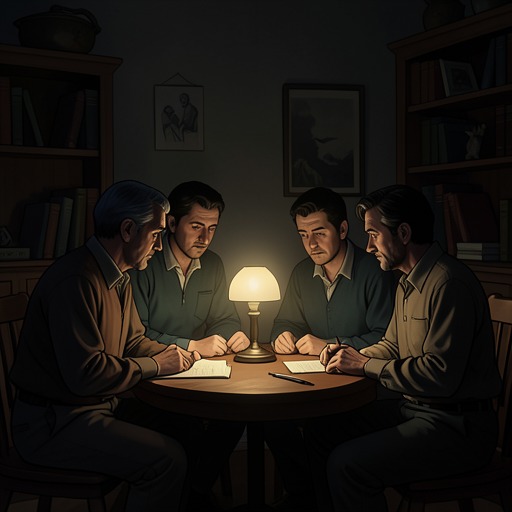
Fry’s diary supplies another form of evidence, but not the clear answer Landor and Hitchcock hope to find. Landor works through its pages late at night, transcribing and unwinding their difficult writing. Hitchcock presses him for names or suspicious details and expects each installment to reveal a new lead. Instead, Landor finds recurring complaints, trivia, and sexual frustration. The diary records the texture of a cadet’s private thoughts, yet its accumulation of ordinary concerns does not readily disclose who killed Fry or why his heart was taken.
This contrast gives Fry a presence that is both intimate and incomplete. The diary lets the investigation approach his private life, but the writing does not become a transparent confession or a key that simply unlocks the crime. Landor’s labor over the pages and Hitchcock’s eagerness to receive them show how much the investigators need the dead cadet to speak through what he left behind. Their disappointment underscores the limits of that method: a document can preserve a person’s words without explaining the event that ended his life.
Fry therefore occupies two connected roles in the narrative: he is a young cadet whose relationships and private record can be pieced together, and the victim whose death exposes the inadequacy of easy explanations. The difference between the suicide report, the troubling evidence, and the diary’s everyday contents keeps his case open in more than one sense. His absence does not make him incidental; it is the condition through which the investigation, and its uncertainties, take shape.