Leroy Fry and Loughborough's Fading Friendship
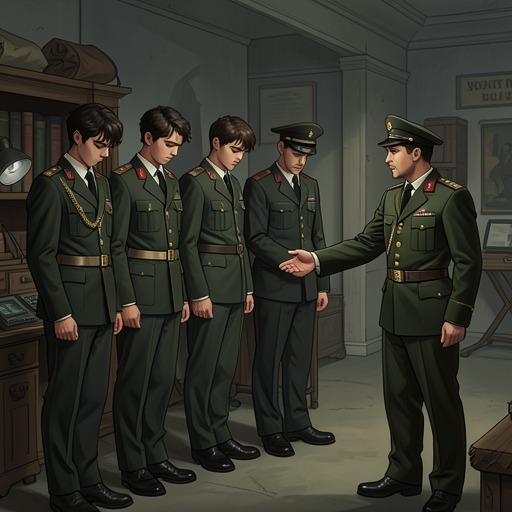
The Pale Blue EyeLeroy Fry and Loughborough’s Fading Friendship is a relationship marked by a sharp change from youthful companionship to guarded distance. Once roommates and “best pals of a sort,” they shared ordinary cadet routines until Fry’s unexplained absence and subsequent withdrawal unsettled their bond. Loughborough’s later testimony offers clues to Fry’s state of mind, but no explanation of what happened to him or definitive account of the “bad bunch” Fry said he had encountered.
Early Friendship and Shared Life
Fry and Loughborough had been roommates when they were plebes. When Augustus Landor later asked whether the two had fallen out, Loughborough resisted that description: he preferred to call it a matter of “diverging paths.” His qualification suggests a relationship that had not ended in a single quarrel so much as loosened over time.
Their closeness had included familiar, recurring activities. Loughborough remembered Fry as someone who could be shy when first met but became talkative once a person knew him. The two had spent time loitering in their room, going for swims, and attending cadet hops. Loughborough’s description of them as “best pals of a sort” preserves the affection in their earlier connection while also qualifying it: the friendship mattered, but was not presented as perfectly intimate or without limits.
Fry’s Absence and Unexplained Distress
The incident Loughborough recalled had taken place about two years before Landor’s interview. He anchored the date through a personal detail: his sister’s letter announcing her marriage to Gabriel Guild had arrived a week before the wedding, in the first week of June. The letter’s timing helped locate the episode, although Loughborough’s lengthy explanation also delayed his account of what happened that evening.
Fry left, and Loughborough said he had been told to cover for him as best he could. He did not know where Fry had gone. Fry was later punished for missing the reveille roll call, but never told Loughborough the purpose of the outing. The episode therefore establishes that Fry entrusted his roommate with concealing his absence, while leaving the destination and whatever business prompted the trip unknown.
Loughborough recalled a change in Fry afterward. Fry seemed troubled, no longer wanted to talk, and had difficulty looking at him. Loughborough repeatedly asked whether he had caused offense; Fry said that he had not. When Loughborough asked who was troubling him, Fry still refused to say. The silence altered the terms of their friendship: Loughborough could see that something was wrong, but Fry would not let him share its cause.
Withdrawal and the “Bad Bunch”
At some point in July, Fry told Loughborough that he had “fallen in with a bad bunch.” He did not identify the people involved. Loughborough assumed they were cadets because that was whom Fry was likely to encounter there, while also allowing that Fry might have become involved with bombardiers. These were conjectures, not information Fry had disclosed, and the account leaves the phrase deliberately unresolved.
Fry’s withdrawal became visible in the routines the two had once shared: he no longer wanted to linger in their room or go swimming, and he stayed away from cadet hops. He later joined the Prayer Squad for a time. The sequence describes a friend growing harder to reach without showing exactly why. Loughborough’s testimony connects the change to Fry’s distress and secretive remark, but it cannot establish whether the “bad bunch” caused that distress or what Fry’s involvement consisted of.
Guilt, Rumor, and the Limits of the Record
When Loughborough returned to Landor’s interview, he framed his concern as an ethical dilemma. He wondered whether a person should feel accountable if a troubled friend did something wrong, and whether being a better friend might have changed what followed. Hitchcock answered that, in the hypothetical situation, the person could have a clear conscience because he had done his best. Loughborough thanked him. The exchange gives the fading friendship a painful afterlife: even without knowing what Fry had concealed, Loughborough wondered whether his failure to reach him had mattered.
A later gathering introduced a separate, unverified rumor about Fry’s final evening. During teasing about the supposed assignation Fry had been expected to keep, Randolph Ballinger asked Artemus Marquis whether his sister had dazzled Fry. Artemus stopped Landor from demanding an explanation, then invited Ballinger to account for his own closeness to Fry. Ballinger replied that he did not believe he had been as close to Fry as Artemus. The exchange exposed tensions around Fry’s intimacy and the rumored meeting, but it did not confirm that Fry and Artemus’s sister had an assignation or explain Fry’s absence to Loughborough.
Together, the interview and the later rumor preserve different, incomplete views of Fry: the roommate who stopped confiding in Loughborough, and the subject of other cadets’ speculation after his death. Loughborough’s account establishes their former companionship, Fry’s retreat, and the burden of unanswered concern. It does not resolve what Fry encountered, what he did during the unexplained outing, or whether the friendship’s decline could have been prevented.