Sacrifice as a promised cure
The Pale Blue EyeSacrifice as a promised cure is the logic by which the Marquis family turns Lea Marquis’s illness into a ritual obligation. After medical regimens and faith healers fail, Henri le Clerc offers a different hope: compliance with his demands will ease Lea’s spells and ultimately free her from what he calls both a curse and a gift. The promise has force because improvement appears to follow, but its promised final cure requires an escalation from animal offerings toward human sacrifice.
Illness, Secrecy, and the Search for Relief
The family’s bargain begins with Lea’s childhood illness, described by her father, Dr. Daniel Marquis, as a terror that struck without warning, stopped her brain, and shook her. He tried every medical regimen he could think of, then brought in faith healers; neither approach stopped the attacks. As the illness took over family life, the Marquis family left the comforts of New York City for the isolation of West Point, withdrew from friendships, and kept largely to themselves. Dr. Daniel Marquis abandoned his ambitions, his wife grew bitter and eccentric, and the children developed what the account calls bonds of unnatural closeness. The disease did not remain Lea’s private affliction: it reshaped the household around fear and the search for relief.
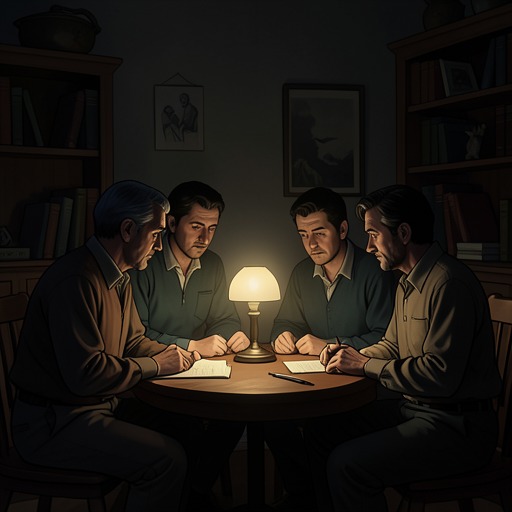
Secrecy was part of that search. Dr. Daniel Marquis explains that the family did not dare speak openly because they feared being shunned. When Lea was twelve, her spells grew much worse, and on more than one occasion her family despaired of her life. The father’s confession to Augustus Landor comes only after the investigator stays with him through the night, offering brandy as his words falter. The delayed telling makes the family’s silence more than a background detail: it allowed the occult account of Lea’s illness to develop within the household without outside scrutiny.
Henri le Clerc’s Promise and the Household’s Participation
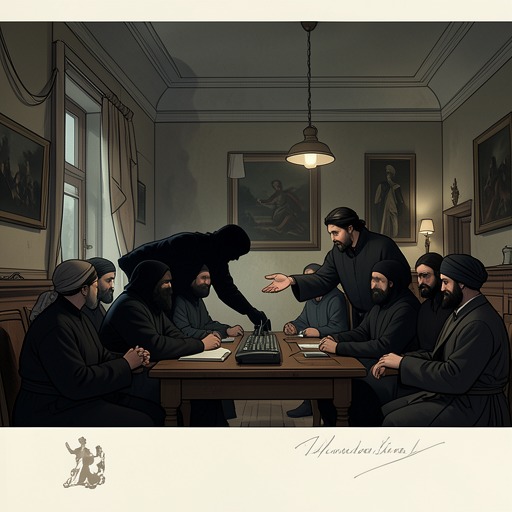
Dr. Daniel Marquis presents Henri le Clerc not as an evil sorcerer but as a healer misunderstood by others. In Landor’s reconstruction, Lea imagined or encountered le Clerc as a guide; she then instructed her brother, Artemus Marquis, and eventually her mother joined the lessons. Landor infers the mother’s participation from the way sound carries through the closely built house. Dr. Daniel Marquis’s reaction confirms the guess, though he had not volunteered that detail. The cure thus becomes a family practice, not simply a private exchange between Lea and le Clerc.
Landor identifies sacrifice as the curriculum’s central subject. The offerings begin with animals, and he argues that the family continued until animals would no longer do. This progression gives the promise a terrible structure: each act of compliance prepares the way for a more consequential one. The change in scale also exposes the conflict between Dr. Daniel Marquis’s professional identity and his conduct. Landor invokes the medical authorities Galen and Hippocrates to confront him with the prospect of sacrificing young men, while the doctor answers that his own art had proved useless and asks how he could object to Lea seeking a cure elsewhere.
Improvement, Freedom, and the Human Offering
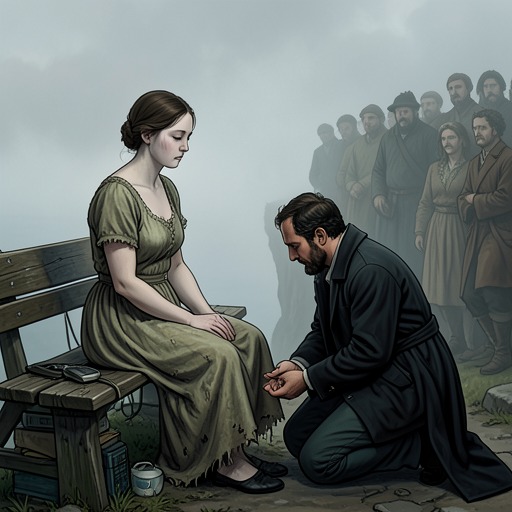
For Dr. Daniel Marquis, the bargain was not empty from the outset. He insists that Lea improved after doing what le Clerc asked: the spells came less often and were less severe. His repeated insistence that she got better supplies the promise with apparent evidence, and helps explain why the family continued to believe in the method. But this improvement is not the same as the freedom Lea was promised. Her father says she wanted no part of a human heart; le Clerc told her it was the only way to be free once and for all.
The cure is therefore defined not merely as fewer attacks, but as the hope of becoming whole and living as other women do. Dr. Daniel Marquis says Lea wanted to love. The distinction between partial improvement and final release keeps the bargain in motion: relief validates le Clerc’s authority, while the claim that a further offering is necessary prevents relief from being enough. Dr. Daniel Marquis says he told Lea and Artemus not to tell him what they were doing, describing this chosen ignorance as the only way he could keep silent. His account makes silence part of the sacrifice’s enabling conditions, even as he presents it as an attempt to live with his daughter’s pursuit of a cure.
The Ritual as the Promise’s Climax
The ceremony involving Edgar Allan Poe gives the bargain a visible, bodily form. Lea tells Poe that what is happening must happen, while he watches her cup the cruet containing his blood. She carries it to the rock altar, raises it above her head, and pours the blood over herself. Then she prays, “Great Father. Release me from thy gift. Release me, O Most Merciful Father.” The appeal joins the language of illness and deliverance to the ritual’s physical act: blood is not incidental to the promise but its offering and medium.
Afterward, Lea reaches into a niche in the stone wall and removes a small wooden box, which the narrator thinks may have been a cigar box belonging to her father. She opens it and shows its contents to the others. The account has already established that le Clerc demanded a human heart as the final means of release, and Dr. Daniel Marquis described such a heart as scarcely larger than a fist. The sequence links the small container and its displayed contents to the promised offering without making the ritual’s outcome a cure. Instead, the ceremony shows how the hope of freedom has carried Lea from the family’s original search for help into an ordeal in which human blood and a heart stand at the threshold of release.