The Heart as Symbol
The Pale Blue EyeThe Heart as Symbol The heart in the novel is never only an organ. After Leroy Fry’s heart is carved from his body, its absence becomes evidence of a desecration, a threat to West Point, and a sign that Edgar Allan Poe reads through poetry and religious language. The investigation turns on the tension between the material heart and the meanings placed upon it: a fistful of muscle can be removed, but the symbols attached to it reach into private grief, institutional identity, and belief.
The Missing Organ and the Academy
When Sylvanus Thayer tells Augustus Landor that Leroy Fry’s heart was carved out, the blunt fact gives physical form to an act he struggles to describe. Thayer calls the treatment of the defenseless body an offense against nature. As he searches for words, he inadvertently calls it a strike at the heart of the institution before correcting himself: the heart at stake, in that moment, is West Point’s integrity and security, not merely Fry’s. His metaphor turns the mutilation of one cadet into an assault on the Academy’s collective body.
Thayer’s response makes that institutional meaning practical. He says that if the perpetrator belongs to the Academy, the offender must be sent away, whether in leg irons or free, and charges Landor with discovering who did it and helping ensure it never happens again. The heart’s removal therefore produces both an investigation and a demand for institutional repair. Thayer’s language does not make the bodily crime figurative; rather, the literal wound gives force to the figure, while the figure enlarges the stakes beyond the victim’s corpse.
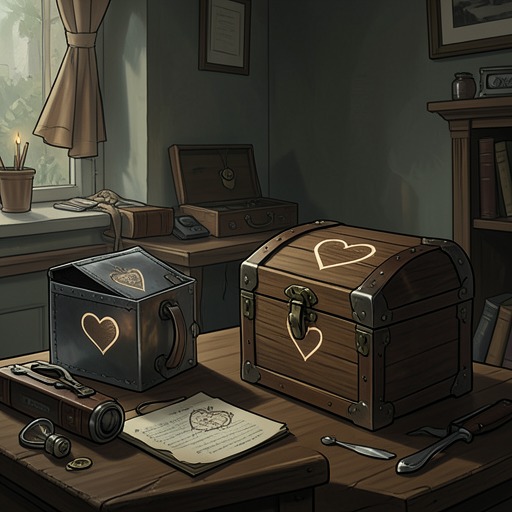
The distinction between body and meaning also shapes Landor’s handling of evidence. As he breaks open the fingers of Fry’s hand, a tiny, yellow, sodden, torn scrap of paper is revealed there. Landor reads it with Hitchcock and Marquis, their lips silently sounding the words like students reading a line of Latin. The scene places a physical remnant of the crime beside a written fragment that requires interpretation. The heart is absent, but the hand still holds a trace that may carry meaning; bodily evidence and textual evidence alike must be opened and read.
Poe’s Poetics of the Heart
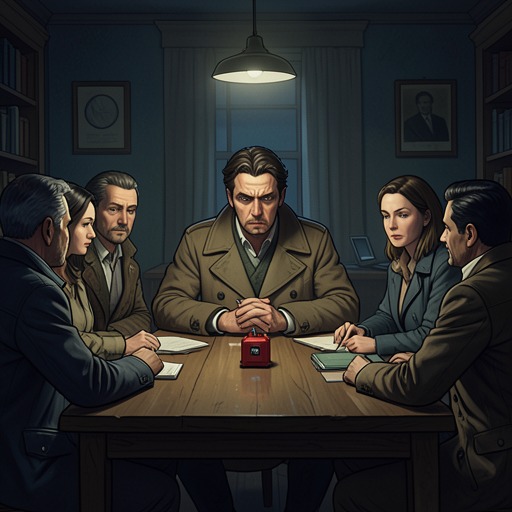
Asked why he thinks the person who took Fry’s heart was a poet, Poe offers a theory of symbolic action. He tells Landor, "the heart is symbol, or it is nothing." In his account, removing a heart is not simply taking a useful piece of anatomy: it is trafficking in a sign. He contrasts the organ as a fistful of muscle with the aesthetic and literary meanings that gather around it, then treats the act as evidence of a mind inclined to work through symbols. His inference is not proof of the culprit’s identity; it is Poe’s interpretive approach to the crime.
Poe develops that approach by recalling several different literary and religious associations. His first is the line from Childe Harold: "The heart will break, yet brokenly live on." He next remembers Lord Suckling’s song asking for a heart to be sent back when its owner cannot possess the beloved’s. He then turns to biblical appeals for a clean heart and for the acceptance of a broken and contrite one. These associations do not settle on one meaning. The heart can be wounded and persist, withheld in love, or made the object of spiritual petition; its symbolic range makes the crime resonate beyond the act of bodily mutilation.
Belief, Appropriation, and Interpretive Limits
When Landor suggests that the evidence might point just as readily to a religious fanatic, Poe answers by treating belief itself as a relation to the heart. He offers a Latin derivation linking credere to cardia and says that credo can be understood as setting or placing one’s heart. This is Poe’s argument, not an independent conclusion established by the investigation. Its function in the conversation is to shift the question away from a simple opposition between religious fanaticism and poetry: in Poe’s reading, both belief and poetic expression can involve investing the heart with meaning.
From that premise, Poe describes the crime as an act of expropriation rather than a denial of the body or a transcendence of it. The distinction matters. The heart is not merely an emblem detached from flesh; the symbol depends on a real heart taken from a real body. Yet neither can the removal be reduced to anatomy, because the act’s significance comes from the meanings that the investigator, the Academy, and literary tradition bring to it. Poe calls this movement a secular faith and, with grim self-awareness, admits that he is inclined to think like a poet. His interpretation illuminates the symbolic force of the crime while also revealing its limits: a compelling pattern of literary associations does not by itself identify the perpetrator.
The Heart’s Double Force
Across these moments, the heart connects individual vulnerability with collective fear. Fry’s mutilated body makes the investigation necessary; Thayer’s language makes the Academy’s own vulnerability legible; Poe’s allusions make the removed organ part of a wider vocabulary of loss, love, endurance, and belief. The scrap hidden in Fry’s hand adds a further tension between what a body conceals and what a reader can recover from it. The novel keeps these meanings in contact without making them identical: an organ can be evidence, a symbol can shape interpretation, and neither can wholly substitute for the other.