
The Ordinary Machinery of Murder
The Pale HorseThe novel exposes how a sophisticated murder business can depend on small acts of substitution, divided knowledge, and ordinary trust.
increasing Bearing strength in each event
 decreasing
Bearing strength in each eventdecreasingA Marketable Promise

A Bet Instead of a Contract
Legal Appearance
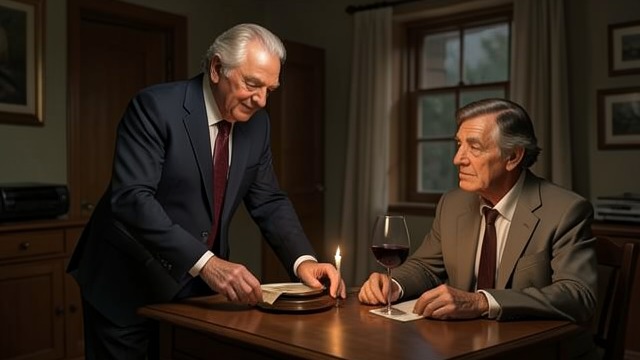
Bradley describes a wager on whether a person will die by a stated date. The client bets on survival, while Bradley offers the darker prediction and collects if the death occurs.
The language of betting disguises a paid murder service as private speculation. Its apparent informality helps participants avoid naming the act they are purchasing.
A Client Kept at a Distance

Safety Through Separation
Avoiding the Victim
Bradley tells Mark that a genuine client must stay away from the intended victim after the arrangement is made. The rule is presented as a guarantee of safety, while also reducing the chance of a direct evidentiary link.
The client’s physical absence becomes one of the organization’s main protections. The apparent distance between desire and action helps make murder resemble coincidence.
The Roles Divided
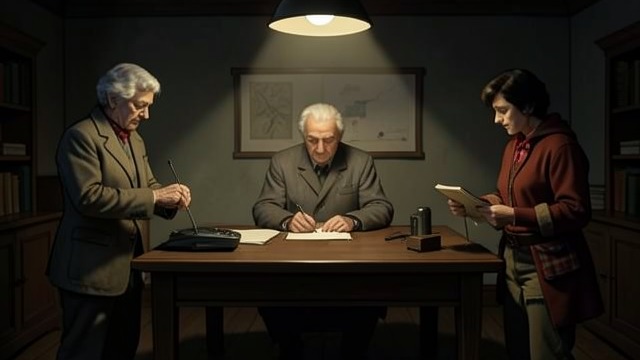
No One Knows Everything
Compartmentalized Work
Bradley handles the financial arrangement, Thyrza runs the occult performance, and consumer-research workers gather household information. Osborne alone performs the crucial substitution that poisons the victim.
Each participant appears separated from the final act. This division protects the organizer and makes the operation seem like a collection of unrelated, lawful activities.
The Substitute Product
Murder Hidden in Routine
Access Without Force
The operative enters a home in a plausible work role and replaces a household product the survey has already identified. The victim continues an ordinary habit and has no reason to suspect that the product has changed.
No dramatic weapon or confrontation is necessary. The method depends on the victim’s trust in familiar routines and in people who appear authorized to enter.
The Business Revealed

Profit and Power
A Criminal Enterprise in Plain Sight
Lejeune explains that Osborne wanted money but also enjoyed the sensation of controlling death. Bradley’s bets and the séance’s theatrical claims helped make the business appear both legal and supernatural.
The operation’s sophistication does not make it grand. It reveals how ordinary greed and vanity can organize repeated violence while every participant tells themselves a partial story.
During Mark’s first visit to C.R. Bradley
During Bradley’s instructions to Mark
As Lejeune reconstructs the organization
During Lejeune’s explanation at Priors Court
After Osborne’s arrest
