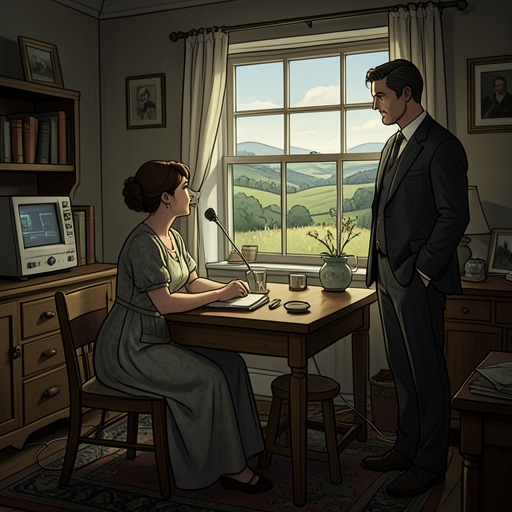
Hugh Despard
The Pale HorseHugh Despard’s importance lies in his refusal to treat the occult as harmless diversion. Experienced enough to sense danger beneath Mark Easterbrook’s pose of casual curiosity, he warns Rhoda away from the gathering and later gives Mark a more complicated account of how belief and fear can affect people. His perspective does not settle whether supernatural forces are real; it insists that their consequences may be serious regardless.
Identity and Judgment
Despard is presented as a shrewd man with an adventurous life behind him and an instinct for danger. When Mark describes his interest in seeing what the trio will show, Despard appears to recognize that Mark’s curiosity conceals a more consequential purpose. The scene distinguishes him from a merely credulous observer: he is alert to risk, and attentive to what other people may be withholding.
That judgment shapes his response to Rhoda. When she eagerly offers to accompany Mark, Despard firmly tells her she will not go. Rhoda insists that she does not believe in spirits and only wants the experience for fun; Despard rejects that distinction as a reason to attend. He allows that there may be something genuine in such practices and warns that they can affect people who approach them idly. His objection is not framed as a debate over Rhoda’s beliefs, but as a concern about exposure to an experience she is treating lightly.
Warning and Conversation with Mark
After Rhoda has gone to the kitchen, Despard turns to Mark and asks whether the experience has shaken him. Mark admits that it felt disturbing in a way, and Despard recognizes the response rather than dismissing it. The private exchange gives his earlier warning a personal dimension: he has not merely tried to prevent Rhoda’s frivolous visit but understands that even a skeptical witness may be affected by what happens.
Despard explains the distinction between intellectual disbelief and psychological impact. A person need not accept an explanation rationally for an experience to have an effect. His account draws on what he has seen in East Africa, where witch doctors, he says, have a powerful hold over people. He adds that events occur there which cannot readily be explained in rational terms, including deaths after someone has been marked down to die. The account establishes the limits of his certainty while making clear that he takes the consequences seriously.
Narrative Role
Despard acts as a cautionary counterweight to Mark’s declared curiosity. Mark presents the visit as a chance to see what sort of show will be put on; Despard recognizes that the situation should not be reduced to entertainment. His later explanation broadens that warning into one of the book’s central uncertainties: an effect may be real even when its supernatural cause is not established. Through Despard, the narrative holds skepticism and fear in tension without requiring him to resolve them.