Man the Superman
The Pale HorseMan the Superman is Mark Easterbrook’s phrase for the powerful human figure imagined by Mr Venables: a person who could direct machines and, more ominously, exert influence without being recognized as doing so. The expression gathers force through a conversation that moves from technological speculation to the possibility of shaping human behavior, leaving Mark both impressed and wary.
Meaning and distinction
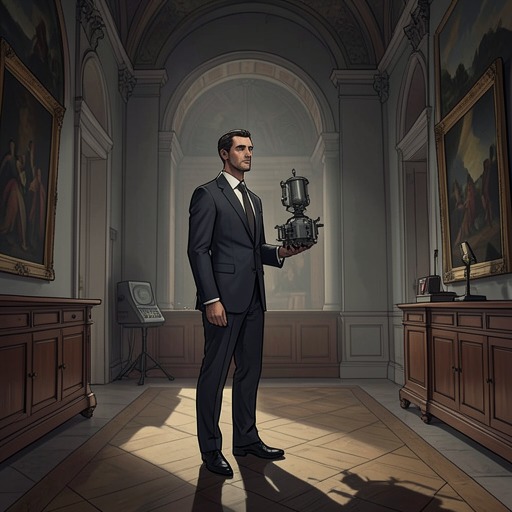
The phrase arises from a distinction between men as units of manpower and Man as a controlling intelligence. Mr Venables does not argue that machines will simply replace every human capacity. Rather, he imagines that they may take over work performed by people considered interchangeable, while a human thinker remains responsible for deciding what the machines should be asked to do. In this formulation, human importance shifts away from physical labor and toward the authority to frame questions and direct action.
That distinction gives the expression its elevated and unsettling character. Man the Controller and Man the Thinker are not simply surviving alongside machines; they occupy a position above them, setting their tasks and determining how their capacities are used. The ideal therefore depends on a hierarchy: mechanical power may grow, but its direction belongs to a human intelligence conceived as exceptional. The phrase Man the Superman compresses this ambition into a memorable label, turning a discussion about labor and technology into a claim about concentrated human agency.
From mockery to consideration
Mark initially treats the grand language with skepticism. He shakes his head doubtfully and gives the phrase a faintly ridiculing inflection when he repeats it. His response marks the distance between the elevated ideal and his own cautious assessment of Mr Venables’s argument. Yet the conversation does not remain a simple contest between a visionary speaker and a dismissive listener. Mark later tells Mr Venables that he has, to some extent, persuaded him of a modern version of the idea.
That change is limited but significant. Mark does not announce that he accepts every implication, and his earlier warning that the doctrine is dangerous remains part of the exchange. Instead, his response registers the idea’s persuasive structure: the prospect of machines replacing routine human labor can make the figure who commands them seem plausible, while the possibility of directing people makes that figure more troubling. The shift from ridicule to qualified interest gives the expression a dramatic life within the conversation; it is tested aloud rather than introduced as an abstract definition.
The mind as an object of influence
Mr Venables extends the discussion beyond machines. He argues that knowledge of the human animal is growing and invokes what is sometimes called brainwashing as evidence that the human mind, like the body, responds to particular stimuli. The term Man the Superman consequently acquires a second dimension. Its imagined power is not confined to asking machines the right questions: it may also involve understanding how people respond and using that knowledge to affect them.
The juxtaposition is the source of the doctrine’s danger in Mark’s eyes. The controller’s authority might operate through knowledge of reactions rather than through visible force. A person who understands how stimuli affect the mind could appear to exercise power indirectly, while those being influenced might not recognize the process as direction. The conversation supplies no worked-out method or proof that such mastery is achievable; it presents the possibility as a claim Mr Venables advances, not as an established fact. That qualification matters: the expression names an aspiration whose reach remains uncertain, even as its implications are unsettling.
Power without recognition
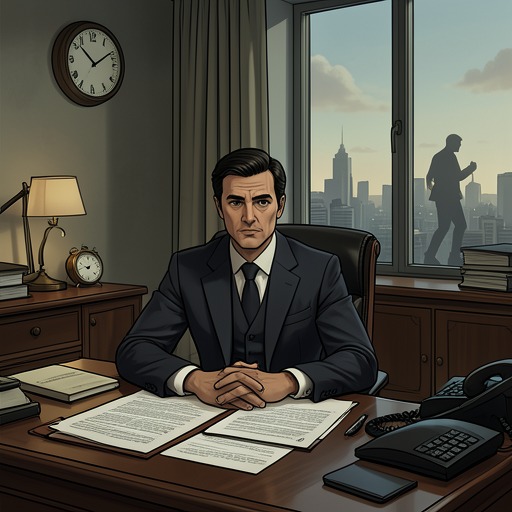
Mark sharpens the idea by observing that Mr Venables’s version of the Superman differs from a simple figure of obvious strength. He describes it as someone able to wield power without being known to wield it, sitting in a chair and pulling the strings. Mr Venables smiles at the description, then asks whether Mark is casting him for the part and says he wishes it were so. The image of hidden control brings the conversation’s separate strands together: command of machines, knowledge of human responses, and authority that may escape public notice.
The exchange also resists a straightforward identification of Mr Venables with the ideal. He briefly entertains the role, but his wish is framed against his physical condition, which he presents as something requiring compensation. Earlier, he has become embarrassed and partially withdrawn an exaggerated claim; Mark interprets his talk in that moment as the talk of a man who lives much alone and may have spoken unwisely. These details keep the conversation personal and provisional. Man the Superman is not established as Mr Venables’s achieved identity, but as an idea he voices and Mark examines.
The expression therefore holds aspiration and warning in the same frame. It elevates thought over manpower and human direction over mechanical operation, yet its most compelling version is not openly heroic: it is the unseen ability to pull strings. Mark’s response preserves the tension rather than resolving it. He can be drawn to the intellectual distinction the phrase makes and still recognize that power over minds, particularly when exercised without recognition, is a dangerous doctrine.