The Pale Horse of Revelation
The Pale HorseThe Pale Horse of Revelation supplies the story’s most concentrated image of death, but its force is not confined to prophecy or supernatural fear. The biblical name attaches itself to the old inn, where occult performances distract from a real murderous scheme; at the end, cleaning the inn sign makes the image behind that name visible. The expression thus moves between scriptural warning, deliberate misdirection, and a material emblem that the characters can finally see plainly.
Biblical Image and the Inn’s Name
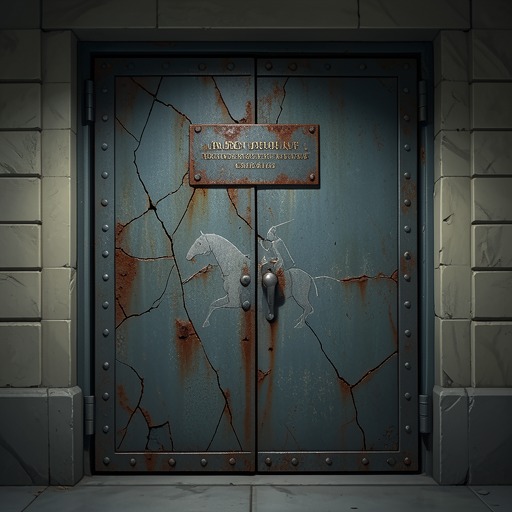
The association is made explicit when Mrs Dane Calthrop recites the verse from Revelation that names the pale horse’s rider as Death, followed by Hell. Her words answer the sign itself: as grime is removed, the figure becomes discernible as a grinning skeleton riding the horse. The image makes the inn’s name more than an atmospheric label. It connects the location to death in a direct, recognizable form, while the skeleton gives the biblical reference a visible counterpart in the story’s present.
The timing matters. The sign is being cleaned after the murderous arrangement associated with the Pale Horse has been exposed, and Ginger is the one working on it. She presents the newly revealed figure triumphantly. The gradual removal of grime provides a modest physical parallel to the investigation: something obscured becomes legible. It does not itself explain how the killings were carried out, but it allows the story to close on an image that gathers the inn’s advertised menace into a concrete object.
Mrs Dane Calthrop’s recitation briefly gives the discovery the gravity of a scriptural pronouncement. The pause that follows is then cut short by her practical, dismissive conclusion that the matter is finished. That turn from solemn biblical language to everyday finality prevents the verse from functioning as a new supernatural revelation. It remains a resonant frame for the story’s death imagery, while the investigation’s explanation rests on human methods rather than the horse’s supposed occult power.
A Name That Conceals a Method
Earlier, the Pale Horse’s name marks a place that Mark Easterbrook connects with Mrs Tuckerton. After thanking her for showing him her house, he turns back to ask whether she knows the Pale Horse. The question produces unmistakable panic: her face turns white beneath its makeup, and her voice rises. The reaction makes the name consequential in the investigation, although it does not, by itself, establish what she knows or prove her participation.
The name also belongs to the cover story built around the organization. Mark explains that Thyrza Grey’s talk of occult powers, the trance, white cockerels, brazier, pentagrams, and reversed crucifix directs attention toward a theatrical supernatural explanation. The supposed machine, or box, serves a similar purpose for people inclined to believe in scientific-sounding forces. In Mark’s account, the display is a stalking horse: the Pale Horse’s reputation draws suspicion toward impossible or harmless phenomena and away from the actual direction of the crime. The biblical association therefore contributes to the disguise. It makes death seem to belong to a realm of spells and remote powers rather than to an ordinary, investigable scheme.
This explanation depends on a contrast between visible performance and concealed cause. The rituals are conspicuous enough to encourage talk about witchcraft, spirits, and unusual forces; the real method does not need to resemble any of them. Mark argues that Thyrza can boast openly about occult powers without being prosecuted for murder on that basis, and that examination could show the box to be harmless. The more extraordinary the public story sounds, the easier it is for the organization’s name to act as misdirection rather than evidence of a supernatural power.
Belief, Skepticism, and the Limits of the Symbol
The characters do not all relate to the occult story in the same way. When Lejeune asks whether all three women are involved, Mark distinguishes Thyrza’s scheme from Bella Webb’s and Sybil Stamfordis’s apparent beliefs. He considers Bella’s belief in witchcraft genuine and says Sybil has a genuine mediumistic gift, entering a trance without knowing what happens and believing what Thyrza tells her. The account therefore does not reduce every element of the performance to a conscious deception by every participant. It distinguishes the deliberate use of the Pale Horse’s reputation from the credulity or sincere belief that may sustain it.
Mr Venables offers a sharply different response to the same association. When told that the organization’s headquarters are said to be a place called the Pale Horse, he treats Thyrza’s claims as nonsense and mocks the local reputation of her circle. His skepticism shows that the name does not compel a single interpretation: for one listener it is connected to serious police inquiry, while for another it is a foolish local story. That contrast also clarifies the name’s usefulness as cover. A story that some people fear and others dismiss can attract attention without making the underlying crime straightforward to identify.
The Sign’s Final Disclosure
The last appearance of the Pale Horse image comes through work on the old inn sign rather than through another séance or claim of occult power. Ginger, still pale and thin and wearing a scarf where her hair has not yet grown back, is busy with rags and bottles when the others arrive. She points out the sign after removing the years of grime, revealing the skeleton rider. The concrete details make the emblem a recovered object, not an apparition: the figure was there to be seen, but dirt had hidden it.
Mrs Dane Calthrop’s biblical recitation joins that recovered image to the name that has haunted the investigation. Yet the ending does not restore the organization’s supernatural pretence as truth. Instead, the sign gathers the story’s recurring association of the Pale Horse with death after the mechanism of the apparent occult threat has been exposed as a decoy. Its significance is consequently double: it recalls the fear cultivated around the inn, while its ordinary, cleaned surface offers a final image of disclosure. The verse gives the emblem its full ominous resonance; the characters’ silence, followed by Mrs Dane Calthrop’s matter-of-fact dismissal, brings that resonance back down to the finished business of the case.