The former Pale Horse inn
The Pale HorseThe former Pale Horse inn is an old village building whose past survives in its name and framed inn sign, even though it is no longer a pub. When Mark Easterbrook visits, the house initially seems too ordinary to match the sinister reputation associated with it. Inside, however, its low, dark hall, twisting staircase, and connection with séances give the setting a different charge. The building’s effect depends on that contrast: its age and atmosphere invite ominous associations, while its present-day domestic appearance resists them.
From Inn to House
The change in the building’s use is the first distinction made about it. Rhoda corrects Mark when he asks about a pub nearby: the Pale Horse is not a pub now. Hugh Despard describes it as an old inn, mostly sixteenth-century in his estimation, but says it has become an ordinary house. The name, by contrast, has remained. Despard thinks it ought to have been changed, while Katherine Corrigan objects to the prospect of replacing it with a conventional-sounding name such as Wayside or Fairview. For her, the old name is not an embarrassment to be hidden but an appealing feature of the place.
That debate makes the building’s history visible in everyday conversation. Its former function has ended, but the name keeps it present; the house is neither simply an inn nor a completely detached modern residence. The old designation also gives visitors an immediate point of curiosity. Mark asks about it before seeing the building, and the answer establishes that the place’s identity rests as much on what it used to be as on what it is now.
Exterior and Approach
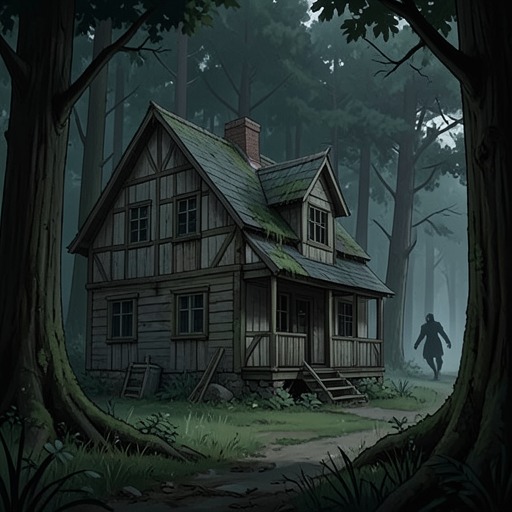
The building is half-timbered, and the description stresses that the timbering is genuine rather than a later imitation. Set a little back from the village street, it has a walled garden partly visible behind it. Those details lend it an Old-World appearance without making it remote from the village: the house is withdrawn slightly from the street, but remains part of the ordinary settlement around it.
Mark finds the exterior disappointing. He had expected it to look more sinister and says it has no atmosphere. Katherine answers that he should wait until he gets inside. The exchange sets up a deliberate gap between appearance and expectation: the outside does not supply the dramatic menace Mark anticipates, while the invitation to enter directs attention toward the building’s interior. As the visitors leave their car and approach the door, it opens. The entrance becomes a simple threshold between the unremarkable view Mark has just judged and the darker space he is about to encounter.
The Hall and the Sign
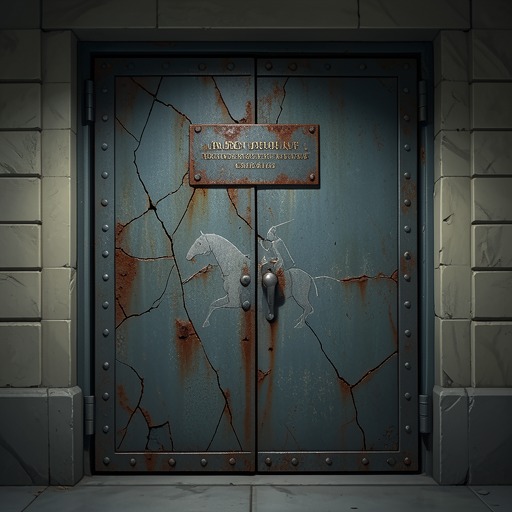
Inside, the hall is low and dark, with a twisting staircase rising from it. A wide fireplace anchors the room, and a framed picture hangs above it. Miss Thyrza Grey identifies the picture as the old inn sign, the Pale Horse, though she notes that the poor light makes it hard to see. The sign thus remains in the building not as a working marker outside an inn, but as a preserved object displayed within the house.
Katherine says she has promised to clean it and expects it to look different afterward. Her offer gives the sign a modest domestic future: it is still part of the house’s furnishings, cared for by one of the people who lives or works there. At the same time, the combination of dim light and an old sign keeps the former inn’s identity perceptible without making it fully legible. The past is visible, but not yet clear. That small visual uncertainty complements the hall’s low ceiling, dark appearance, and turning staircase, which make the interior feel unlike the ordinary house Mark expected from the exterior.
Reputation and Use
The building’s present associations are not limited to its architecture. When Rhoda looks around the hall, she asks whether this is where séances are held. Thyrza Grey confirms the connection and says that the village knows its residents’ business better than they do. She describes the house as having a sinister reputation and connects that reputation to an old story about one of her great-great-aunts, or a more distant great-aunt, who was supposedly burned as a witch in Ireland. The remark places local gossip, occult practice, and inherited associations around the house, though it does not establish the building itself as the source of any supernatural power.
The former inn therefore works through competing impressions rather than through a single, settled identity. It is an old, partly medieval building turned into an ordinary home; a piece of authentic half-timbered architecture that disappoints Mark’s expectation of an overtly sinister exterior; and a séance setting whose dark hall and old sign encourage a more uneasy reading once the visitors are inside. The contrast between everyday residence and village legend gives the house its narrative force: its atmosphere emerges gradually, as the threshold, hall, sign, and reputation accumulate meanings that the street-facing view alone does not provide.