The struggle between good and evil
The Pale HorseThe struggle between good and evil is shaped by a tension between spectacle and endurance: evil can seize attention with menace and apparent power, while goodness may look plain, even inadequate, yet prove more durable. The novel carries this question from Mark Easterbrook’s childhood pantomime memories into conversations about real wickedness, criminal ambition, and the supposed powers of witches, without allowing theatrical appearance alone to settle what evil is.
The Pantomime of Moral Conflict
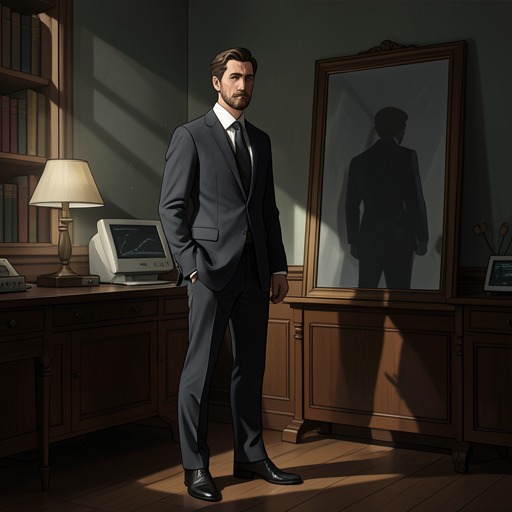
Mark’s first sustained image of the conflict comes to him while he is reflecting on sinister noises at Luigi’s coffee bar. He recalls pantomime villains emerging through clouds of smoke, with trapdoors and windows seeming to release infernal forces. Against them stands Good Fairy Diamond, whose wand looks inadequate and whose hopeful pronouncements are delivered in a flat voice. Even the song that follows has little to do with the story. In this remembered theatre, goodness seems poorly equipped: its language is trite, its gestures small, and its performance less exciting than the threat it opposes.
Mark nevertheless reads the pantomime’s ending as a lesson in durability. Evil has to make a show of itself, startling and challenging the settled world; goodness need not be impressive to outlast it. The final procession reverses the opening spectacle. Good Fairy Diamond does not insist on taking first place, and the Demon King, once snarling and breathing fire, is revealed as only a man in red tights. The transformation does not mean that evil is unreal, but it exposes how performance can magnify it. The stage supplies an image of stability surviving the display of instability, rather than of goodness winning by outshining its opponent.
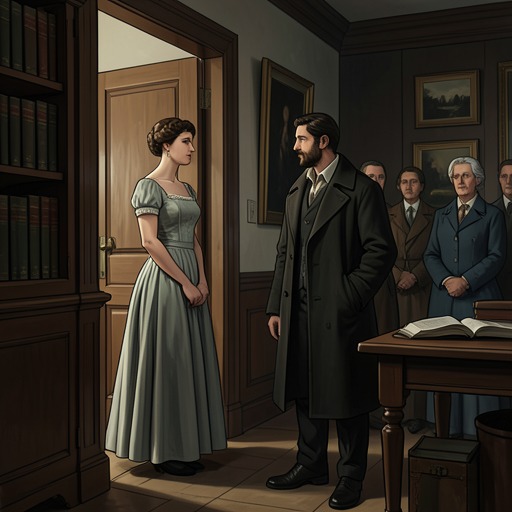
The image recurs when Hermia Redcliffe and others discuss the witches. One speaker imagines them capering like a threefold Demon King and expects a Good Fairy to appear with a reassuring promise that evil will not triumph. The joke carries the earlier pantomime comparison into the novel’s present: the witch figures can look like a theatrical embodiment of evil, while the expected reassurance risks sounding as flat and formulaic as the fairy’s speech. The recurring motif makes the moral question harder, not easier; familiar conventions offer comfort, but they do not establish what kind of danger the characters face.
Power, Greatness, and Scale
A conversation about whether an evil person can also be great tests the attraction of visible impact. Hugh Despard asks whether evil can belong to someone of great intellect and moral strength. Rhoda points to Napoleon and Hitler as examples of great men, judging them by the effects they produced. Mrs Oliver counters with the possibility that a person responsible for enormous consequences might appear, at close range, merely pathetic and undersized: someone posturing to overcome a sense of inadequacy. Rhoda resists that explanation, insisting that such results could not have come from figures so small.
Mrs Oliver’s reply shifts the scale of the argument. Even a stupid child can set a house on fire; destructive consequence alone does not prove grandeur, intelligence, or an imposing inner nature. The comparison separates the magnitude of harm from the stature of its cause. It also unsettles the fascination that evil can command: people may be awed by what an agent has done, while the agent’s own character remains ordinary, foolish, or diminished. In this light, evil’s power to impress resembles the pantomime villain’s smoke and fire—an effect that must be distinguished from the substance beneath it.
Mr Venables rejects any interpretation that reduces evil to something unreal. He insists that evil exists, can be more powerful than good, and must be recognized and fought; otherwise, he warns, people descend into darkness. His position gives the theme a necessary counterweight to the pantomime’s demystification. The image of a villain as a man in costume may puncture theatrical grandeur, but it cannot justify complacency about actual harm. The novel holds together two claims: evil may be less magnificent than it appears, and it remains dangerous enough to demand resistance.
Wickedness as Performance and Ordinary Motive
Mrs Oliver is uneasy with the conventional figure of the master criminal. In her view, a villain can remain impressive while unidentified, but the revelation of who he is may produce anticlimax. She finds ordinary crimes easier to believe in: a bank manager embezzling funds, or a husband seeking to remove his wife so he can marry the children’s governess. These familiar motives have none of the grand theatrical scale of a Demon King, yet their recognizability gives them a more convincing place in everyday life. Evil need not announce itself in a form worthy of legend; it can act through commonplace desire and self-interest.
Mrs Dane Calthrop makes a related distinction between boasting and genuine wickedness. In her experience, people who make a show of their sins may be trying to make small, mean conduct seem grand. A village witch might exploit fear with a knowing nod when a neighbor’s hens die, turning coincidence and grievance into a performance that secures attention or advantage. Such a figure may be silly and malicious rather than powerful. The distinction echoes Mark’s pantomime reflection: ostentation can make evil look larger, but spectacle is not reliable evidence of its depth.
Yet Mrs Dane Calthrop does not dismiss every possibility behind the performance. She allows that Bella Webb might be more than a petty village witch, perhaps connected to a malevolence that has persisted from an earlier age and occasionally appears in country places. She describes Sybil Stamfordis as foolish but genuinely a medium, while admitting that she does not know what to make of Thyrza Grey. Her uncertainty matters: the characters cannot simply classify every occult claim as either harmless pretence or proof of supernatural evil. She suspects Thyrza may have encountered some real fragment of knowledge and mixed it with invention to enhance her importance and command over occult powers. The possibility of borrowed truth makes the performance more unsettling without confirming the supernatural explanation.
Recognition, Humility, and Resistance
The conversations therefore distinguish recognition of evil from admiration of it. Mr Venables argues that denial leaves people vulnerable to darkness; Mrs Oliver warns that the apparent grandeur of a villain may collapse under scrutiny; and Mrs Dane Calthrop sees self-advertisement as a way to inflate small sins. Each position corrects the others. Evil should not be dismissed because its performers are ridiculous, but neither should it be granted greatness merely because it makes a spectacle or produces alarming effects.
Humility offers a final contrast to display. Mark’s Good Fairy Diamond does not seek to be first in the procession, and Mrs Dane Calthrop observes that good people are generally not proud of their goodness; they may not even recognize it in themselves. Against evil’s insistence on being noticed, goodness appears as steadiness without self-congratulation. The motif does not promise that goodness is always visibly stronger. Instead, it suggests that its endurance depends on qualities that spectacle cannot easily represent: restraint, persistence, and the willingness to oppose harm without turning virtue itself into a performance.