
The Scientific Real and Conscious Experience
The Parallax ViewThis thread traces the book’s encounter with neuroscience, appearance, and the question of how consciousness arises from material processes.
increasing Bearing strength in each event
 decreasing
Bearing strength in each eventdecreasingThe Cave Turns Inward
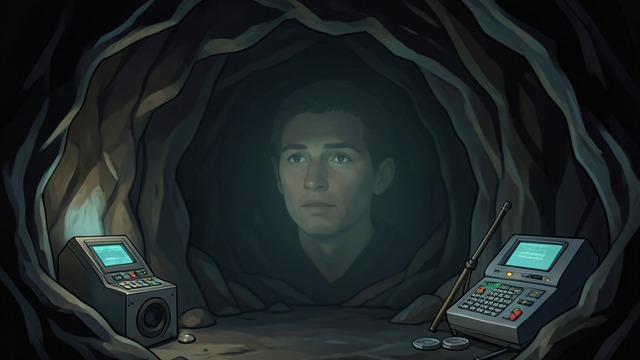
A Theater Without an Observer
The brain as cave
The book revisits the cave image through brain science: the mind may generate its own model of a world without an inner watcher.
An unresolved gap
The absence of a substantial self does not explain why experience appears. The scientific account sharpens rather than erases the problem.
Humiliation and Subjectivity

The Cost of Disenchantment
A series of decenterings
Modern science displaces humanity from the center of the universe, species, and mind. Each humiliation also opens a new question about the subject.
A modern paradox
Empirical humanity becomes smaller while the formal subject gains importance. The book presents this contradiction as constitutive, not temporary.
Appearance Gains Autonomy

More Than a False Surface
Beyond demystification
The sciences increasingly study processes that cannot be reduced to stable objects. Appearance and process acquire an autonomy once assigned to a hidden substance.
The Real shifts
The book asks how appearances arise from reality and how reality itself is split. This question resists both naive realism and simple relativism.
Consciousness as a Loop
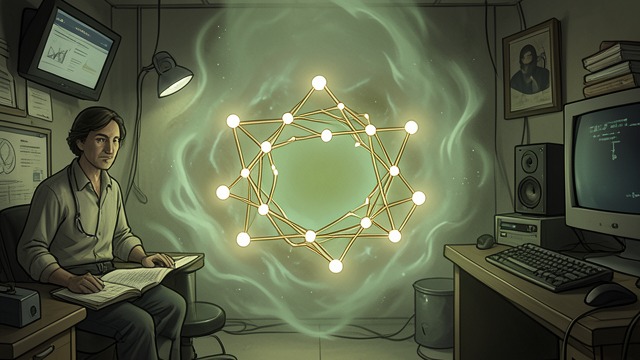
Self-Relation Emerges
Neural activity closes a circuit
Accounts of brain processes point toward feedback loops that produce a new organization. The subject appears not as a controller but as an effect of self-relation.
Immediacy is made
Conscious experience feels direct, yet depends on complex mediation. The book treats this seeming immediacy as an achievement rather than a basic fact.
Freedom as a Negative Capacity

The Power to Interrupt
Awareness can veto
Consciousness may not originate every act. Its distinctive power can be the ability to block an impulse or suspend a given course.
A materialist freedom
Freedom is not a gap in causality but a reflexive way of determining which causes will govern the subject. The loop of agency remains material.
Chapter 3 opening
Chapter 3, discussion of scientific revolutions
Chapter 3, transition to contemporary science
Chapter 4, discussion of neural models
Chapter 4, late discussion of consciousness
