
The Passage from Money to Capital
The Parallax ViewThis thread follows the book’s account of how exchange, production, and circulation form an irreducible economic parallax.
increasing Bearing strength in each event
 decreasing
Bearing strength in each eventdecreasingCommodity Appears Ordinary

The Strange Commodity
Surface and secret
A commodity first looks trivial and useful. Analysis reveals that its social relations take a strange, almost theological form.
Form is not decoration
The book insists that the commodity form itself matters. Critique must explain why social relations appear through relations among things.
The Sale as a Leap
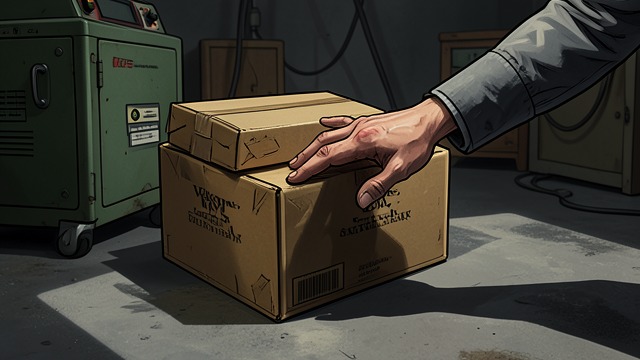
The Commodity Risks the Market
Value awaits exchange
A product becomes a commodity only if it finds a buyer. Its value is not fully secured by the labor already embodied in it.
The salto mortale
Circulation requires a risky leap between production and realization. The book uses this gap to resist a one-sided account of value.
Money Becomes an End
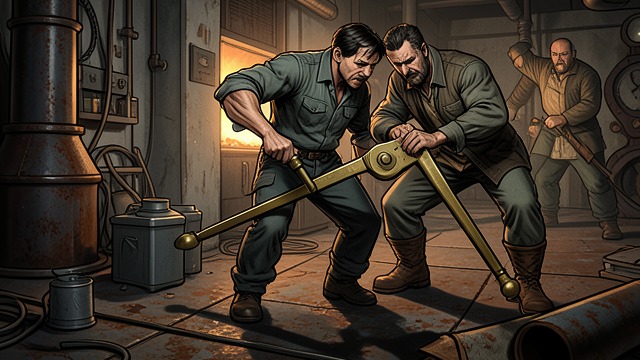
From Exchange to Expansion
A changed circuit
Simple exchange aims to obtain useful goods. Capital turns money’s return into an end in itself, repeating the circuit without a natural limit.
A system propelled by excess
The process appears self-generating, as if value produced more value by itself. Its smooth movement conceals dependence on labor and exploitation.
Crisis Makes the Fetish Visible
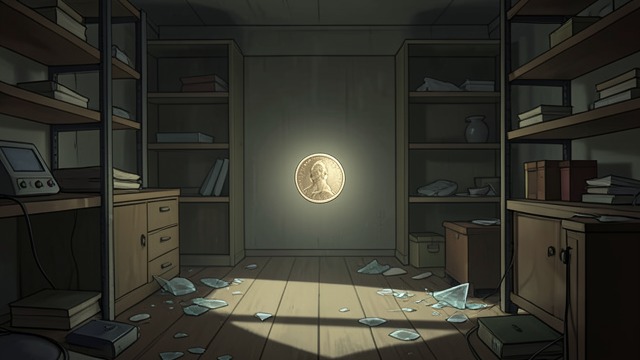
The Return of Money
Use-value collapses
In crisis, commodities may become unsellable and their practical usefulness no longer secures value. Money suddenly appears as the only true commodity.
Disavowed belief exposed
The crisis makes explicit a belief that ordinary exchange usually conceals. What looked like a harmless instrument reveals its power over social life.
Production Cannot Be the Whole Story

Two Irreducible Sites
Production and circulation
Value is produced in labor yet realized through circulation. Neither process can be reduced to the other as the single hidden truth.
Political implications
The same split separates economic form from political struggle. A materialist account must hold both levels together without collapsing them.
Chapter 1, political economy section
Chapter 1, discussion of simple circulation
Chapter 1, transition to capital
Chapter 1, discussion of economic crisis
Chapter 1 conclusion of the economic argument
