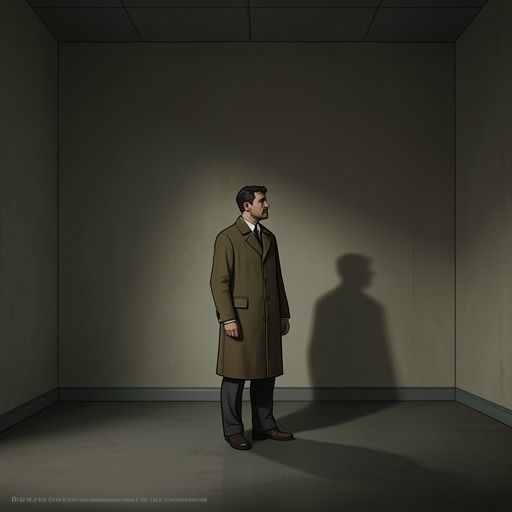
Bartleby
The Parallax ViewBartleby appears here less as a character developed through biography or plot than as the emblem of a political gesture. His refusal to participate becomes a possible first step toward real change: not passive accommodation, but a withdrawal that interrupts the activities maintaining the status quo.
Bartleby as a Political Figure
The discussion introduces Bartleby through the phrase “I would prefer not to.” It does not recount his personal history or the circumstances behind his refusal. Instead, it makes the refusal carry a political argument: a person’s decision not to take part can matter when ordinary participation helps ensure that nothing changes.
Passivity and Refusal
The argument distinguishes Bartleby’s stance from “aggressive passivity,” the habitual busyness of people who remain active in ways that preserve the existing arrangement. Against that pattern, Bartleby’s refusal is described as passive aggression: it withholds cooperation rather than confronting the order through direct opposition. This refusal is not presented as a completed transformation; it is the necessary first step that clears the ground and opens a place for further action.
Political Significance
Bartleby’s formula gives nonparticipation a sharper meaning than simple inactivity. The refusal interrupts the established coordinates, making possible an act that could actually change them. The text therefore treats Bartleby not as a model of permanent withdrawal, but as a figure for the pause before effective political action: a refusal that creates room for something other than the routine reproduction of the existing order.