Bartleby politics
The Parallax ViewBartleby politics treats refusal not as resignation but as a possible opening for political change. Against the habitual activity that ensures nothing really changes, it proposes withdrawal as a critical first move: a refusal that clears space for action capable of altering the existing arrangement.
Definition and Political Contrast
The concept turns on a distinction between passive aggression and aggressive passivity. Passive aggression, in the familiar psychological sense, opposes another indirectly through noncooperation or sabotage. Aggressive passivity, by contrast, describes a mode of participation in which people remain busy while helping to preserve the status quo. Bartleby politics gives the first pattern a radical political function and rejects the second as a way of keeping change at bay.
The Living Dead and Exclusion
The argument develops this distinction through two positions described as being between the two deaths. In one, a person is biologically dead but remains symbolically alive, surviving as a spectral presence or as the authority of a name. In the other, a person is symbolically excluded from the social and symbolic order while remaining biologically alive. Antigone and those rendered Homo sacer exemplify this latter position. The parallel makes the political contrast more than a choice between action and inaction: it asks how participation, refusal, and exclusion are arranged within the existing order.
Refusal as a First Step
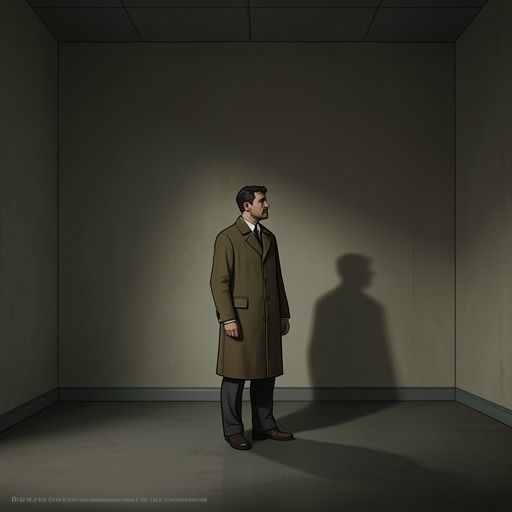
Bartleby’s “I would prefer not to” condenses the proposed gesture. Refusing to participate is not presented as a complete political programme or as the final act of change; it is the necessary first step. By withdrawing from the routines that sustain the current constellation, refusal clears ground and opens a place for further activity. Its measure is therefore not mere passivity, but whether it makes possible an act that actually changes the coordinates of the situation.