Goli Otok
The Parallax ViewGoli Otok, glossed in the text as “naked island,” is a notorious Communist concentration camp whose significance lies in a bitter historical reversal: Joe Jurani, a revolutionary who had led a prisoner uprising on nearby Rab Island, was later imprisoned there and made to help commemorate that same uprising. The island becomes the setting for an image of a revolution’s past surviving under a regime that has turned its former participants into prisoners.
The island and its place in the narrative
The account identifies Goli Otok as a Communist concentration camp near Rab Island. It offers no further physical description of the island; its force in the narrative comes instead from the history attached to it. Jurani’s movement from revolutionary leader to prisoner makes the site a point where the promise of collective liberation confronts the authority of the postwar Communist state.
From the Rab uprising to imprisonment
In 1943, after Italy capitulated, Joe Jurani led Yugoslav prisoners in a rebellion at a concentration camp on Rab Island. Under his leadership, 2,000 starving prisoners disarmed 2,200 Italian soldiers. After the war, Jurani was arrested and imprisoned on nearby Goli Otok, where he joined the population of the Communist camp. The contrast is not simply between victory and defeat: the man who had helped prisoners overthrow their captors was now held by a regime formed in the name of the revolution.
The monument and its historical irony
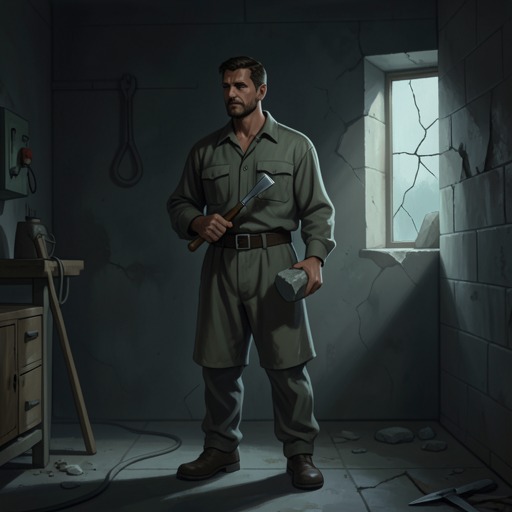
In 1953, Jurani and other prisoners were mobilized to build a monument commemorating the tenth anniversary of the 1943 rebellion on Rab. The monument celebrated the uprising he had led, while its builder remained imprisoned on Goli Otok. The act joins commemoration to coercion: the state preserves the revolutionary past as an official memorial even as it confines one of that past’s central participants.
The book presents Jurani’s fate as a universal singular, an individual history that stands for the larger experience of people who helped overthrow the old regime and were later subordinated to the new one. Goli Otok is therefore more than the setting of his imprisonment. It concentrates the account’s central contradiction: revolutionary achievements endure, but under Stalinist rule their former makers may be forced to serve the order that has betrayed them.