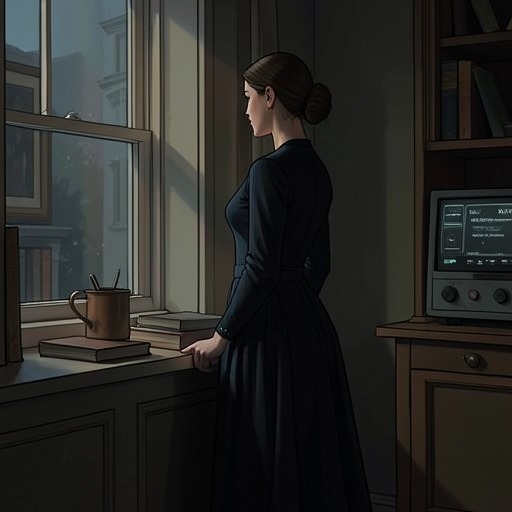
Kate Croy
The Parallax ViewKate Croy is the ethical center of The Wings of the Dove in a reading that turns on the novel’s final scene. Neither a cold manipulator nor merely a victim of circumstance, she recognizes that Merton Densher’s refusal of Milly Theale’s money does not free him from the fantasy surrounding Milly’s death. Kate’s own decisive act is to refuse the terms on which Densher asks her to choose: she leaves him and the money, breaking the arrangement that has continued to bind them to Milly’s memory.
Identity and Interpretive Role
The novel presents a moral trial whose meaning changes according to whose perspective guides the reading. Kate’s part in that trial can be missed if she is treated simply as a calculating woman or as someone passively shaped by social circumstances. The critical argument instead identifies her refusal at the end as the novel’s one genuine ethical act. It is not an indecisive gesture: Kate recognizes the structure of the choice before her and refuses to let Densher define its terms.
That reading also places Kate’s ending beside the negative gesture associated with Isabel Archer at the end of The Portrait of a Lady. In both cases, the possibility of an act lies in refusing the apparent resolution available within the existing arrangement. For Kate, the refusal does not restore the couple to an earlier happiness; it cuts through the deadlock produced by their shared history and knowledge.
Milly’s Bequest and Densher’s Refusal
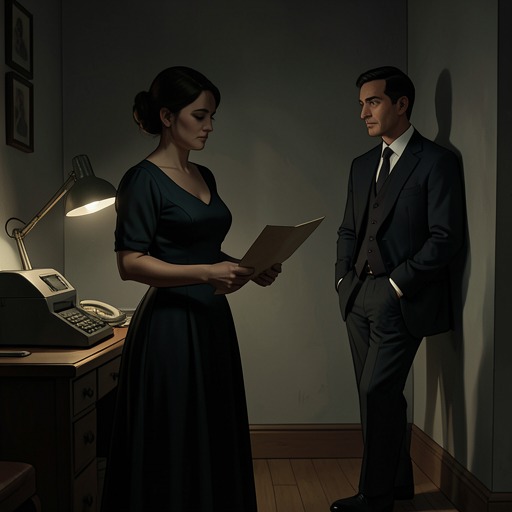
In the events leading into the final scene, Densher receives a thick envelope from Milly’s lawyers in New York. It contains Milly’s bequest of the bulk of her wealth to him. He sends it to Kate unopened, but by the time she comes to his room, she has opened it and lays it conspicuously on the table. The envelope makes the ethical conflict tangible: it is both an inheritance and the object around which Densher’s account of his own conduct takes shape.
Densher is disappointed that Kate has opened it and treats her action as a failed test. He wants no association with the money, which he regards as tainted, and challenges her to marry him without it or to lose him while keeping her freedom and the inheritance. His refusal can look like moral growth, but Kate disputes that appearance. She believes that Densher did not love Milly while she was alive, but has fallen in love with her after her death—with the sacrifice he now attributes to her. In this interpretation, rejecting the bequest does not undo his entanglement in Milly’s fantasy. It allows him to preserve a love of her memory while appearing to refuse its material reward.
Kate Names the Betrayal
Kate’s account of Densher’s change gives the final exchange its emotional and ethical force. She says that his change came on the day he last saw Milly: Milly died for him, in Kate’s formulation, so that he might understand her, and from that hour he loved her. Kate describes Milly’s gesture through the image of the dove: she had once called Milly a dove, and now imagines her wings stretched over both Kate and Densher. The image is at once an expression of Milly’s reach and an account of how her death continues to shelter—and entrap—the survivors.
The interpretation calls Densher’s attachment to Milly’s sacrificial memory a betrayal because it is not simply grief or belated affection. It is a form of moral masochism: his guilt and refusal of the money keep him attached to the meaning he has given her death. Kate will not accept a marriage organized around that private attachment. For her, accepting Densher while he remains in love with Milly’s memory would leave the central truth of their relationship untouched, even if the couple could outwardly return to life together.
The Choice Kate Makes
Densher frames the decision as a choice between himself without the money and the money without him. Kate sees that this leaves the governing terms intact: if she chooses Densher, she must forgo the inheritance; if she does not choose him, she may keep it. Her answer is more radical. She wants neither Densher without the money nor money without Densher, and she refuses the premise that these are the only available outcomes. The result is that she loses both.
This is why her refusal is described as properly ethical rather than as a disguised preference for wealth. Kate is not selecting the bequest over Densher. She is rejecting the arrangement in which Milly’s money, Densher’s guilt, and their marriage can be separated into a clean choice. The interpretation calls this an atheist ethics: Kate acts without relying on a higher guarantee that her sacrifice will be rewarded or reconciled. Her refusal does not promise a more comfortable resolution; its force lies in accepting the loss rather than sustaining a false one.
The Ending and the Dove
Densher offers to marry Kate immediately, as they were before. She asks whether he means as they were, and when he confirms it, she turns to the door and answers, “We shall never be again as we were!” The finality of the line rests on their shared knowledge: they may pretend that nothing has changed, but the relationship cannot return to its earlier state. The ending’s sudden cut gives this recognition the force of an intervention rather than a negotiated reconciliation.
The title’s dove image gathers the competing readings of Kate’s role. Milly is the most immediate dove, having, in the interpretation, flown away and found rest in death. Densher is another: his desire is to escape everything. But the final line also discloses Kate as the true dove. She has spread her wings over Milly and Densher through her plot, then turns away when faced with Densher or money. Her departure refuses both options and completes the ethical gesture that the novel’s earlier deadlock could not supply. Kate’s ending is therefore not a return to innocence or a settlement between the survivors; it is the break that exposes why they cannot be as they were.