Rab concentration camp prisoner uprising
The Parallax ViewThe Rab concentration camp prisoner uprising was a 1943 revolt led by Joe Jurani, an old Slovene Communist revolutionary, after Italy capitulated. Its significance reaches beyond the prisoners’ disarming of their guards: Jurani’s later imprisonment and compelled work on a monument to the uprising turned his life into an emblem of how a revolutionary movement could subject its own veterans to a new regime’s power.
The Revolt on Rab Island
In 1943, following Italy’s capitulation, Jurani led a rebellion by prisoners held in a concentration camp on Rab Island in the Adriatic. Under his leadership, 2,000 starving prisoners disarmed 2,200 Italian soldiers. The account presents the action as a striking reversal of power, with imprisoned people taking control of the situation and overcoming a larger force of guards.
From Revolutionary to Prisoner
After the war, Jurani was arrested and imprisoned on nearby Goli Otok, a notorious Communist concentration camp. The contrast is central to the account: the man who had led prisoners against their captors became a prisoner under the Communist regime established after the war. His fate makes the uprising more than a story of wartime resistance; it exposes the distance between the revolution’s emancipatory promise and the authority that claimed to inherit it.
The Monument and Its Reversal
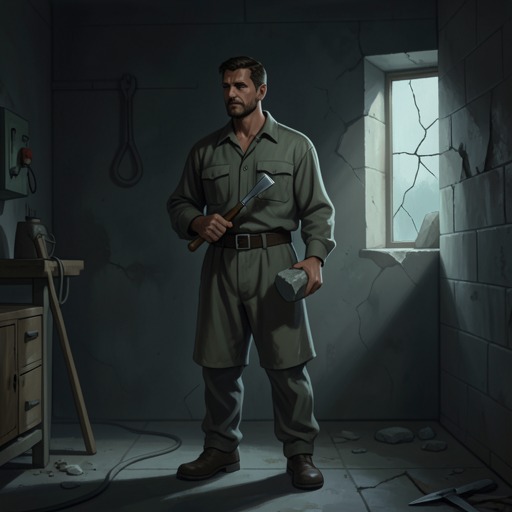
In 1953, while imprisoned on Goli Otok, Jurani was mobilized with other prisoners to build a monument marking the tenth anniversary of the 1943 rebellion. The monument commemorated the very uprising he had led. The episode thus bound commemoration to coercion: a revolutionary, deprived of freedom by the regime, was made to help memorialize his own past act of resistance.
Political and Narrative Significance
The book treats Jurani’s fate as a “universal singular”: one individual’s experience that stands for the wider fate of people who helped overthrow the old order and were later forced to live under the new one. The monument sharpens this argument. The revolutionary past is neither simply erased nor freely honored; it survives as an official memorial built by those whom the regime has subordinated. Jurani’s story makes that contradiction concrete, showing how the legacy of revolt could persist inside Stalinist rule in a form that also testified to its betrayal.