Apolonia
The PearlApolonia is the wife of Juan Tomás and the sister-in-law of Kino, a figure who, though not central to the plot, serves as a crucial representative of the village's familial and communal structures in John Steinbeck's The Pearl. Her actions, from her formal lament to her practical assistance in hiding Kino and Juana, reveal the deep ties of kinship and the social rituals that bind the community, as well as the strain that Kino's fortune places upon those ties.
Identity and Role in the Family
Apolonia is introduced as Kino's brother's wife, a "fat wife" who, along with Juan Tomás and their four children, is among the first neighbors to crowd into Kino's brush house after Coyotito is stung by a scorpion. She is part of the immediate family circle, and her physical description—her "big stomach jiggling with the strenuous pace" as she follows Juana and Kino to the doctor—marks her as a woman of the village, rooted in the rhythms of domestic life. Her identity is defined by her marriage to Juan Tomás and her place within the extended family, and she acts as a conduit for the family's collective emotions and duties.
The Formal Lament and the Hiding of Kino
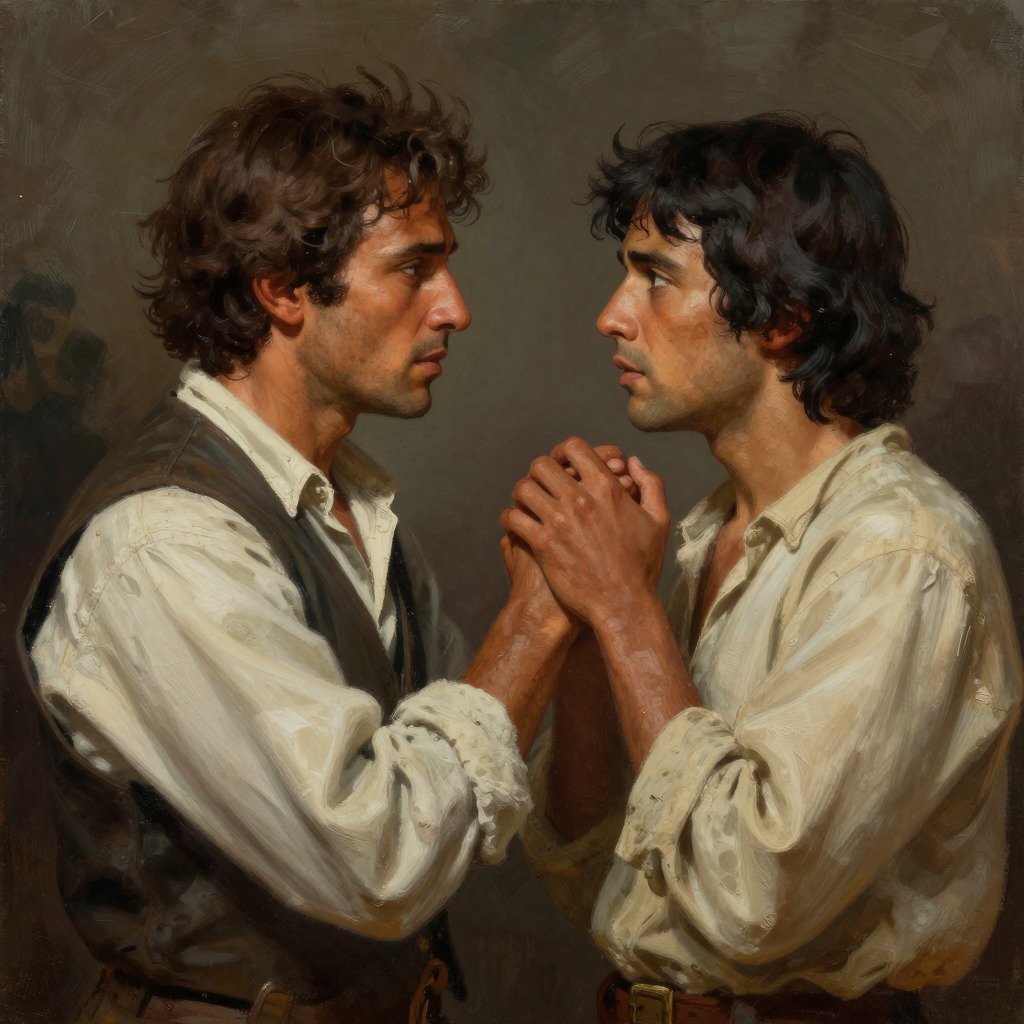
When Kino's brush house is set on fire, Apolonia's response is immediate and ritualistic. As the nearest woman relative, she raises a "formal lament for the dead of the family," a keening cry that signals to the community that a tragedy has occurred. This act is not merely an expression of grief but a social performance, a prescribed role she fulfills to mark the family's loss. However, her loyalty is tested when Kino and Juana, having escaped the fire, slip into her house. Apolonia, in the midst of rushing to get her "fine new" head shawl, is startled to find them there. Kino instructs her, "Do not cry out. We are not hurt," and commands her to fetch Juan Tomás without telling anyone else. She pauses, her hands helpless in front of her, and then agrees, saying, "Yes, my brother-in-law." This moment shows her willingness to protect the fugitives, even as she must suppress her own shock and the public ritual of mourning she had begun.
Relationship with Juan Tomás and the Community
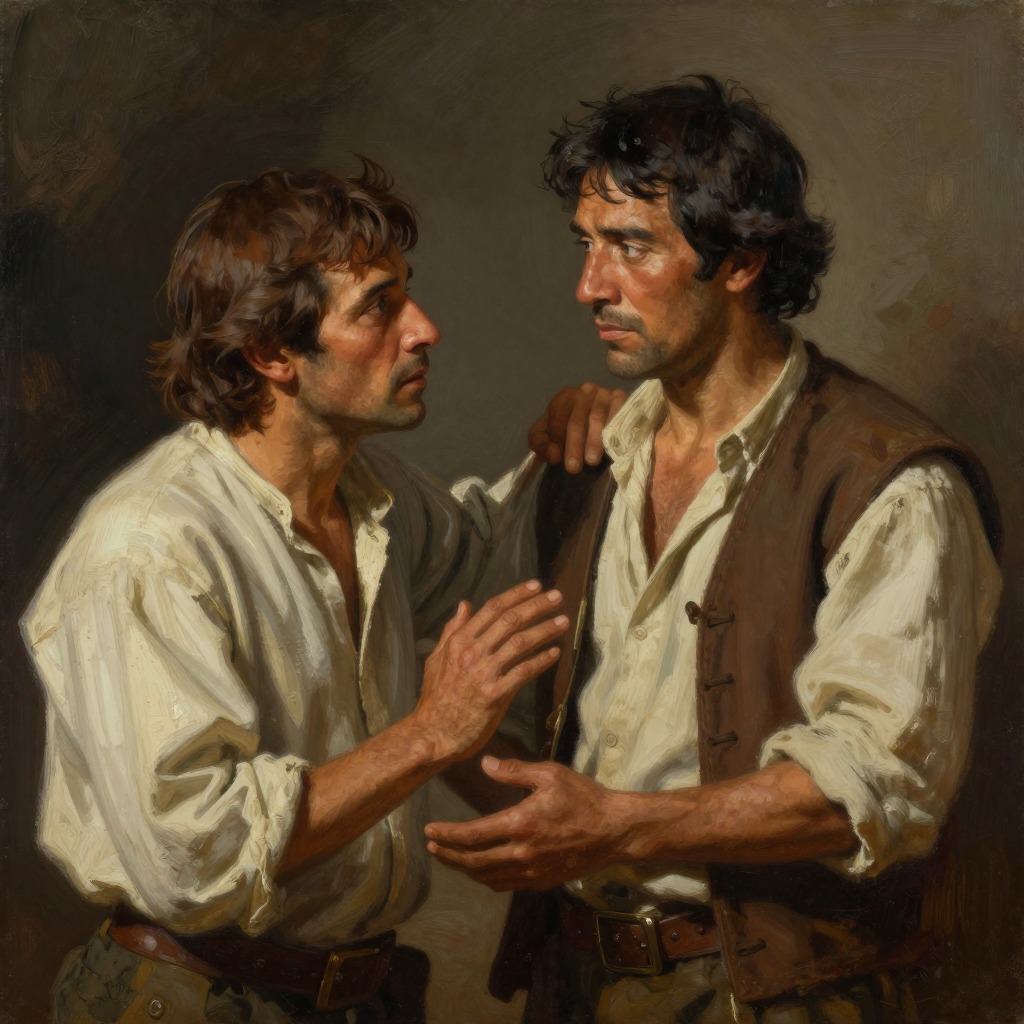
Apolonia's relationship with her husband, Juan Tomás, is one of partnership within the traditional village structure. When Juan Tomás returns with her to find Kino and Juana hiding in the corner, he assumes authority, telling her, "Apolonia, see to the door, and do not let anyone enter." She obeys without question, demonstrating the hierarchical yet cooperative nature of their marriage. Throughout the day that Kino and Juana hide in their house, Apolonia is a silent but essential participant in the deception. Juan Tomás goes out among the neighbors, spreading false theories about Kino's disappearance—that he has gone south along the coast or drowned—and he tells them, "Apolonia is ill with grief." This lie, which uses her supposed illness to explain her absence, shows how her role as a grieving relative is weaponized to protect the family secret. Her silence and cooperation are vital to the success of the plan, and she embodies the quiet, steadfast support that the family offers Kino, even as his actions threaten to bring danger upon them all.
Thematic Significance
Apolonia's character, though briefly drawn, highlights the tension between individual ambition and communal solidarity that lies at the heart of The Pearl. She is a figure of tradition, performing the expected rituals of grief and obedience, yet she also participates in the subversive act of hiding Kino from the authorities. Her willingness to risk her own safety for her brother-in-law reflects the strength of family bonds, but her role is ultimately passive; she is a helper, not a decision-maker. In this, she represents the village's collective response to Kino's tragedy—a mixture of sympathy, fear, and a desire to maintain the social order. Her formal lament, her silent cooperation, and her husband's use of her feigned illness all underscore the ways in which the community both supports and is complicit in the events that unfold, making her a small but telling part of the story's exploration of how wealth and fear can corrode even the closest of human ties.