Juan Tomás
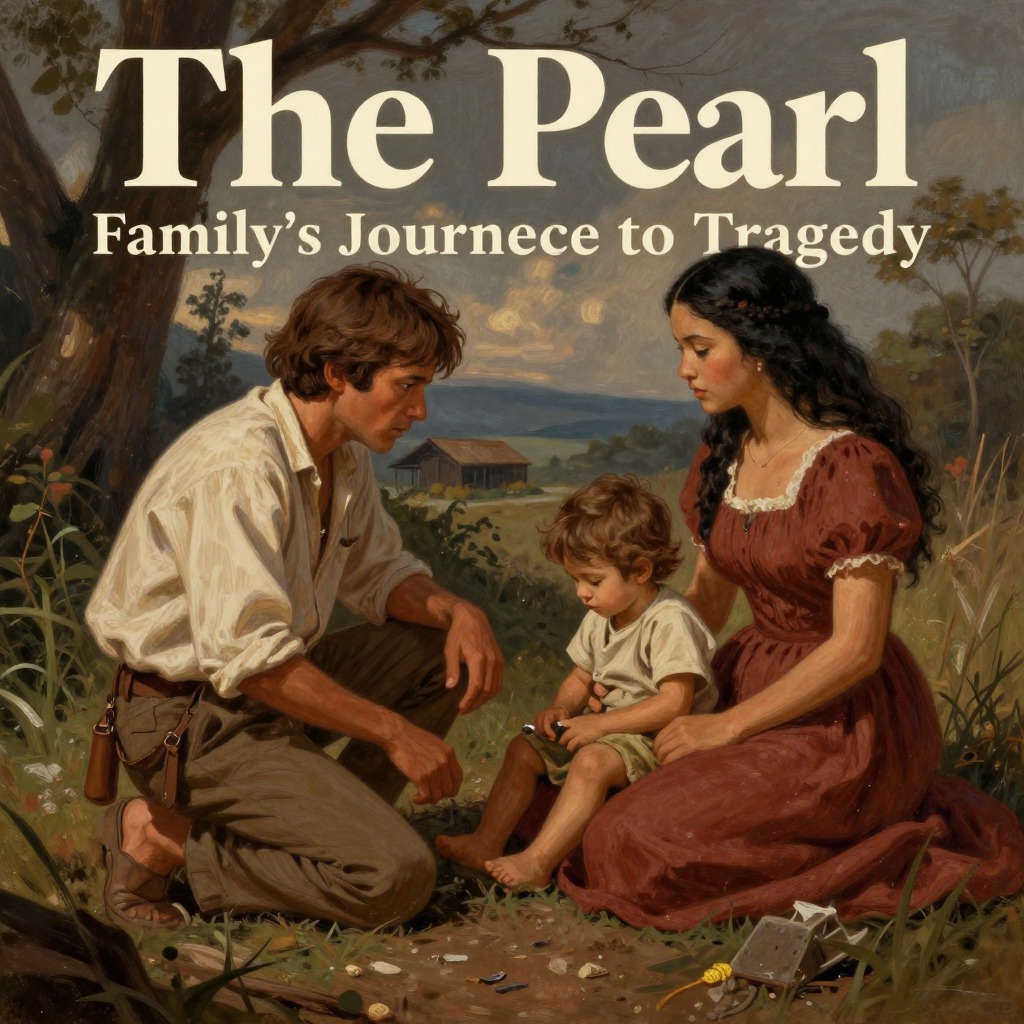
The PearlJuan Tomás is Kino's older brother and a central figure in the fishing community of La Paz, serving as the voice of caution, historical memory, and familial loyalty throughout John Steinbeck's The Pearl. As the elder sibling, he carries the weight of communal wisdom and the bitter lessons of his people's past, and his interactions with Kino chart the widening gap between the dream the pearl inspires and the reality it destroys.
Identity and Role in the Community
Juan Tomás lives with his wife Apolonia and their four children in a brush house nearly identical to Kino's, and he is the first neighbor to appear when Coyotito is stung by the scorpion. He and his family crowd into Kino's doorway alongside the other neighbors, and he later squats on Kino's right hand because he is his brother. His position in the community is that of a steady, respected elder whose opinions carry weight; when Kino announces his plans for the pearl, the neighbors look to Juan Tomás for confirmation of the extraordinary events.
Voice of Historical Caution
Juan Tomás repeatedly warns Kino about the dangers of stepping outside the established order. When Kino declares his intention to sell the pearl, Juan Tomás cautions him to be careful not to be cheated, and he recounts the failed attempts of earlier generations to bypass the local pearl buyers. The old ones, he explains, once pooled their pearls and sent an agent to the capital, but the man was never heard of again; they tried a second time with the same result, and finally gave up the idea. He also recalls the priest's annual sermon, which teaches that each person is like a soldier stationed by God in a particular part of the castle of the Universe and must not go running about. Juan Tomás's warnings are grounded in four hundred years of subjugation, during which Kino's people learned only one defense: a slight slitting of the eyes, a slight tightening of the lips, and a retirement into themselves.
Loyalty and Shelter
Despite his fears, Juan Tomás remains unwaveringly loyal to his brother. After Kino kills a man in the second night attack and returns to find his brush house burned and his canoe destroyed, Juan Tomás hides Kino, Juana, and Coyotito in his own home. He assumes authority, instructing Apolonia to guard the door and tell no one. Throughout the day he goes among the neighbors to divert suspicion, telling one that Kino has gone south along the coast and another that Kino may have drowned in the storm. He borrows food—a little woven straw bag of red beans, a gourd full of rice, a cup of dried peppers, a block of salt—and brings Kino a long working knife that serves as both tool and weapon. When Kino thanks him and says he does not want to bring danger, Juan Tomás replies simply, "I will protect you." At their parting, he embraces his brother with the double embrace and kisses him on both cheeks, saying "Go with God" in a tone that sounds like a death.
Relationship with Kino and the Pearl
Juan Tomás is the only person to whom Kino listens, even briefly. When Kino asks what else he could have done after the pearl buyers offered only a thousand pesos, Juan Tomás answers gravely that Kino has defied not just the buyers but the whole structure, the whole way of life. He warns that if the pearl is truly valuable, the game is not over, and he expresses fear because Kino is walking on new ground where he does not know the way. Yet when Kino insists that his son must have a chance, Juan Tomás can only say, "Go with God." He is the first to name the pearl a devil, telling Kino he should have sold it and passed on the devil. Kino's reply—"This pearl has become my soul"—marks the point at which his brother's counsel can no longer reach him.
Narrative Significance
Juan Tomás functions as a Greek chorus within the story, giving voice to the communal understanding that Kino is attempting something unprecedented and dangerous. His presence validates the reader's sense that Kino's ambition, however understandable, is doomed by the forces of history and collusion. He represents the continuity of his people's experience—the memory of failed revolts, the acceptance of a fixed station, the protective wall of silence and withdrawal. His final appearance comes when Kino and Juana return to La Paz with Coyotito's body; Juan Tomás raises his hand in greeting but does not speak the greeting, leaving his hand in the air for a moment uncertainly, a gesture that captures the community's stunned recognition of what the pearl has done.