La Paz
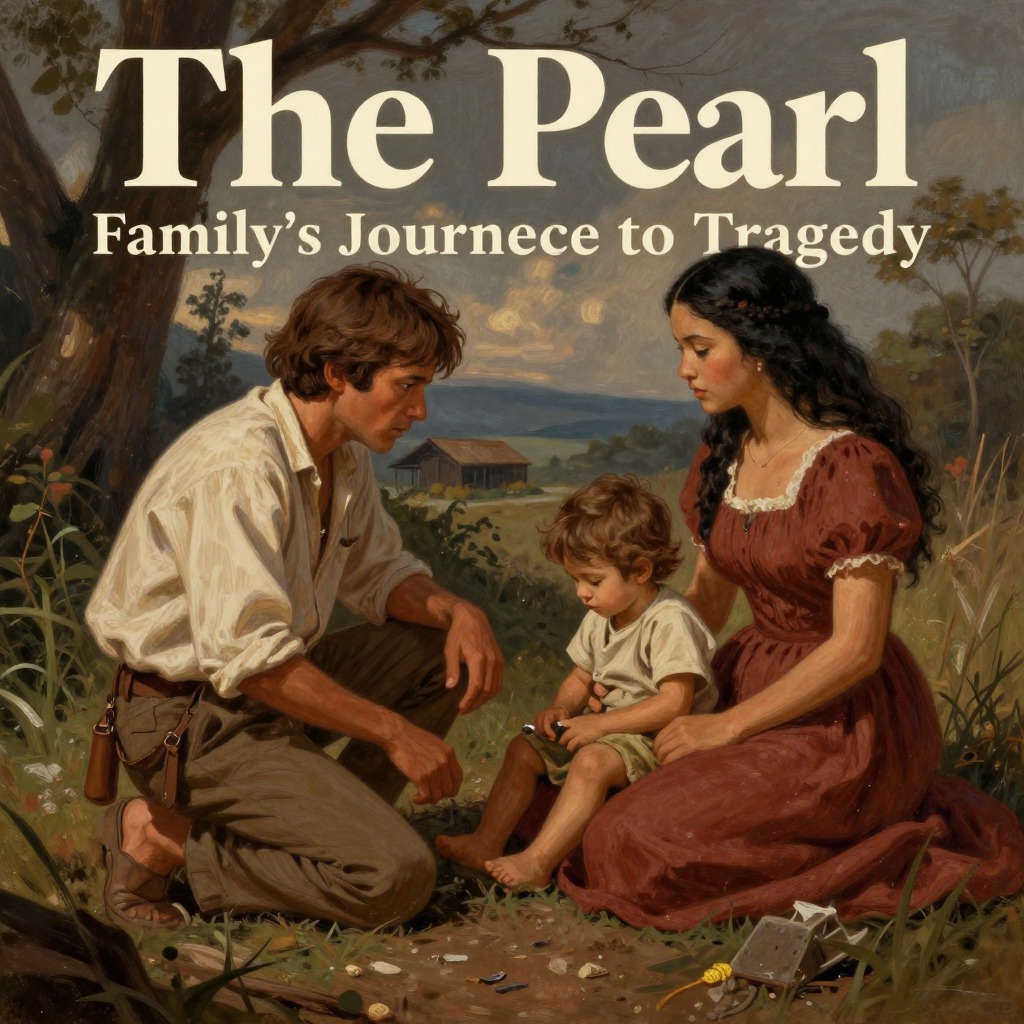
The PearlLa Paz is the coastal town in Baja California that serves as the setting for John Steinbeck's novella The Pearl. It is the home of the fisherman Kino, his wife Juana, and their infant son Coyotito, and it is from its shores that Kino dives for the pearl that will bring both hope and destruction. The town is divided between the brush houses of the poor fishing people and the stone and plaster city of the wealthy, a physical manifestation of the colonial hierarchy that has oppressed Kino's people for four hundred years. La Paz is not merely a backdrop but an active participant in the story; its collective nervous system reacts to the news of the pearl, and its institutions—the church, the doctor's office, the pearl buyers' syndicate—conspire to ensure that the poor remain poor. The town's name, ironically meaning "Village of Peace," becomes a bitter contrast to the violence and chaos that the pearl unleashes.
Geography and Social Structure
The town lies on a broad estuary of the Gulf of California, its old yellow plastered buildings hugging the beach. The brush houses of the fishing people are clustered back from the shore, while the city of stone and plaster begins at a clear boundary, a place of harsh outer walls and inner cool gardens where bougainvillaea crusts the walls and caged birds sing. This spatial division mirrors the racial and economic divide: the doctor, the priest, and the pearl buyers live in the stone city, while Kino and his neighbors live in the brush huts. The beach itself is the zone of labor, where the white and blue canoes from Nayarit are drawn up, preserved for generations by a secret waterproof plaster. The sea bottom, rich with oysters, is the source of the town's legendary wealth—it had once raised the King of Spain to power—but the profits have never reached the divers.
The Town's Reaction to the Pearl
When Kino finds the great pearl, the news travels through La Paz with a speed that seems supernatural. Before Kino and Juana have even returned to their brush house, the nerves of the town are pulsing and vibrating. The priest, walking in his garden, puts a thoughtful look in his eyes and remembers certain repairs necessary to the church. The shopkeepers look at men's clothes that have not sold well. The doctor, sitting with a patient, grows stern and judicious, claiming Kino as his client and thinking of Paris. The beggars in front of the church giggle with pleasure, knowing that no almsgiver is like a poor man suddenly lucky. The pearl buyers, who are in fact agents of a single syndicate, sit alone in their little dark offices, their fingertips burning, each thinking how the patron cannot live forever. The news stirs up something infinitely black and evil in the town; the poison sacs of the town begin to manufacture venom, and the town swells and puffs with the pressure of it. Every man suddenly becomes related to Kino's pearl, and Kino himself becomes every man's enemy.
The Pearl Buyers' Collusion
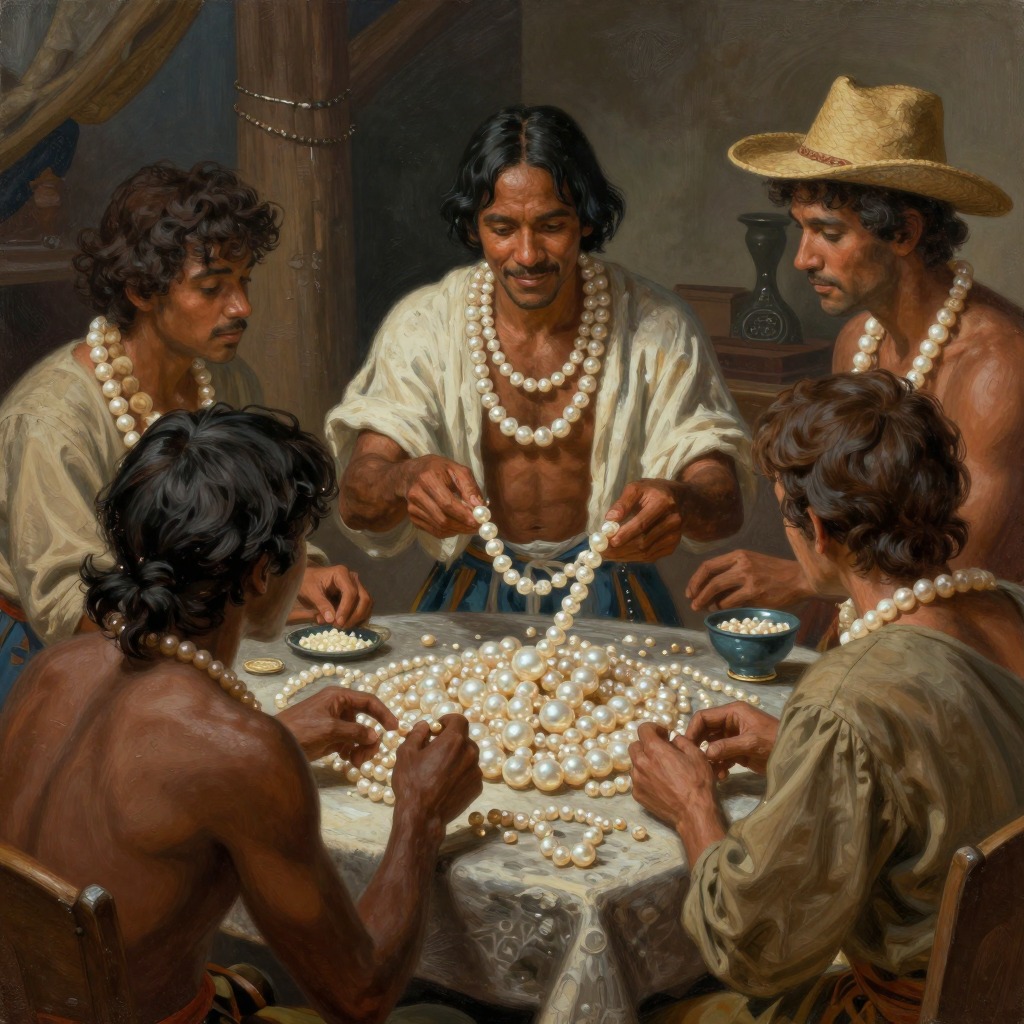
At the center of the town's economic exploitation is the pearl buyers' syndicate. The buyers' offices are clustered together in one narrow street, barred at the windows, with wooden slats cutting out the light so that only a soft gloom enters. The first buyer, a stout, fatherly man with a practiced legerdemain, offers Kino only a thousand pesos for the pearl, claiming it is too large and clumsy, a mere curiosity. He then calls in two other dealers, who examine the pearl and pronounce it a monstrosity, soft and chalky, destined to lose its color. The third offers only five hundred pesos. Kino, realizing he is being cheated, refuses to sell and declares he will go to the capital. The dealers glance at one another, knowing they have played too hard and will be disciplined for their failure. The first buyer quickly raises his offer to fifteen hundred, but Kino pushes his way through the crowd and strides away. The neighbors, watching, are divided: some think Kino is a pigheaded fool, while others are proud of his courage, hoping that from his defiance they may all profit.
Violence and Flight
The refusal to sell triggers a spiral of violence that drives Kino and his family out of La Paz. That night, an intruder attacks Kino in his house, leaving him with a bleeding forehead. The next night, Kino is attacked again and kills a man in self-defense. His canoe, the one thing of value he owned, is found with a great hole knocked in its bottom—an evil beyond thinking, for a boat does not have sons and cannot protect itself. His brush house is torn up and set on fire. Kino, Juana, and Coyotito flee into the night, heading north toward the mountains. The town, through its trackers, pursues them. The trackers, as sensitive as hounds, follow the trail through the desert, and behind them rides a dark man with a rifle. The family hides in a cave above a mountain spring, but Coyotito's cry gives them away. Kino attacks the trackers in the moonlight, killing all three, but in the gunfire, Coyotito is shot and killed.
Return and Rejection
Kino and Juana return to La Paz in the late afternoon, walking side by side, not in single file as before. Kino carries a rifle across his arm; Juana carries her shawl like a sack over her shoulder, and in it is a small, limp, heavy bundle—Coyotito's body. The shawl is crusted with dried blood. The people of the town crowd back and let them pass without speaking. They walk through the stone and plaster city and down among the brush houses, past the burned square where their house had been, past Kino's broken canoe, without looking. They go to the water's edge, and Kino takes out the great pearl. He looks into its surface and sees only evil: the frantic eyes of the man in the pool, the light of burning, and Coyotito lying in the cave with the top of his head shot away. He holds the pearl out to Juana, but she says, "No, you." Kino draws back his arm and flings the pearl with all his might into the sea. They watch it sink, winking and glimmering under the setting sun, until it settles on the sand bottom and a crab, scampering over the bottom, raises a little cloud of sand, and the pearl is gone. The music of the pearl drifts to a whisper and disappears. La Paz, the town that had been so eager to share in the pearl's fortune, is left only with the memory of the tragedy.