Song of the Family
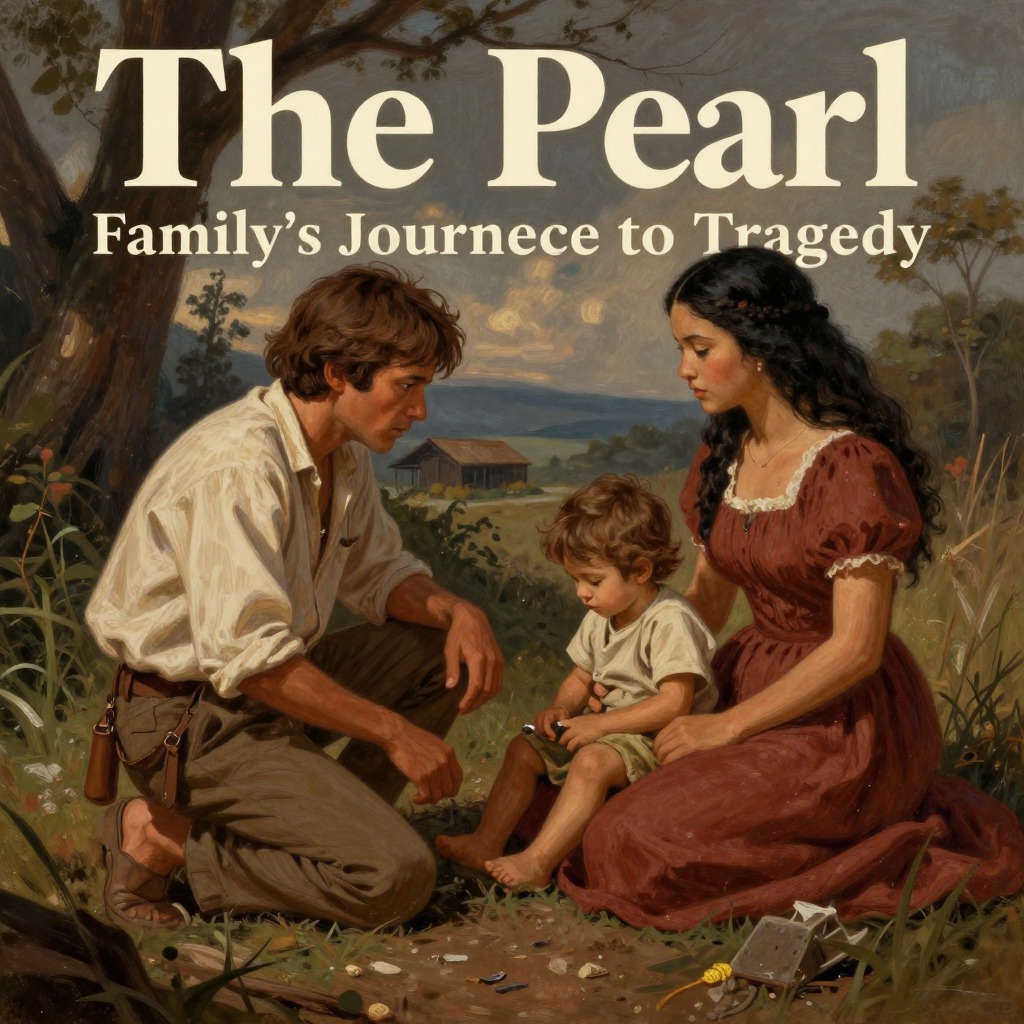
The PearlThe Song of the Family is the internal musical motif that represents Kino's sense of safety, warmth, and wholeness in his domestic life, and it serves as the emotional and thematic counterpoint to the Song of Evil throughout the novella. It is the melody of the life Kino knows before the pearl enters his world—a life of simple rhythms, shared purpose, and unspoken understanding between husband and wife. As the story progresses, the Song of the Family is tested, distorted, and ultimately transformed into a battle cry, marking the destruction of the peace it once embodied.
Identity and Origin
The Song of the Family is not a literal song but a recurring internal melody that Kino hears in his mind. It is part of a larger tradition: Kino's people had once been great makers of songs, so that everything they saw or thought or did or heard became a song. That was very long ago, and no new songs were added, but the old songs remained, and Kino knew them. The Song of the Family is one of these inherited songs, and it is intimately tied to the daily rituals of Kino's household. It is the rhythm of the grinding stone where Juana works the corn for the morning cakes, the sound of her patting corncakes on the cooking plate, and the rich smell of them. It is also the ancient song Juana sings with only three notes and yet endless variety of interval, a song that sometimes rises to an aching chord that catches the throat, saying "this is safety, this is warmth, this is the Whole." The Song of the Family is thus the musical expression of Kino's entire world—his wife, his child, his home, and his place in the natural order.
Arc Through the Plot
The Song of the Family is first heard on the morning of the scorpion sting, when Kino awakens in the near dark and listens to his music. It is clear and soft, and it comes from behind him as Juana's fire leaps into flame. The song is immediately threatened when the scorpion appears: in Kino's mind a new song comes, the Song of Evil, the music of the enemy, and underneath, the Song of the Family cries plaintively. This establishes the central conflict of the novella—the struggle between the family's unity and the forces that seek to destroy it. When Juana insists on taking Coyotito to the doctor, Kino sees her determination and the music of the family sounds in his head with a steely tone, showing that the song can adapt to meet a threat. After Kino finds the great pearl, the music of the pearl merges with the music of the family so that one beautifies the other, but this harmony is short-lived. As Kino's plans for the future take shape, the Song of the Family is gradually overwhelmed by the music of evil. When Kino stands in the doorway of his house after the priest's visit, he feels all the warmth and security of his family behind him, and the Song of the Family comes from behind him like the purring of a kitten. But by saying what his future was going to be like, he has created it, and other forces are set up to destroy it. The song becomes a fragile thing, easily attacked.
Juana's Use of the Song
Juana actively uses the Song of the Family as a protective force. When Coyotito is sick after the doctor's treatment, Juana rocks from side to side and moans out the little Song of the Family as though it could ward off the danger. Later, as Kino sits brooding after the failed attempt to sell the pearl, Juana watches him with worry, and as though she too could hear the Song of Evil, she fights it, singing softly the melody of the family, of the safety and warmth and wholeness of the family. She holds Coyotito in her arms and sings the song to him, to keep the evil out, and her voice is brave against the threat of the dark music. This shows that the Song of the Family is not merely Kino's private experience but a shared resource that Juana wields in her own way, a form of prayer and magic combined.
Transformation and Final Form
As Kino descends into violence and flight, the Song of the Family itself is transformed. When Kino creeps down the mountain to attack the trackers, his own music is in his head—the music of the enemy, low and pulsing, nearly asleep. But the Song of the Family has become as fierce and sharp and feline as the snarl of a female puma. The family song is alive now and driving him down on the dark enemy. The harsh cicada seems to take up its melody, and the twittering tree frogs call little phrases of it. The song that once represented warmth and safety has become a weapon, a battle cry. In the final scene, as Kino and Juana walk back into La Paz with Coyotito's body, in Kino's ears the Song of the Family is as fierce as a cry. He is immune and terrible, and his song has become a battle cry. The song has not disappeared; it has been warped by grief and rage into something unrecognizable from its original form. It is no longer a song of peace but a song of survival, a testament to what has been lost.
Thematic Significance
The Song of the Family is the emotional and thematic heart of the novella. It represents the wholeness that Kino and Juana possess before the pearl enters their lives—a wholeness that is not dependent on material wealth. The song's gradual corruption mirrors Kino's own moral decline. When Kino says "This pearl has become my soul," he is acknowledging that the pearl has replaced the Song of the Family as the organizing principle of his life. The song's final transformation into a battle cry shows that even the most fundamental human bonds can be perverted by greed and violence. The Song of the Family is thus a measure of what is at stake in the story: not just a pearl, but a way of life, a set of values, and a family's unity. Its loss is the story's deepest tragedy.