The Doctor
The PearlThe Doctor is the most vivid embodiment of colonial cruelty and moral corruption in John Steinbeck's The Pearl. A fat, lazy man who longs for the "civilized living" of Paris, he treats the indigenous fishing people of La Paz with contempt, refusing to help them unless they can pay. His avarice, triggered by the discovery of the great pearl, leads him to poison the infant Coyotito and to attempt theft, making him the primary human agent of the evil that the pearl represents. He is a figure of institutional power—medicine, wealth, race—deployed not to heal but to exploit and destroy.
Identity and Background
The Doctor is a man of European descent living in the stone and plaster part of La Paz, a world entirely separate from the brush houses of Kino's people. He sits up in a high bed, wearing a dressing gown of red watered silk from Paris, and drinks chocolate from a tiny cup of eggshell china. His eyes rest "in puffy little hammocks of flesh" and his mouth droops with discontent; he is growing very stout, and his voice is hoarse with the fat that presses on his throat. He had once, for a short time, been a part of the great world, and his whole subsequent life is memory and longing for France—by which he means that on a small income he had been able to keep a mistress and eat in restaurants. His room is furnished with heavy, dark, gloomy pieces, religious pictures, and a large tinted photograph of his dead wife. He is attended by a servant of Kino's own race, whom he treats with casual disdain.
Racism and Refusal to Treat Coyotito
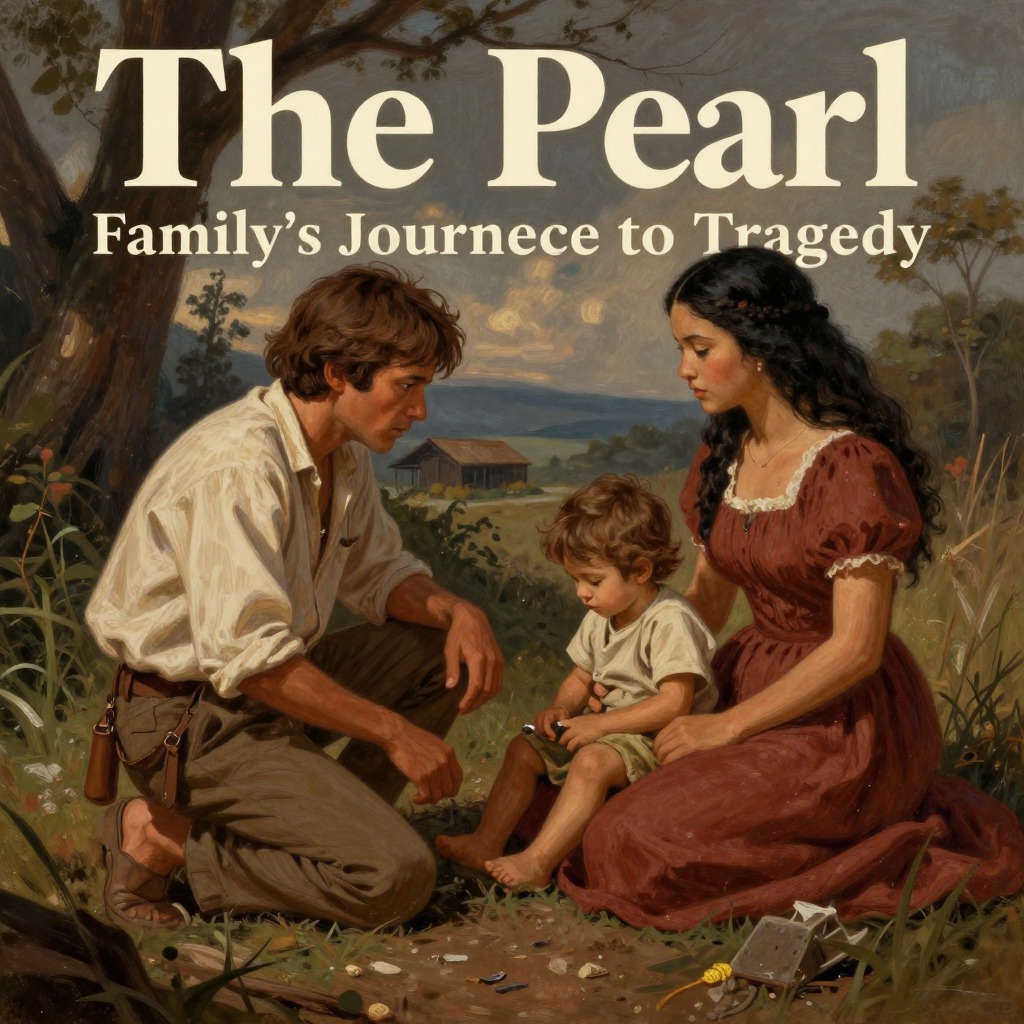
When Kino and Juana bring their scorpion-stung baby to the Doctor's gate, the Doctor's response reveals the deep racial hierarchy that governs La Paz. Upon being told that "a little Indian with a baby" has come, he explodes: "Have I nothing better to do than cure insect bites for 'little Indians'? I am a doctor, not a veterinary." He demands to know if the family has any money, and when Kino offers eight small, misshapen seed pearls, the servant is sent back with the lie that the doctor has gone out. Kino, standing before the gate, feels the weight of four hundred years of oppression: the Doctor is of a race which "for nearly four hundred years had beaten and starved and robbed and despised Kino's race, and frightened it too." The Doctor's refusal is not merely personal cruelty but the institutional expression of colonial power.
Greed and the Poisoning of Coyotito
The moment the Doctor learns that Kino has found the Pearl of the World, his attitude reverses completely. He arrives at Kino's brush house that same evening, claiming he has come to see the baby at the first chance. He warns Kino that the scorpion sting can have "a curious effect"—a withered leg, a blind eye, a crumpled back—and insists on treating the child. In reality, he administers a capsule of white powder that makes Coyotito violently ill, inducing the very symptoms he had predicted. He then returns, gives the baby an antidote, and presents himself as the savior. The entire performance is a fraud designed to gain access to the pearl. When he asks where Kino keeps it and offers to put it in his safe, his wet eyes never leave Kino's, and he watches Kino's involuntary glance toward the place where the pearl is buried. That night, he sends someone to steal it.
The Doctor as a Symbol of Systemic Evil
The Doctor is not merely a villainous individual; he is a function of the social system that keeps Kino's people in poverty. The beggars in front of the church know "his ignorance, his cruelty, his avarice, his appetites, his sins"—they know his clumsy abortions and the little brown pennies he gives sparingly for alms. The priest, when he hears of the pearl, thinks of repairs to the church. The pearl buyers operate a collusive syndicate to cheat the fishermen. The Doctor is part of this network of exploitation, and his actions are the first concrete manifestation of the evil that the pearl attracts. Kino's later violence, his killing of a man, and the eventual death of Coyotito all trace back to the Doctor's initial refusal to treat the baby and his subsequent greedy intervention. The Doctor's world—of Parisian silk, chocolate, and caged birds—is built on the suffering of those he despises, and the pearl threatens to disrupt that order. His role is to show that the system will use any means, including medical fraud and attempted theft, to maintain itself.