Trackers pursue the family
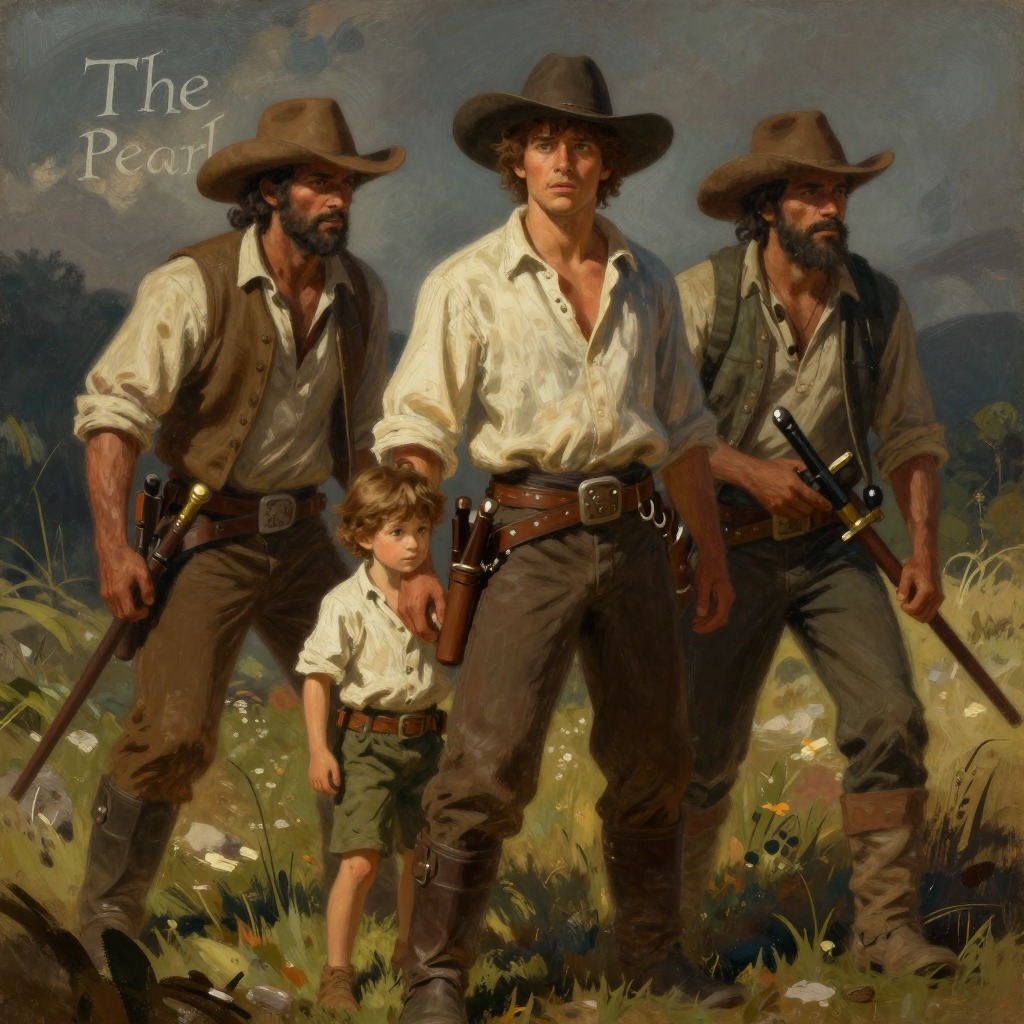
The PearlThe pursuit of Kino and his family by professional trackers marks the final, most desperate phase of their flight from La Paz. After Kino kills a man in self-defense during the second night attack, the family's old life is irrevocably destroyed: his canoe is broken, his house is burned, and a dead man lies in the brush. With every escape route cut off, Kino, Juana, and the baby Coyotito flee northward into the desert, hoping to reach the capital. But the town's authorities—or the shadowy forces that covet the pearl—dispatch three inland hunters, men as sensitive as hounds, to follow their trail. This pursuit transforms the family's journey from a flight of hope into a grim struggle for survival, compressing Kino's world into a narrow corridor of fear, vigilance, and lethal calculation.
The Trackers and Their Method
The three pursuers are not ordinary men but specialized hunters from the interior, accustomed to living off a land where game is scarce. Two are on foot, bent low to the ground, reading the earth with an animal precision that Kino recognizes with dread: they can follow the trail of a bighorn sheep through stone mountains, and they can read a broken straw or a little tumbled pile of dust. The third man rides a horse, his nose covered with a blanket, and across his saddle a rifle gleams in the sun. Kino, watching from the cover of a thorny tree, sees them approach along the road he has traveled. The trackers whine a little, like excited dogs on a warming trail, and they stop at the place where Kino swept out his footprints. They study the swept ground, then move on slowly, but Kino knows they will circle back. He has left too many signs—broken twigs, scuffed places, displaced stones—and there is a panic in him now, a panic of flight.
Kino's Desperate Calculations
As the trackers draw near, Kino lies rigid as a tree limb under a fallen branch, barely breathing. He knows what he must do: if the trackers find the swept place, he must leap for the horseman, kill him quickly, and take the rifle. That is his only chance. He digs little pits with his sandaled toes so that his feet will not slip when he springs. The trackers stop at the swept place, study it, and the horseman waits. The horse flings its head up against the bit, and the bit-roller clicks. For a long moment the trackers bend over the road, then move on. But Kino knows they will be back. He slides backward, no longer bothering to cover his tracks, and returns to Juana. A helplessness sweeps over him; he suggests letting the trackers take him. Juana's response is immediate and fierce: "Do you think they would take you back alive to say they had stolen it?" She reminds him that they would not let her or the baby live either. Her goading strikes into his brain; his lips snarl and his eyes grow fierce again. They flee into the mountains.
The Flight into the Mountains
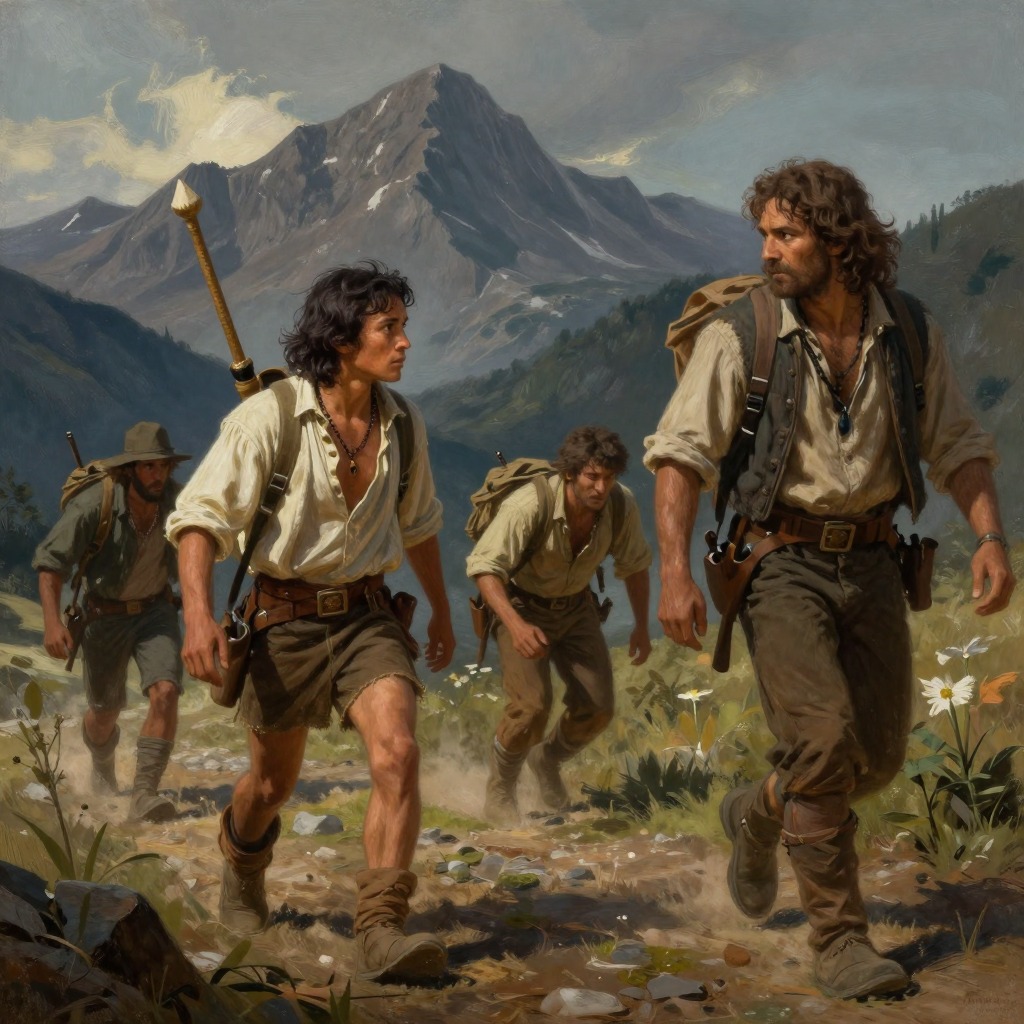
Kino and Juana trot quickly through the tangle of undergrowth, no longer trying to conceal their passage. The high sun streams down on the dry, creaking earth. Ahead are the naked granite mountains, rising out of erosion rubble and standing monolithic against the sky. Kino runs for the high place, as nearly all animals do when pursued. The land is waterless, furred with cacti and great-rooted brush; underfoot is broken rock, not soil. Horned toads watch them pass, and jackrabbits bump away and hide behind rocks. Kino knows what will happen: the trackers will find the place where they rested, and from there it will be easy—the little stones, the fallen leaves, the whipped branches, the scuffed places where a foot has slipped. The music of evil sings loud in Kino's head now, secret and poisonous, with the whine of heat and the dry ringing of snake rattles. He climbs a great boulder and looks back, but cannot see his enemies. Juana squats in the shade, her ankles cut and scratched from the stones and brush. Kino proposes that he go on alone to lead the trackers away while she hides and then goes north to Loreto or Santa Rosalia. Juana refuses: "No," she says. "We go with you." He looks for weakness in her face and finds none; he takes strength from her, and when they move on it is no longer panic flight.
The Final Confrontation
Kino leads the family up the steep slope toward a dark cleft in the mountain range, where a little spring bubbles out of the stone. They reach the water utterly weary, and Kino sees the trackers far down the slope, little more than dots or scurrying ants. He finds a series of shallow erosion caves thirty feet up on the stone shoulder and helps Juana and Coyotito into the largest one. He does not erase their tracks; instead, he climbs the brush cliff beside the water, clawing at ferns and wild grape, then comes down again, leaving a false trail. He crawls into the cave beside Juana and waits. The trackers arrive at dusk, and Kino sees them from above: two squatting near the pool, the third with the rifle sitting apart. In the darkness, Kino strips off his white clothes, hooks his amulet neck-string about the horn handle of his great knife so that it hangs down in front of him, and creeps down the smooth rock face like a slow lizard. He moves with excruciating care, his spread fingers gripping the mountain, his bare toes finding support through contact. The moon begins to rise, and Kino knows he must attack before its light exposes him. But he is too late: the silver edge of the moon slips above the eastern horizon, and he sinks back behind a bush. Then from above comes a little murmuring cry—Coyotito. The watcher hears it, cocks the rifle, and raises it toward the cave. Kino is in mid-leap when the gun crashes. The great knife swings and crunches hollowly, biting through neck and deep into chest. Kino becomes a terrible machine: he grasps the rifle, whirls, and strikes the head of the seated man like a melon. The third man scrabbles away, slips into the pool, and tries to climb the cliff, but Kino deliberately throws the lever of the rifle, aims, and fires between the eyes. Then he hears the sound that breaks through his red concentration: the keening, moaning, rising hysterical cry from the little cave—the cry of death.