
The Village’s Moral Judgment
The PeasantsThis thread follows gossip, sexual double standards, and the village’s conversion of private conduct into collective punishment.
increasing Bearing strength in each event
 decreasing
Bearing strength in each eventdecreasingRumor Takes Shape

Rumor Takes Shape
Talk around Jagna
Women describe Jagna as beautiful, vain, and sexually available, while men pursue her with less public condemnation.
Reputation as power
The gossip establishes a double standard that will later make Jagna’s private choices a public concern.
A Marriage Becomes Public
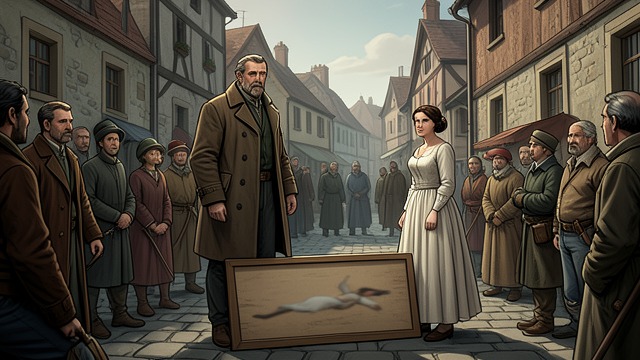
A Marriage Becomes Public
Community scrutiny
The announcement that Maciej Boryna will marry Jagna turns private arrangements into village-wide debate about inheritance, fairness, and sexual reputation.
Conflicting standards
People condemn Jagna’s supposed conduct while treating the older man’s pursuit of a young bride as ordinary or amusing.
The Affair Is Exposed
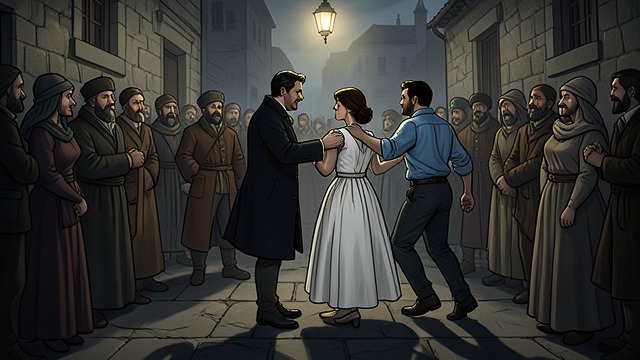
The Affair Is Exposed
A public scene
Antek dances openly with Jagna, and Maciej sees their closeness before pulling her away and confronting his son.
Private desire, public offense
The affair becomes a communal scandal, amplified by earlier gossip and competing claims over the household.
Blame Reassigned
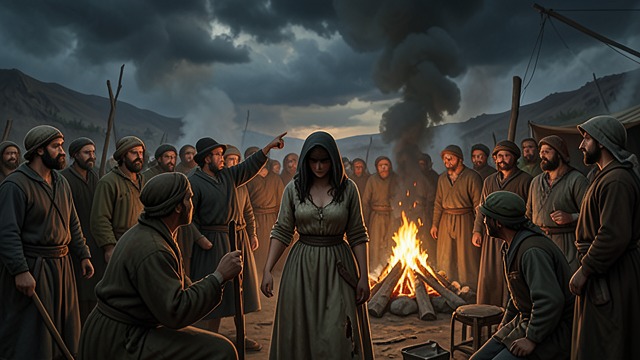
Blame Reassigned
The village’s changing story
After the fire and forest arrests, residents continue to debate Antek’s conduct, but anger increasingly concentrates on Jagna.
A scapegoat forms
The community enlarges her supposed guilt with rumor and old resentments, making her a convenient target for collective frustration.
A Verdict Without Trial
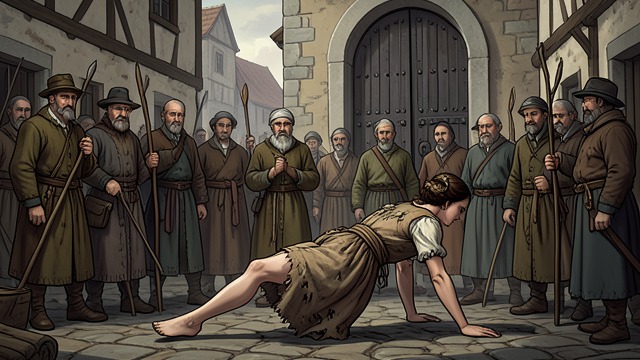
A Verdict Without Trial
Collective decision
The village agrees to expel Jagna, claiming communal authority to punish her without a formal process.
Violence made ordinary
Residents beat and cast her out, exposing a moral order that condemns women more harshly than men and treats exclusion as justice.
early autumn
late autumn
winter
spring
near the ending
