
The Community’s Price of Belonging
The PeasantsThis thread traces the social rules that define who may belong in Lipce, from outsiders and hired hands to women marked as transgressors.
increasing Bearing strength in each event
 decreasing
Bearing strength in each eventdecreasingInsiders and Outsiders
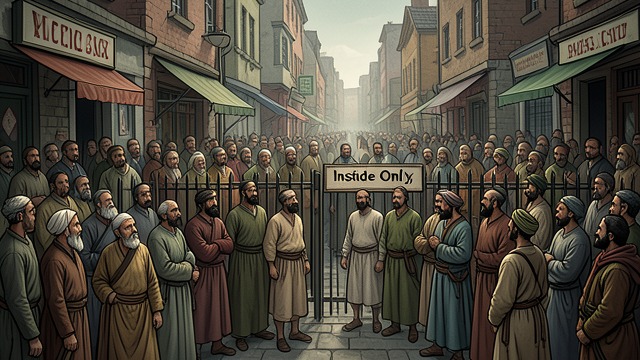
Insiders and Outsiders
A bounded community
Lipce’s inhabitants depend on dense local ties, while travelers, Jews, servants, and beggars are treated as people at the margins.
Belonging has a price
Kinship and land offer protection, but those without property can be pushed from household to household.
The Hired Hand’s Position
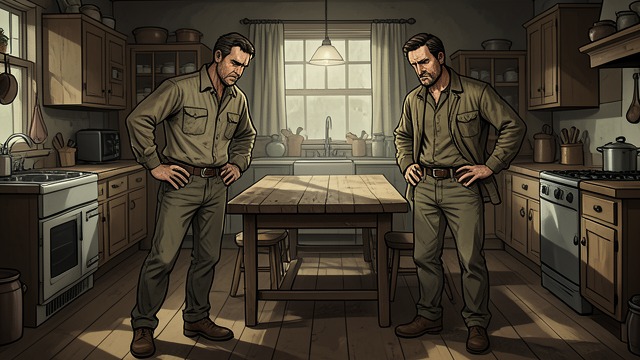
The Hired Hand’s Position
Labor without standing
Kuba, Witek, and other hired hands work within farmers’ households but have limited control over decisions or resources.
Rank becomes custom
The community’s social order appears natural to many villagers, even when it denies dignity to those who sustain the farms.
Poverty and Kinship
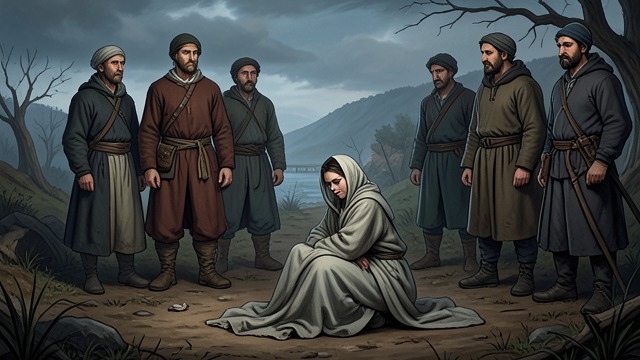
Poverty and Kinship
Agata’s return
Agata comes back from winter begging expecting her relatives to receive her, but her age and illness make her a burden.
A conditional welcome
The episode shows how family obligations are weakened by scarcity and by a system in which elders have already surrendered property.
Jagna Becomes an Outsider
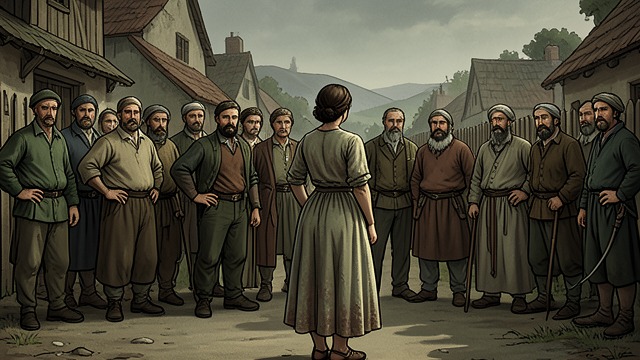
Jagna Becomes an Outsider
Accumulated judgment
Rumor, sexual double standards, and resentment over property progressively isolate Jagna from the village.
Belonging withdrawn
The community treats exclusion as moral protection, even as it erases her voice and physical safety.
Expulsion at the Boundary
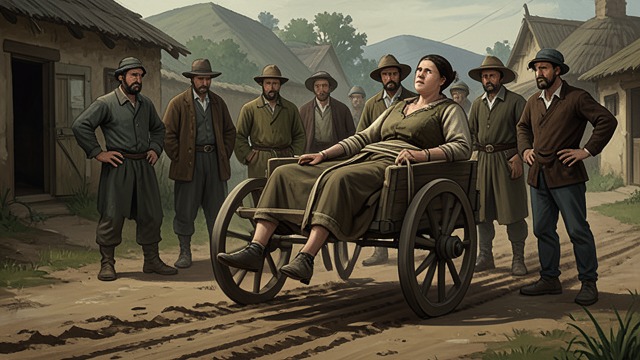
Expulsion at the Boundary
Cast beyond Lipce
The villagers bind Jagna to a dung cart and leave her beyond the boundary, turning the village edge into a sentence of exclusion.
A collective act
The violence makes clear that belonging is controlled by the community, not secured by marriage or property alone.
early autumn
autumn and winter
spring
late summer
near the ending
