
Women’s Survival and Power
The PeasantsThis thread traces women’s unpaid labor, dependence on land and marriage, and moments when women seize authority in a patriarchal village.
increasing Bearing strength in each event
 decreasing
Bearing strength in each eventdecreasingThe Work of the Household
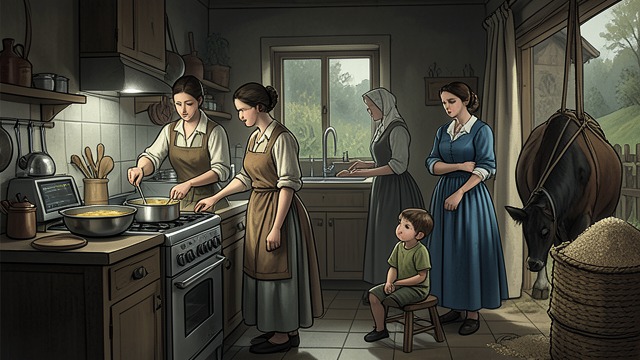
The Work of the Household
Labor behind the farm
Women cook, milk, care for children, process crops, and manage animals while men decide property matters.
Invisibility and dependence
Their daily labor sustains household wealth, yet does not automatically grant a secure claim to land.
Jagna’s Negotiated Marriage
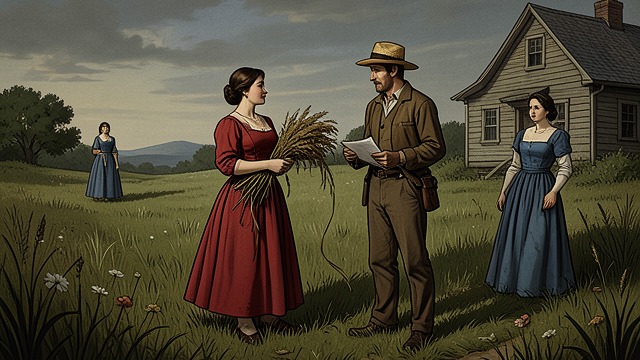
Jagna’s Negotiated Marriage
Marriage as security
Dominikowa negotiates Jagna’s marriage to Maciej Boryna, emphasizing a land settlement and a respectable place in the household.
Choice constrained
Jagna’s assent is quiet and uncertain, shaped by her mother’s plans and the village’s expectations.
Hanka Becomes a Manager
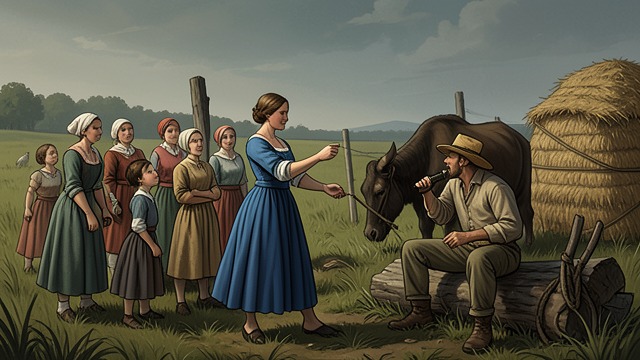
Hanka Becomes a Manager
Competence under pressure
With the men arrested, Hanka directs work, protects stores, and helps keep Boryna’s farm operating.
Authority earned, not granted
Her strength changes how other women see her, but the burden comes from crisis, not an equal distribution of power.
Jagna’s Limited Rebellion
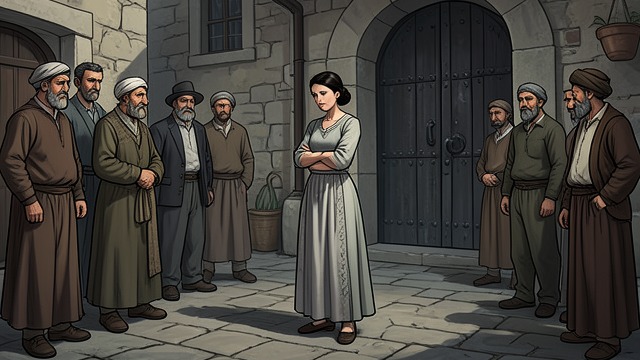
Jagna’s Limited Rebellion
Refusing a role
Jagna resists Hanka’s control and rejects the idea that her only value lies in land, marriage, or household labor.
A dangerous independence
Her refusal brings gossip and punishment rather than lasting freedom, exposing the narrow limits placed on women’s agency.
Women Enforce the Verdict
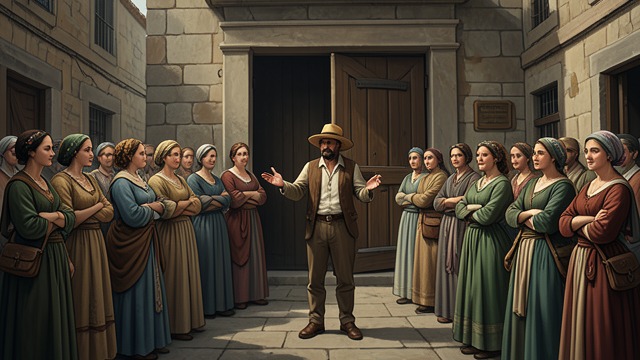
Women Enforce the Verdict
A public campaign
Women lead much of the anger against Jagna and help carry out the village’s decision to expel her.
Shared oppression, unequal judgment
Their participation shows how people with limited power can still wield collective authority against someone even more vulnerable.
autumn
late autumn
spring
summer
near the ending
