Agata dies
The PeasantsAgata’s death turns a lifetime of preparation for poverty and dependence into a carefully ordered final scene. She arranges her own deathbed and clothes, receives the priest and the prayers of those around her, and dies as the ripe rye is being cut in the fields beyond her window. The beggar woman’s passing is mourned throughout the village—and, to the villagers, appears enviably peaceful—while Jasio is so shaken by her death that he flees, and Jagusia follows to comfort him.
Preparations for the final hour
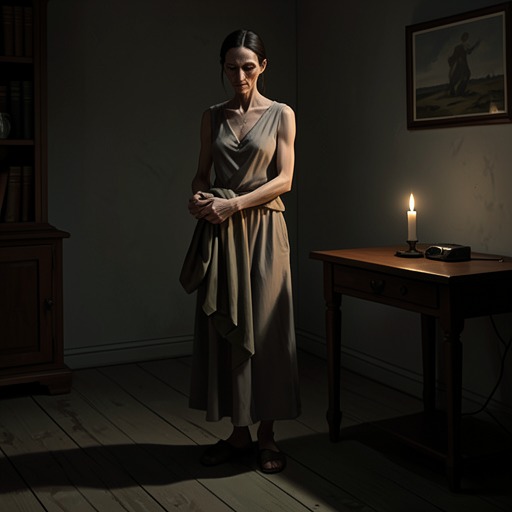
Agata had prepared for this moment over many years. When Jasio returned to the cottage, she was conscious and taking the contents of her chest onto the bench: fresh bedding, a clean sheet, holy water, an aspergillum, a votive candle, an image of the Lady of Częstochowa, a new smock, a wool skirt, a frilled cap, a headkerchief, and new shoes. These were not incidental possessions but a carefully assembled funeral outfit and set of rites, gathered through a lifetime of begging. She took pleasure in displaying them to the women and even tried on the bonnet before looking at herself in the mirror. Her satisfaction made the prospect of death seem, for a moment, like the completion of a long-prepared household task.
She asked to be dressed in these clothes the following morning. When evening came, she ate only a little of the eggs she had wanted, then spoke timidly to Tomek, reassuring him that she would not remain a burden for long. The next morning, those around her followed her instructions. Agata was placed on Kłąb’s bed, over her own bedding, and she herself checked the quilt, poured holy water onto a plate, and set the aspergillum beside it. Only after making sure that the room was properly prepared did she ask for the priest.
A deathbed among the living
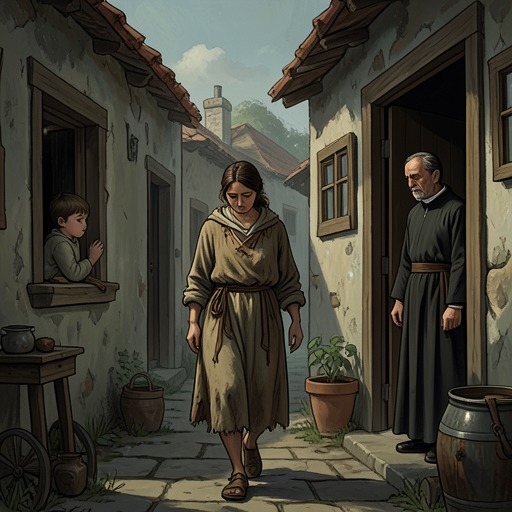
The priest came carrying the Lord Jesus and prepared Agata for her final journey. He told Jasio to stay with her until the end, although he himself was in a hurry to leave. Jasio sat beside the bed and read quietly from the breviary. The Kłąb household remained at home, and Jagusia arrived and crouched silently in a corner. The flies continued to buzz as the people in the room moved about quietly, glancing toward Agata.
Agata remained conscious, rosary in hand, and said farewell to those who came to see her. Children gathered in the hallway and under the window; she gave them a few groszy and asked them to pray for her. Then she fell silent for hours. The scene gives her a presence at the center of the household: those around her keep watch, while she has already arranged the objects, gestures, and prayers that will accompany her passing.
The fields beyond the window
Lying beneath the holy pictures, Agata appears at ease in the kind of deathbed she had imagined throughout her life. Tears gather in her eyes, but her face holds quiet pride and happiness. She looks through the window toward the deep sky and the wide fields, where scythes are already cutting the heavy, ripe rye. The living harvest continues within sight of her bed, joining her final moments to the work and seasonal life of the village. Her gaze seems directed toward a place beyond what the other people in the room can see, while the fields themselves remain concrete and visible to them.
As evening approaches, the room fills with the red light of sunset. Agata suddenly becomes agitated, sits up, stretches out her arms, and cries that her time has come. She falls back. The change is abrupt, but the rites she prepared continue: those present kneel beside the bed, Jasio reads the prayers for the dying, and Kłąb’s wife lights the blessed candle. Agata repeats the prayers, growing weaker and less distinct until she lets go of the candle and takes her last breath.
The village’s farewell and Jasio’s grief
Ambrozy arrives just in time to close Agata’s eyes. Jasio says an ardent prayer over her, and the whole village comes to pray beside her body, weep, and marvel at what they regard as her happy death and easy ending. The description of Agata as a beggar who dies like the village’s first lady holds together two unlike measures of worth: her poverty and the dignity she gives her own passing. The funeral clothes she collected, the household observances she directed, and the attention of the village make her final hours something she has shaped rather than merely endured.
For Jasio, however, the sight of her dead face brings no easy consolation. Looking into her lifeless eyes, he is overcome with terror, runs home, throws himself onto the bed, and weeps into his pillow. Jagusia follows despite her own grief and horror. She wipes his tear-stained face and lets him nestle against her as he would against his mother, while he clings to her and sobs. Agata’s death therefore ends one life but also exposes the force of another person’s bereavement: the village can gather around the body in prayer, yet Jasio’s immediate response is to flee from it, and Jagusia must meet his grief through physical comfort.