Antek and Hanka’s home
The PeasantsAntek and Hanka’s home is the hovel to which they move after being driven from Boryna’s farmstead, a shelter that makes their loss of security visible in every part of its construction. The family’s possessions arrive on a borrowed horse, and the cramped, freezing interior later holds their children and a small remnant of livestock. It is less a settled home than a precarious refuge, with Hanka’s daily labor keeping a household alive under severe material strain.
A refuge after expulsion
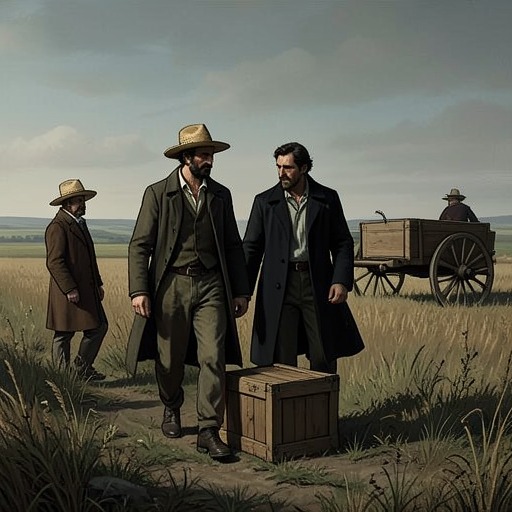
After Antek and Hanka are ordered out, they pack their belongings and leave without a quarrel. Hanka is nearly faint with misery, while Antek revives her with water and presses her to get away quickly, before his father sees them. He borrows a horse from Kłąb rather than use his father’s, then drives their things to Hanka’s father, at the other end of the village beyond the inn. The destination marks both a practical refuge and the depth of the family’s rupture with Boryna.
A few farmers, led by Roch, come to try to reconcile father and son, but neither will listen. Boryna leaves Antek to discover for himself what freedom and earning his own bread will mean. The move therefore begins not with a new independence secured, but with a family pushed into dependence on Hanka’s kin and exposed to the hardships of making a home elsewhere.
The hovel in winter
The dwelling’s poverty is starkly apparent on a bitter winter morning. Hanka lights a fire while darkness still obscures the village; the room is damp and penetratingly cold, and the unseasoned juniper smokes until she feeds the hearth with splinters and straw. Outside, snow has already fallen in a quantity described as a winter’s worth. The cold is not scenery alone: it determines how the family warms the room and how difficult even the morning’s ordinary work becomes.
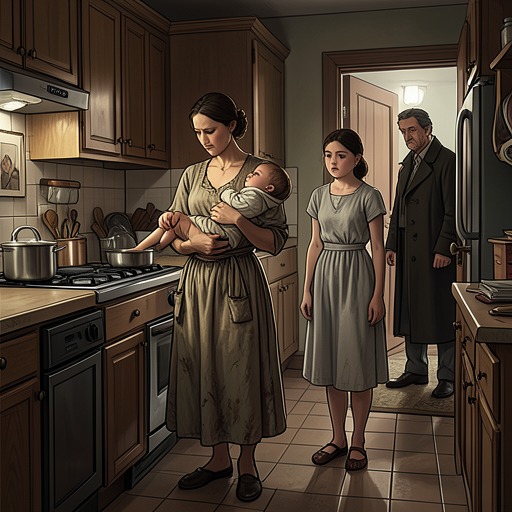
The house itself is a heap of mouldering planks, dung, and rubbish. Its uneven clay floor is frozen mud and trampled muck; damp streams down warped walls patched with clay, straw, and dung, while frost gathers in the corners. The low ceiling sags, and cobwebs and straw seem to outnumber the beams. A few holy pictures, a clothes pole, and a chest offer scant order within the decay. Behind a brushwood partition, the cows are penned inside the same cramped domestic space.
Household and means of survival
Hanka’s entire stock consists of a cow, a heifer, a pig, two geese, and a few hens. The small inventory is presented as her treasure, emphasizing how little stands between the family and destitution. Although the household chores are quickly done, there is little enough to do in a dwelling with so few possessions and animals. Hanka dresses the boys, who go to play with Weronka’s children in the hallway, then prepares to leave for the village because merchants are expected.
The home’s significance lies in the contrast between its physical wretchedness and the work required to maintain family life within it. Boryna’s cottage had seemed like a manor beside this place; here, Hanka’s care, the household’s few animals, and the children’s play occupy rooms that offer almost no protection from cold or poverty. The refuge gives the expelled family somewhere to go, but it does not restore the security they have lost.