Boryna’s farmstead
The PeasantsBoryna’s farmstead is the domestic and agricultural center of Maciej Boryna’s household, where control of work, property, and family life meet. Its changing atmosphere makes the home more than a backdrop: after a feast day it falls into a hush of fear and resentment; once Maciej recovers, he reasserts command over the farm and watches Jagna Borynowa closely. The farmstead’s routines and rooms register the cost of that authority, while the surrounding village economy and seasonal labor show how exposed every household is to poverty and the demands of the land.
Household and seasonal economy
The farmstead belongs to a village economy in which the approach of winter makes even ordinary purchases and obligations difficult. As Lipce prepares for the fair on St Kordula’s Day, households deliberate over whether to sell cattle, grain, or smaller livestock and how to buy clothing, tools, and farm necessities. Taxes, commune contributions, debts, and payments to servants come due together; even landholders with fifteen morgen may need to take a horse or cow to market. Poorer households face still narrower choices. The scene places Boryna’s home within a community where land and livestock sustain the household, but cash shortages and seasonal deadlines can force the sale of what makes that livelihood possible.
That pressure is not confined to the autumn fair. In winter, Antek Boryna and Hanka the Farmstead Keeper live apart from the paternal homestead after being turned out. Their separate cottage is reduced to potatoes and salt, with no money to spare; when Antek refuses hired work, Hanka fears that selling their cow may be the next necessity. She imagines working without respite if she were a man, while the family’s poverty leaves her with few means to secure the household’s survival. The contrast clarifies what expulsion from Boryna’s farmstead costs: not simply a change of address, but separation from a productive household and the resources that might carry a family through winter.
A home under strain
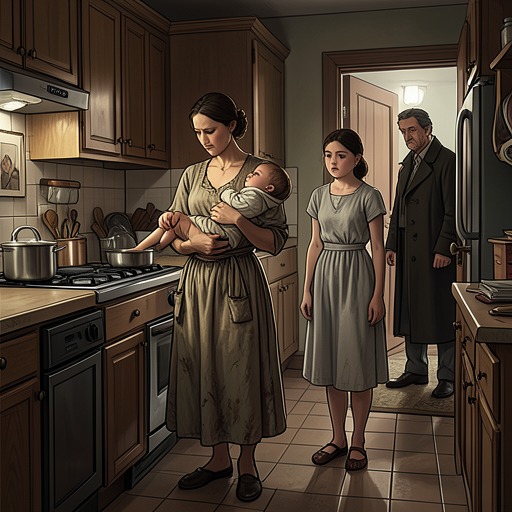
After a feast day, Boryna’s farmstead is described as tomb-like: there is no open weeping or shouting, only a heavy silence, suppressed anger, and the sense that disaster may be imminent. Maciej says nothing against Jagna when he returns, nor does he complain to Dominikowa. His silence, however, does not signal reconciliation. He becomes ill, unable to rise from bed, suffering nausea, pain in his side, and fever; the narrative connects his physical decline to the rancor he keeps within him.
The conflict becomes visible in an object brought back into the house. Jagna is making the bed and murmuring prayers when Maciej throws a snow-covered rag at her feet: the apron she had lost by the stile. He speaks quietly, but his curt manner and piercing look alarm her. Jagna blames the dog Łapa, saying it has dragged away her apron and even her clogs. The brief exchange turns a household possession into evidence under suspicion. Within the farmstead, ordinary domestic objects no longer feel neutral: they can prompt accusation, expose unease, and make Jagna’s movements subject to Maciej’s interpretation.
Authority restored, trust diminished
Once recovered, Maciej resumes control of the farmstead with renewed rigor. He spends whole days threshing with Pietrek and working on wheat in the barn, scarcely leaving the property; in the evenings he mends harnesses or whittles farm tools in the cottage. His practical labor is accompanied by close supervision of Jagna. He keeps her under watch, locks away her Sunday clothes, and carries the key himself. At the same time, he assigns work and household oversight to Józka Boryna, discusses matters with her, and gives her responsibility for keeping an eye on everything.
The arrangement sidelines Jagna in the home she is expected to inhabit as its mistress. She spins for long stretches, wanders without purpose, or goes to her mother to complain, while Maciej addresses her sharply and treats her as though she were a servant. His command of the farmstead is therefore also command over the household’s social order: he decides who works, who is consulted, and who may move freely. The result is not simply a return to efficient farm management. It is a domestic regime in which labor continues but intimacy and trust have been damaged.
The priest’s intervention helps alter that regime. As Maciej weighs the priest’s words and assurances, he gradually becomes calmer and changes how he treats Jagna. Daily life at the farmstead returns to its earlier outward pattern, but the household does not recover its former joyful bustle or quiet trust. The narrator compares it to a mended pot that still leaks somewhere. The image distinguishes restored routine from restored relationship: the vessel holds together, yet its damage remains consequential and not easily located.
Thresholds and the wider farming year
The farmstead’s authority is also tested at its boundary. During a snowstorm, Maciej brings Hanka back toward her cottage, helps her shoulder her load, and quietly urges her to visit him because he sees that she and the children are in danger of hunger. Hanka answers that he was the one who threw them out and asks how she could dare come. The exchange does not erase the expulsion; it places care and injury beside one another. The road and cottage path become a threshold where Maciej can offer help, but Hanka’s reply keeps the earlier rupture present.
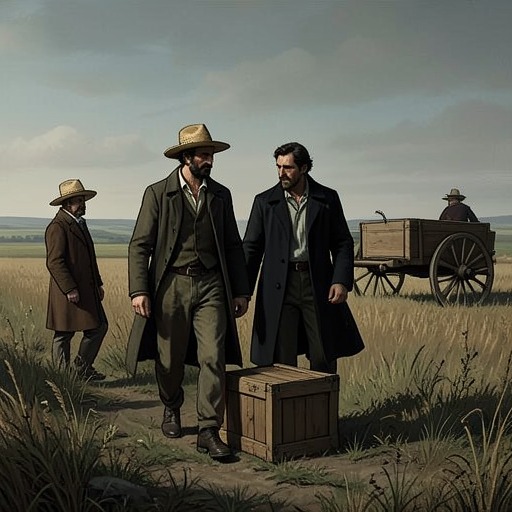
Beyond this household, the novel sets the farmstead against Lipce’s larger seasonal labor crisis. With the village’s working men in gaol, women must contend with births, calving cows, hatching fowl, farrowing sows, planting, drainage, manure, firewood, livestock care, and children, while the fields still require work. Spring makes the shortage visible in the fallow ground awaiting the plough. When neighboring villagers later arrive to help, carts, horses, and ploughs revive the empty fields; the people cross themselves before sowing, entrusting their labor to the earth. These scenes do not describe work at Boryna’s farmstead alone, but they enlarge its significance: a farm household depends on seasonal labor and mutual aid, and its private conflicts unfold within a rural world where work, land, and survival remain inseparable.