Harvest season
The PeasantsHarvest season in Lipce is not simply the moment when grain is gathered; it is the hinge between labor and subsistence, celebration and scarcity. A full barn can reward months of work, but the promise of that harvest depends on sowing and tending fields in time, preserving household resources, and having enough hands to work. Across the agricultural cycle, weather and communal labor shape whether abundance arrives as expected or remains only a hope.
The promise of harvest
In the village’s account of the year, autumn rest follows work already done in the fields. Once hayricks are full and wheat fills the barn, the grain waits for threshing and people can turn from summer toil to feasting, friendship, and customary celebrations. This seasonal respite is earned rather than detached from labor: its pleasures are framed as a fitting pause after drudgery, while the harvest itself is the material reward that makes such rest possible.
That promise makes the period before harvest a time of acute anxiety. When villagers consider how to meet winter’s needs, they argue over whether to sell cattle, grain, or smaller livestock. Clothing, tools, and farm supplies also have to be bought, while ready cash is scarce. Harvest therefore stands between present hardship and hoped-for provision; a household may have to part with the means of future work or food before the crops are in.
Weather, timing, and risk
The natural cycle does not guarantee a good outcome. Spring can arrive in visible abundance—the earth green, warm, and full of birdsong—while the practical needs of planting remain urgent. Villagers fear what autumn will bring if sowing is delayed. When the men are imprisoned, the shortage of labor falls heavily on the women: they must plant potatoes and garden sets, drain water from fields, cart manure, tend livestock, split wood, and manage household care. Calving cows, hatching poultry, farrowing sows, and pregnancies add to the same seasonal burden. The fields’ future yield thus depends on work performed under conditions that threaten to exceed the available labor.
Later, heat compounds that uncertainty. As May ends, conditions are already as scorching as midsummer: streams dry up, sandy ground bakes, vegetables wilt, and potato plants barely cover the soil. Winter crops fare better, but their survival does not erase the damage elsewhere. A change in weather can also alter the landscape abruptly: after a period of grey skies, warm rain falls over fields and orchards. The seasonal setting is an active material condition, not a decorative backdrop; it determines what can grow and how much work a household must do to secure its livelihood.
Work, scarcity, and communal need
The connection between agricultural seasons and employment is visible in the dispute over the manor’s logging. During a hard winter, hired hands are desperate for work; some families have already lost potatoes to frost, and villagers fear a lean preharvest period in which some people eat a hot meal only once a day. They had expected the felling at Wolf’s Hollow to provide jobs, but the Squire refuses to employ men from Lipce. That decision turns seasonal need into a grievance: the villagers experience the loss of work not as an abstract disappointment but as a threat to surviving until spring and harvest.
The same gap between neighbors’ circumstances and the community’s shared dependence appears in accounts of the poor. Filipka’s family has no potatoes, has sold its quilt, and must beg groats; with her husband imprisoned and one daughter gravely weakened by hunger, she has little protection against the months before harvest. Another account rebukes better-off farmers for attending to food and lending at interest while leaving poor households to suffer. The harvest is therefore unevenly anticipated. Its approach may promise eventual food, but it does not provide immediate relief to those who lack provisions, credit, or working family members.
Preparation and the harvest itself
After the imprisoned men return, Lipce begins preparing for the fair. The poor set out first: Filipka drives six old geese to market because her husband has fallen sick and there is nothing to put in the pot. The detail makes the fair both a seasonal gathering and a response to immediate want. A week after the men’s return, the village’s rhythms include the movement of livestock and preparations for the event, but the households do not enter that season on equal terms.
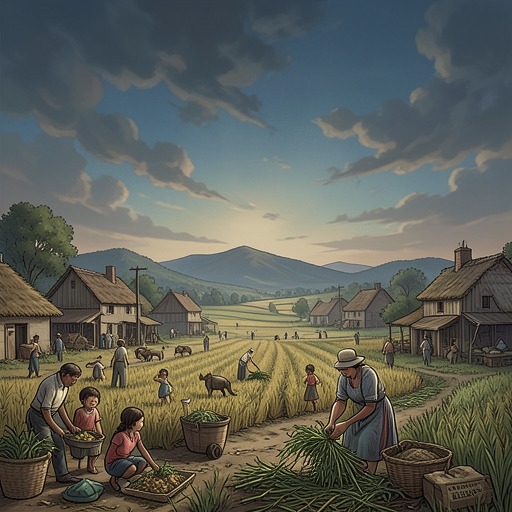
By the time harvest is close, the work changes from waiting and preparation to coordinated action. In Lipce, hayricks are repaired, carts are soaked in the pond, barns are opened for cleaning, straw ropes are woven, and men peen their scythes while women bake bread and ready supplies. As the sickles and scythes go out from the village, whole groups leave their cottages and farmyards for the fields. The village’s preparations resemble those for a holiday, but they are also practical: tools, carts, stores, and food must be ready for an exacting stretch of work.
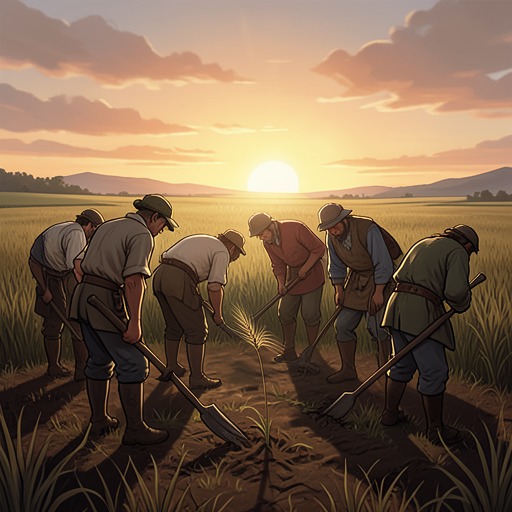
The harvest proceeds crop by crop, with little pause. Wheat is bound into sheaves and stacked by the mendel on the strips, then gradually carted home. Before the rye is finished, oats on the slopes call for the scythe; barley ripens and wheat deepens in color. The labor is exhausting enough that some workers fall asleep over their evening bowls, yet Lipce’s fair remains alive with conversation, laughter, songs, and music. Communal festivity does not replace work; it accompanies the intense collective effort that brings the crops into the village.
Seasonal order and its limits
The year’s cycle gives harvest a powerful place in Lipce’s social imagination: work leads toward the possibility of rest, and the fields connect household survival to shared rhythms of sowing, gathering, and celebration. But the narrative repeatedly qualifies that order. Floodwater swells beyond the pond’s banks and reaches roads, fences, and cottage walls; winter gales worry roofs and fences; drought damages crops; and imprisonment removes workers precisely when fields and households need them. A season’s promise can be weakened by weather, poverty, or decisions about who receives work.
Harvest season thus carries both fulfillment and suspense. Full ricks and barns mark what labor can achieve, while the hunger before the harvest shows how exposed families remain until that achievement is real. The shift from anxious preparation to scythes flashing across the fields offers a concrete release, but not a guarantee that every household has escaped need. In Lipce, the harvest is at once an agricultural event, a communal undertaking, and a measure of how precariously people depend on land, labor, and time.