Józka
The PeasantsJózka is Maciej Boryna’s younger daughter by his second marriage, and one of the younger members of the Boryna household. Her place in the family is shown less through independent authority than through the work, errands, pleasures, and attachments that fill life at home. She helps with domestic tasks, tends animals, and joins in the household’s social rhythms; later, when she falls seriously ill, Witek watches over her, and she is still in bed when Rocho entrusts her with papers during a search. Her father’s death gives her one of the story’s clearest final images: Józka clinging to his coffin and weeping while the bells toll in the distance.
Identity and place in the household
A character list identifies Józka, also called Józia, as Maciej Boryna’s younger daughter from his second marriage. Antek, Magda, and Grzela are children of Boryna’s first wife, making Józka their half-sister. The family setting shapes the evidence of her life: she appears among people preparing food, caring for livestock, and managing a busy household, rather than as an independent actor with land or a household of her own.
Her connection to her father is also visible in a small but telling act of generosity. Before spring, Boryna buys her a silk headscarf he had promised as a reward for grazing the cows. He keeps it in his breast as he makes his way through the crowded pig market. The detail links Józka’s work with the animals to a personal token of affection, while also showing that even a gift in this household is attached to labor and a promise remembered over time.
Work, sociability, and domestic life
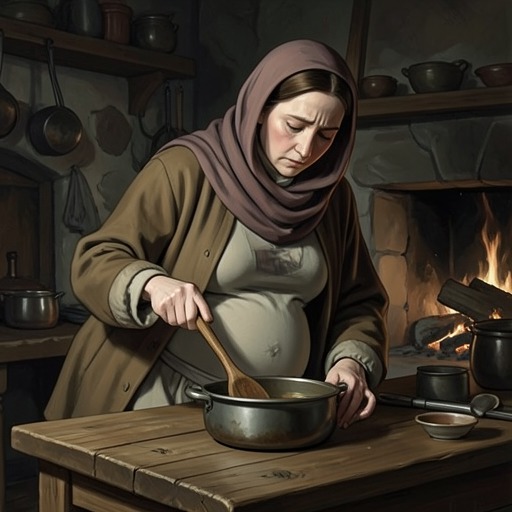
Józka’s presence in the cottage is often active and audible. While other household members prepare meals or attend to farm work, she sings quietly and makes colored-paper cuttings to decorate beams and picture frames. At the same time, Jagna kneads dough and makes strudels with her mother. The scene places Józka’s decorative handiwork alongside the demanding rhythm of food preparation: she brightens the interior while remaining part of a working household, not separate from its obligations.
The household’s preparations also include practical materials and objects that record earlier celebrations. Someone explains that the hanging globes are needed because the previous year’s decorations were used up at the wedding. The detail situates Józka’s work among recurring family occasions and makes the home’s festive appearance a product of reuse and collective effort, rather than an ornament detached from daily life.
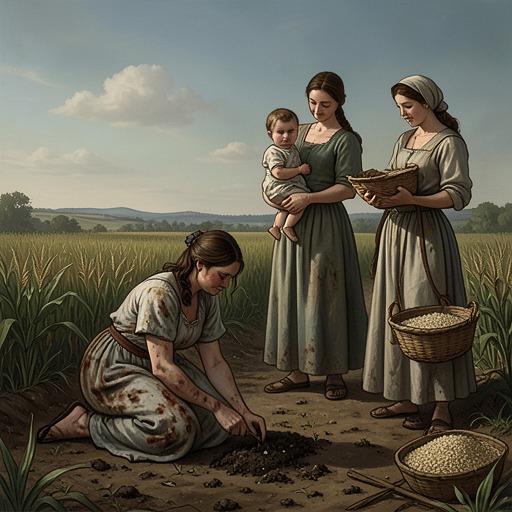
Her social world reaches beyond the cottage. Jagna is asked to come the following day for cabbage trimming, an invitation that places Józka’s household among the women’s shared work and visiting routines. Elsewhere, after rain has stopped and the sky begins to clear, Antek, Kuba, and the women leave the cottage to gather brushwood and rake pine needles. Józka also appears in a brief exchange while dinner is being prepared, asking who is being discussed. These moments give her no extended speech or private account, but establish her as present within the household’s ongoing talk and labor.
At another point, Witek becomes fascinated by the thought that cows can talk like people on a particular night. He quietly summons Józka, and the two slip away together to the byre. Her participation makes the episode a shared act of curiosity, grounded in the animals and spaces of farm life. On another occasion she bursts into the room with news that her wand has flowered. The exclamation shows how readily she gives voice to surprise and excitement, though the evidence does not explain the wand or the circumstances behind its flowering.
Family relations and everyday conflict
Józka’s relationship with Witek is especially visible in small acts of companionship. The two go together to the byre after his discovery about talking cows, and later, when she is ill, he sits beside her for hours, keeping flies away with a branch and handing her water. In the sickroom he becomes her attentive companion, staying near her while the adults’ other responsibilities continue around them.
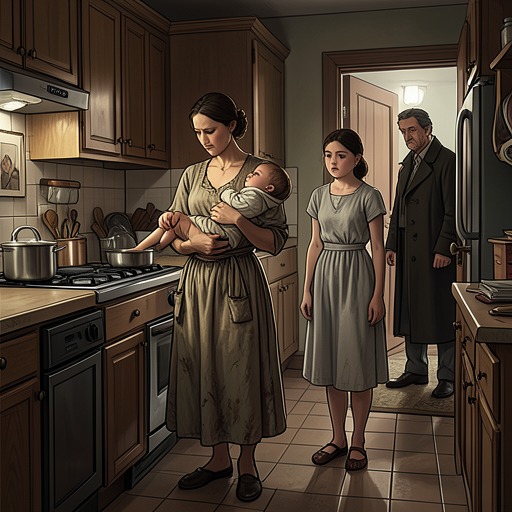
Her position among the household’s younger members does not exempt her from correction. When a pig belonging to Jagna roots through a heap of potatoes in the barn and chickens scratch at grain screenings left in the wrong place, Hanka scolds Józka about the disorder. Witek narrowly escapes Hanka’s attention, while Józka flounces and complains. The episode makes the domestic division of authority concrete: Hanka watches over the stores and livestock, while Józka is answerable for what happens around them.
Hanka’s authority also reaches into Józka’s plans. During her illness, Józka says that Hanka has forbidden her to attend Nastusia’s wedding, but insists she will go anyway, deliberately choosing a blue bodice and the skirt she wore at the fair. She imagines that people will stare and says she intends to dance with farmhands. Her resolve is striking beside her physical condition: she is bedridden, swollen with fever and spots, yet speaks as though the wedding remains within reach. She then stops and falls asleep, leaving the plan unrealized in the scene. The contrast registers both her youthful wish for social participation and the limits imposed by illness and household supervision.
Smallpox and dependence
Józka has been ill for a week when she is described as swollen, feverish, and covered in spots. At first, the family carries her into the orchard each day because she pleads to be taken outside; as her condition worsens, Jagustynka forbids further trips into the fresh air. The sequence marks a change from a sick person still making requests to someone whose worsening state requires others to decide what is safe.
Even in bed, Józka tries to sustain her ties with people beyond the cottage. She asks Hanka to give her piglet to Nastusia, saying that she expects to die and that Nastusia can pray for her in return. She then tells Witek to make clear that the piglet comes from her and urges him to return quickly, because she cannot move. The gift and requested prayer turn her fear into an exchange of care: she sends something of her own toward a friend and asks for remembrance in return. The words reveal how seriously she understands her illness, but they do not establish that she dies.
Her illness also draws attention to the small tasks of care. Witek stays for hours, brings her water, and uses a branch to keep flies away. When she finds a little hare, she presses it to her breast and speaks to it as an orphan taken from its mother. The animal struggles free, leaps among the hens and out into the orchard, with the dog and Witek after it; Józka laughs as Hanka comes running from the farmyard. The episode shows her tenderness toward a vulnerable creature and preserves a moment of laughter amid the later account of her illness.
Her father’s death and final scenes
When Maciej Boryna lies in his coffin, Józka throws her arms around it and weeps bitterly, paying no attention to what is happening around her. The household has gone quiet apart from the bells tolling mournfully in the distance. The scene reverses the energy of her earlier appearances: the girl who sings, decorates, rushes into rooms with news, and complains when scolded is now fixed in grief beside her father’s coffin.
Later, during the search for Rocho, Józka is again confined to bed. Rocho spins through the room, thrusts papers at her, and tells her to hide them underneath herself and say nothing. Searchers examine the corners and even look behind pictures; Józka follows them with feverish eyes and cries out deliriously when one approaches. Her sickbed becomes the hiding place for papers at a moment of danger, making her body part of the concealment even though she is too ill to act freely. After the old man gathers his things and says farewell to the women, Hanka falls at his feet and Józka breaks into loud, whimpering sobs. These episodes leave her ending unresolved in the supplied evidence, but firmly situate her among the household’s vulnerable members, whose illness and attachments are caught up in its larger losses and dangers.