Kuba’s shotgun
The PeasantsKuba’s shotgun is both a negotiated tool and the means by which Kuba carries out a dangerous poaching expedition. Agreed upon with Jankiel in exchange for game, it links the village’s tight calculations over cash and supplies to a hunt in the manor forest, where a shot hind becomes proof of Kuba’s skill and a secret he insists Witek keep.
Bargaining for the gun
The shotgun first takes shape in Kuba’s reckoning of what hunting might make possible and what the equipment would cost. He calculates the price of ordinary necessities—a sheepskin at about five roubles and shoes at about three—before estimating that a shotgun from the blacksmith would cost around five roubles. His thoughts move between the weapon and the food and tobacco he wants, including arak, rolls, and a whole herring. The gun is not presented as a detached symbol of power: it belongs to a practical list of desired goods, and its expense has to be set against Kuba’s limited means.
Jankiel turns that loose calculation into a specific arrangement. He works the figures out in chalk and whispers them to Kuba, who agrees to acquire a shotgun, powder, and whatever else is needed, then bring Jankiel the game he shoots. A deer will earn Kuba a full rouble. Powder costs fifteen kopecks, which Jankiel will deduct; if Kuba damages the gun, he must make up the loss with a quart of oats. The bargain therefore places the weapon within a system of advances, deductions, and liability. Kuba receives access to the equipment and a price for his quarry, but the cost of ammunition and the possibility of damage remain attached to him.
From agreement to hunt
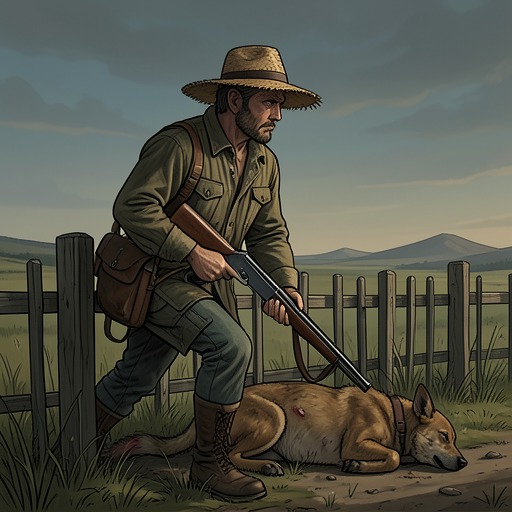
Kuba’s later account shows the gun in use. He goes to the manor side of the forest, where deer come out to feed on winter wheat, and waits through the dark. At dawn a stag approaches to within five paces. Although Kuba has brought the shotgun, he lets the stag go: it looks enormous, and he doubts he can manage it. He waits again, then chooses a hind from the animals that follow. The decision makes the hunt a matter not only of having a weapon but of judging what he can safely bring down.
The firing is forceful and imperfect. Kuba says he packed the gun hard; when it booms, the recoil swells his shoulder. The hind falls but is not immediately dead: pellets have struck her side, and she bleats. Afraid that the woodsman will hear, Kuba finishes her off. The account supplies the hunt’s material sequence—waiting, aiming, recoil, injury, and killing—rather than presenting the shot as effortless marksmanship. The shotgun makes the capture possible, but its power comes with physical cost and leaves Kuba needing to silence the wounded animal quickly.
Secrecy and instruction
After the hunt, Witek asks whether the hind has been left in the forest. Kuba refuses to tell him where it is and warns him not to speak to anyone. The warning makes secrecy part of the gun’s use: the weapon and its quarry belong to an illicit transaction, and even a companion’s curiosity is treated as a risk. Kuba is not merely proud of having fired; he is protecting the location and the arrangement from discovery.
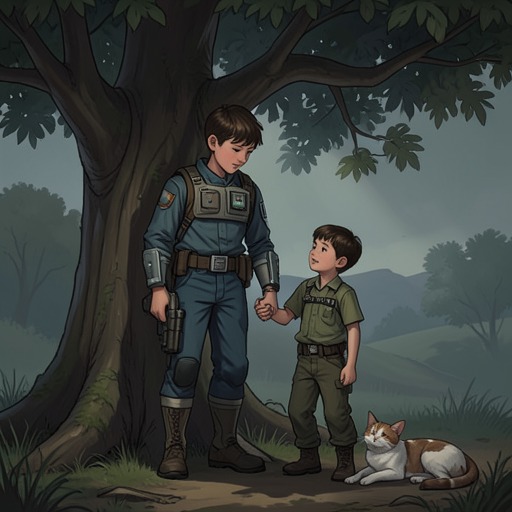
The shotgun also becomes a point of intimacy between Kuba and Witek. In the stable, Kuba cleans it on his pallet while Witek watches from the window, keeping an eye out for anyone approaching. Witek recalls how loud the shot sounded and says he thought the Squire or woodsman was shooting. Kuba confirms that he had not fired in a long time and repeats that the gun’s heavy charge made it thunder. His handling of the weapon after the hunt—cleaning it while the boy stands watch—extends the episode beyond the moment of firing and shows the care required to keep the secret.
Witek pleads to be taught, offering money he has saved for the dead souls at the listing. Kuba first objects that gunpowder costs money, then relents, whispers that he will teach him, and strokes the boy’s head. The shotgun thus passes, at least in promise, from Kuba’s solitary expertise toward instruction. The moment does not erase the danger or secrecy of the hunt: Witek has already been warned to keep quiet, and his proposed contribution comes from money set aside for a religious purpose.
Narrative significance
The weapon’s significance lies in the concrete chain it joins together: Kuba’s calculation of prices, Jankiel’s chalked terms, the rouble offered for a deer, the deduction for powder, the liability for damage, and the actual killing in the forest. Its meaning is economic as much as dramatic. A shotgun is expensive equipment, but within the bargain it offers Kuba a way to turn hunting skill into payment, while also binding him to Jankiel’s accounting.
The scene also sets the gun between competence and vulnerability. Kuba knows how to shoot from earlier forest outings, yet he passes up the stag, suffers the recoil, and has to finish a wounded hind before the woodsman hears. Witek’s awe and wish to learn add a generational dimension, but the weapon is not simply an emblem of mastery: its noise attracts notice, its shot injures, and its use depends on concealment. Through this mixture of skill, cost, risk, and guarded companionship, Kuba’s shotgun becomes the practical center of the poaching episode rather than a mere accessory to it.