Land shortage and land distribution
The PeasantsLand shortage and land distribution are material pressures and sources of social authority in Lipce: access to fields, pasture, forest, and work determines who can sustain a household and who is left exposed to poverty. The novel presents land not as acreage alone, but as inheritance, customary entitlement, and the basis on which people claim a place in village life. Its disputes repeatedly reveal the distance between rights asserted by villagers and the protections available to the landless.
Inheritance and the demand for land
A note on the novel identifies the parcelling out of land in the second half of the nineteenth century, together with the persistent demand for land, as one of the era’s chief social problems. The distribution of former manor estates mattered deeply to villages, and its importance was reinforced by the memory of the 1863 peasant land reform in Russian Poland. Land distribution therefore carries both an immediate economic meaning and a longer historical one: it offers the prospect of material security while recalling earlier changes in who could possess land.
The pressure is also visible within households. On a journey through the forest, Boryna calculates his claim as four morgen and adds the one morgen belonging to Jagusia. His attention fixes on the land and its trees as resources that are already counted, claimed, and potentially threatened. The moment links household property to the wider dispute with the manor: the village’s conflict is made up of individual holdings and remembered entitlements, not an abstract opposition between peasants and authority alone.
Access, custom, and exclusion
The novel distinguishes possession from access. In one dispute, villagers blame the manor’s people for driving their animals from pasture that they insist is theirs and recorded in the register. One cow, worn down by the chase and inflammation, is said to have cost three hundred zlotys; the speakers consider taking the matter to court or the commissioner. Their complaint shows how access to grazing can carry the weight of a household’s property, and how formal records and legal appeal enter a conflict rooted in everyday use.
Forest rights are contested in similarly layered terms. Boryna thinks of the forest as containing his four morgen and Jagusia’s one, while also insisting that the village must not allow itself to be wronged by the manor. Later, news that the squire is felling what villagers call their forest turns those claims into an immediate collective crisis. The competing language of individual acreage and a shared village right does not resolve who may use the woodland; instead, it makes the forest a focal point where household claims, customary expectations, and the manor’s power collide.
The boundaries of access also divide villagers from one another. Hired hands own no land and, as the explanatory note states, are not entitled to easement rights over land held in common by manor and village. Their demand to be included in the forest dispute is therefore not equivalent to the claims of landholding farmers. They depend on wages and work rather than a recognized share of common resources, even as they experience the consequences of decisions about those resources.
Poverty, work, and the costs of exclusion
The refusal to employ Lipce workers in the felling makes land conflict a livelihood crisis as well as a rights dispute. A speaker estimates that at least twenty hired hands in the village urgently need work. Winter frost has destroyed some potatoes, cash is scarce, and the coming preharvest period threatens severe hunger. Villagers had expected that cutting timber at Wolf’s Hollow would provide employment; instead, the squire is said to have vowed not to hire anyone from Lipce after a complaint was lodged against him. The protest against logging thus includes both a claim over the woodland and anger at being denied the wages that its exploitation might have supplied.
The novel gives poverty a household scale. Filipka’s daughter is gravely ill in a freezing cottage where straw stuffs the windows; the family has no potatoes left and has sold its quilt. They must beg the miller for groats, while other families struggle to find food or credit before harvest. In another household, Florka has given birth but is sick, has no savings, and lacks help while her husband is imprisoned and the fields stand fallow. These circumstances show how precarious access to land and labor becomes when illness, imprisonment, and the seasonal calendar converge.
This deprivation exists alongside the relative security of better-off farmers. One speaker condemns those who concentrate on feeding themselves or lending at high interest while leaving the poor to divine care. The contrast makes distribution a moral question as well as an economic one: village residents share space, but proximity does not guarantee mutual aid. Land and resources may be scarce, yet the narrative also points to the choices of people who could help and do not.
From claims to collective action
When the villagers learn that the squire is felling the forest, they initially doubt the report. The timing—mid-March, as the ground thaws and sap begins to rise—makes the activity seem unexpected. Once the news is accepted, however, it gathers older grievances into a single confrontation. At a public meeting, Boryna addresses farmers and hired hands together, naming the felling, the refusal of employment, and a history of harassment and failed complaints as connected injuries. His appeal turns a specific resource dispute into a broader indictment of power and the failure of legal remedies to protect the village.
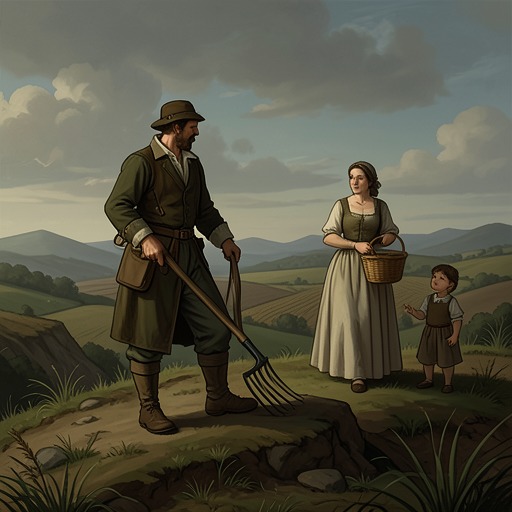
The crowd then goes to the forest. Women, men, and youths arrive by sleigh, cart, horse, and on foot; some carry sticks, pitchforks, flails, or scythes, while others have only branches or their voices. They rush the woodcutters, and Boryna calls for them to leave, insisting that the forest belongs to the villagers. The scene makes collective action visible, but does not erase differences among its participants: landholding farmers and landless workers assemble together while bringing unequal claims and needs to the dispute.
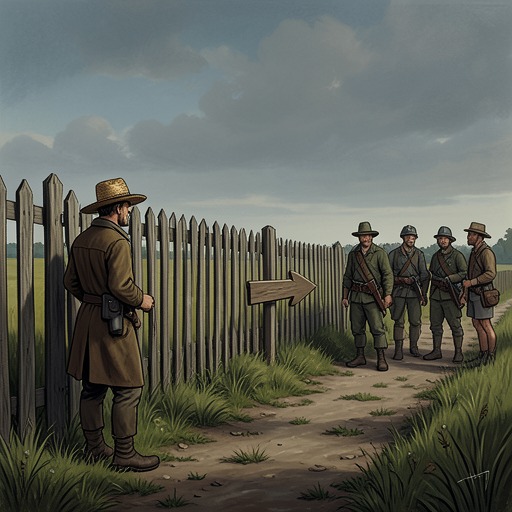
A related proposal over Podlesie applies the same logic of coordinated resistance to a different threat. Villagers discuss approaching the Germans together to warn them not to buy the land, and, if they proceed, refusing to let them sow or build. The proposal remains a threatened course of action in the evidence; its significance lies in the community’s attempt to defend access and control through collective pressure rather than leaving the matter to individual bargaining.
Significance
Land shortage and distribution connect the intimate economy of the household to the political life of the village. Inheritance determines who can hold land; easement rules distinguish farmers from hired hands; pasture and forest disputes test customary claims against the manor’s authority; and employment decisions determine whether the poorest can endure the winter and reach the next harvest. The novel’s conflicts show that land is simultaneously a productive resource, a source of status, and a basis for asserting belonging. They also expose the limits of solidarity: villagers may unite against the manor, yet the landless remain differently situated, and poverty can persist beside people who have the means to relieve it.