Old Bylica
The PeasantsOld Bylica is Hanka’s ailing father, an elderly man so weak that he can barely move about. His visit to Hanka’s home reveals how dependent he has become on others for food, warmth, and shelter—and how precarious the family arrangements meant to provide for him have proved.
Identity and Condition
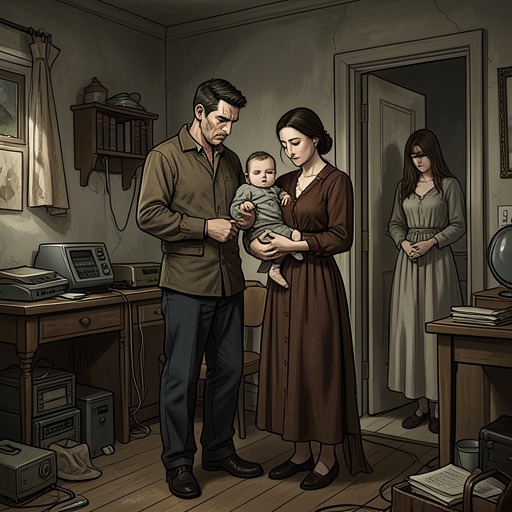
Old Bylica rarely visits because illness has made getting about difficult. At Hanka’s home he sits by the window, leaning on a stick; his hair is grey, his lips tremble, his voice is faint, and wheezing persists in his chest. The children keep to a corner or glance toward Hanka while she prepares dinner and talks with him. His physical condition is not incidental to the scene: it limits his ability to seek help and makes the dispute over his care a matter of immediate daily survival.
Neglect and the Family Arrangement
When Hanka asks whether he has eaten, Old Bylica says that Weronka forgot to give him breakfast and that he did not want to remind her. Hanka, still angry over the previous winter, accuses Weronka of taking what remained after their mother’s death and giving nothing over; the sisters now see little of each other. Old Bylica does not join in the accusation. He explains that Weronka’s household has many mouths to feed and not enough potatoes, while Stach Płoszka earns food and forty groszy a day threshing for the organist. Weronka also has two cows whose milk brings in a little money through butter and cheese sold in town, and she spins and weaves woollen skirts. Even as he describes being forgotten at mealtimes, he speaks gently of the pressures on her household.
His account also exposes the gap between the support he says was owed and the care he actually receives. Hanka says Weronka took half the land and half the house in return for maintaining him, including food, firewood, and clothing; Hanka adds that the twelve roubles a year their side owed has already been paid. Old Bylica confirms that he once hid a few zlotys for his burial, but Weronka coaxed the money from him and more was later needed. He sits silent and hunched after recounting this loss, his diminished posture underscoring how little control he retains over the resources meant to protect him.
Hanka’s Offer and His Departure
Old Bylica tells Hanka that he would do anything for her. She offers him room in the house and says they could put in a bed so he would be warm. He says he would even be content in the barn with the horses, provided he could stay with Hanka and not have to return. He describes having lost his quilt and bed, being denied even a log for warmth, and being begrudged each spoonful of food; too weak to manage the journey easily, he says he was driven to beg.
Hanka responds with anger at the treatment he describes and urges him to seek legal redress. Yet the scene ends not with a settled move into her home but with a quieter, practical gesture: after dinner, when The Blacksmith’s Wife arrives with the children, Old Bylica takes the bundle Hanka has secretly prepared and slips away. The bundle is the concrete help she can give him in that moment, while his departure leaves his longer-term care unresolved. His visit makes the difference between formal provision and lived care painfully visible: land and money have been allocated, but an old man still arrives hungry, cold, and dependent on his daughter’s discreet kindness.