Pan Tadeusz
The PeasantsPan Tadeusz is Adam Mickiewicz’s Polish national verse epic, published in 1834. In The Peasants, it appears as a book Jasio is reading, giving a concrete literary presence to the wider question of Polish identity: whether the rural population, shaped by serfdom and political subordination, can become part of a national community.
Appearance in the Novel
The novel identifies Pan Tadeusz in its final chapter, where Jasio is reading it. The reference is brief, but it places a work of national literature in the hands of a young villager. The book is not presented as a cause of an action or as the subject of an extended discussion; its significance comes from the contrast between its cultural reach and the limited educational circumstances described elsewhere in the novel.
Those circumstances include schooling conducted in Russian, with Polish instruction restricted largely to learning letters. Antek describes the resulting condition as a form of double illiteracy. Against that background, Jasio’s reading of a Polish verse epic marks a point of contact with a literary tradition that local education and administration do not reliably sustain.
Romanticism and National Identity
The national importance attached to Pan Tadeusz belongs to the broader history of Polish Romanticism. In the account surrounding the novel, Mickiewicz appears among the poets who shaped a political ideal of the patriotic Pole, an ideal formed amid the loss of independence and the persecution of patriotic youth. Romantic values such as rebellion and resistance to tyranny acquired a specifically political force in this setting.
That tradition offered a language for imagining Polish identity beyond the boundaries of ethnicity. Yet the novel’s historical problem is not simply how to inherit that language: it is how to make former serfs, long excluded from the political nation and often hostile to landowners who opposed their emancipation, into citizens sincerely attached to Poland.
The Book and the Peasant Political Question
The novel’s account of that problem is deliberately unresolved. Its major family story—Maciej Boryna’s marriage to Jagna and Jagna’s affair with Antek—unfolds alongside the peasants’ conflict with the manor over the forest. Together, these plots test how a politically conscious peasant class might emerge without Polish educational or administrative institutions under Russian control.
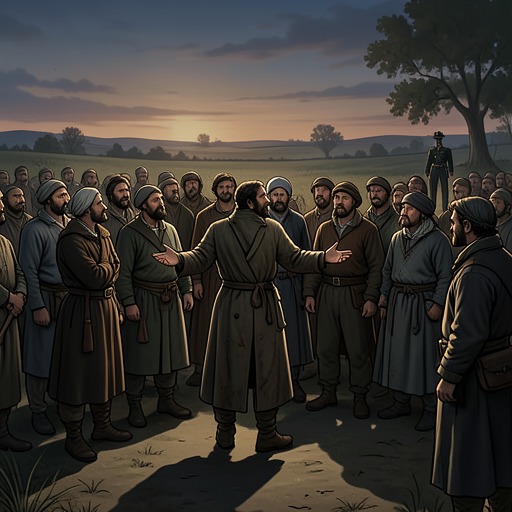
At the forest gathering, Antek addresses the crowd as Christian people, Poles, farmers, and hired hands, joining shared injustice to a national designation. But the village does not speak with one settled political voice: during a later argument, a farmer from Przyłęk accuses Rocho of siding with the gentry and turning people against the officials. These moments show both the availability of patriotic language and the mistrust that complicates its use. Pan Tadeusz stands within that tension as a landmark of national literature, while the novel questions whether literary and patriotic inheritance can, by itself, overcome the divisions of village life.