Preharvest
The PeasantsPreharvest is the fraught interval before the next harvest can secure food and income, when people in Lipce must endure dwindling resources while work, debts, and weather press in at once. Its defining condition is not simply hunger but exposure: the crops are not yet ready to relieve need, while the obligations of village life continue. Across the narrative, rain-swollen roads, winter gales, forest disputes, and scorching late-spring days give that wait a shifting but recurring material force.
The agricultural year and its hazards
The strain begins in the fields and households long before the grain can be brought in. During the cabbage harvest, the village is so occupied cutting and gathering that its roads and yards seem deserted. Cabbages fill threshing floors, passageways, and rooms, while great barrels stand soaking in the rain. Yet abundance in one crop does not mean that the season is easy: the pond rises against its banks, spills onto the lower road by Boryna’s side, reaches the fences, and splashes foam against cottage walls. Farm labor and weather share the same crowded landscape, with water threatening the routes and homes on which work depends.
Winter brings another kind of exposure. Soon after St Barbara’s feast, sharp winds sweep through the village, stripping and mauling the snow before the cold hardens the roads and ground. The episode shows how quickly conditions can change: the winds briefly retreat to the forest, while heavy clouds gather from several directions. The season’s hardships are thus not an inert backdrop. They alter the ground, threaten buildings, and set the conditions under which villagers must carry out their work.
Work, land, and conflict
By mid-March, as the earth begins to thaw and sap rises, news spreads that the squire is felling the peasants’ forest. The villagers initially doubt it; they had assumed that the activity in the woods was some other task. The timing makes the news especially consequential. A season of need is already approaching, yet access to work and woodland is bound up with the dispute between the manor and the village. Preharvest scarcity can therefore sharpen conflict over who controls land and who will benefit from its resources.
The pressure continues into late spring. Before May has ended, heat arrives with the force of July: the sun bakes the higher ground and sandy soil, vegetables wilt yellow, fallow grass is seared, and streams run dry. Potato stalks that had started well barely cover the ground, although winter crops escape the worst damage and continue to grow tall enough to screen the cottages. The contrast between damaged gardens and promising winter crops makes the danger uneven rather than absolute. Nights, too, are so humid and stifling that people sleep in orchards because their homes are unbearable.
Poverty before the harvest
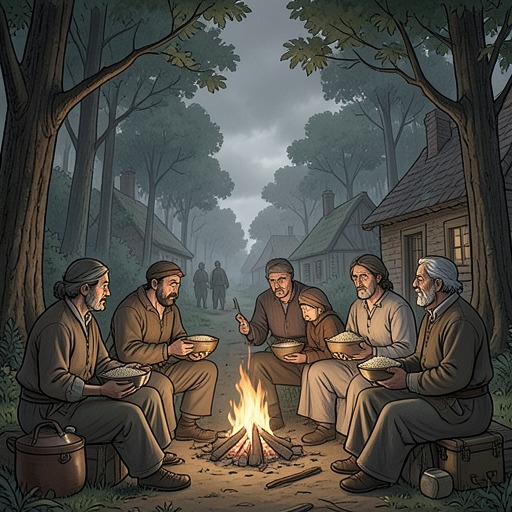
In the hard preharvest, even farmers feel the strain. One exchange measures poverty through food: wild spinach with bran is treated as evidence of deprivation, while the offer of a bushel of potatoes can be earned back through work at harvest. The arrangement is practical mutual aid, but it also makes the season’s precarious economy plain. Food is lent against future labor because immediate need arrives before the crop can be gathered.
Public obligations compound that shortage. During a harsh preharvest, the Notary summons farmers one by one and quietly reminds them of taxes, unpaid dues for the court building, and other demands. Some lack even enough money for salt. They bow, plead to wait until harvest or the next fair, and in some cases press a last zloty into his fist. The Notary extracts further goods and favors, invoking the Prefect and threatening consequences; he also warns villagers that resistance over a proposed school could jeopardize their accord with the squire over the wood. Scarcity leaves people negotiating not only with the season but with officials who can turn delayed payment into further pressure.
A season that tests attachment
Preharvest need reaches into private decisions. After learning that Szymek and Nastusia have bought land at Podlesie on instalment, with the squire also promising them offcuts and scantlings, Antek hears that their wedding has been postponed until Szymek has established himself. Against this account of another household trying to secure a footing, Antek weighs his own troubles and repeatedly considers fleeing. He cannot bring himself to leave Lipce for ever; the prospect frightens him more than prison, even the worst prison can offer. His choice gives the season’s pressure a human measure: poverty and legal peril narrow his options, but attachment to the village still holds him there.
The pattern is not one of unrelieved ruin. After a death is announced, a fine, warm rain falls over the fields and orchards; crops, leaves, trees, streams, and parched earth drink their fill. The rain does not erase the earlier damage or the burdens of debt, but it restores water to a landscape in which survival depends on it. Preharvest in Lipce is therefore both a recurring interval of vulnerability and a test of the ties—labor, land, obligation, and belonging—that must carry people until the harvest arrives.